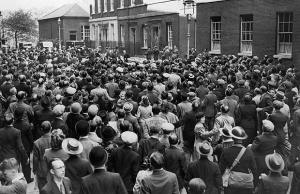
VoxPop2015: The People’s Conclusion

Tags

, , ,

A thoughtful and exciting stream about writing history.

manyheadedhailwood's avatarthe many-headed monster

Mark Hailwood

It’s been a lively old summer here on the ‘monster, and as the dust finally starts to settle on our ‘Voices of the People’ online symposium its probably time for a few conclusions. The vast range of thoughts provoked by our brilliant contributors is beyond comprehensive capture in a humble blog post, so there is no pretense here of providing a definitive summary of all the key points: for that, you’ll have to read the posts (and the #voxpop2015 hashtag on twitter). Instead, I’ll keep to highlighting a few of the themes that featured most prominently in your comments, both on the posts and on twitter, and that seem to me, therefore, to set the agenda for keeping the broader conversation about ‘history from below’ moving along.

History from below is… popular

peopleLet’s start with the vital statistics: since the start of the symposium in July, the many-headed…

View original post 1,880 more words

Call for Papers: The Victorian Brain

Alexandra Bacopoulos-Viau's avatarh-madness

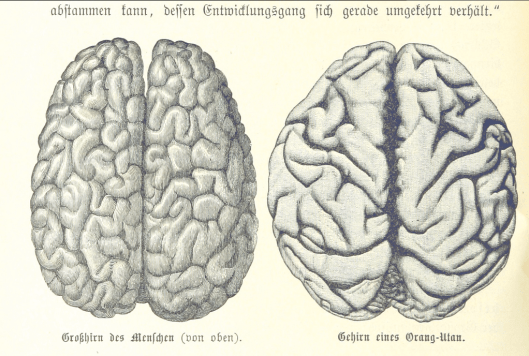
Call for Papers: Victorian Brain 

Victorian Network is an open-access, MLA-indexed, peer-reviewed journal dedicated to publishing and promoting the best postgraduate and early career work across the broad field of VictorianStudies. We are delighted to announce that our eleventh issue (Summer 2016) will be guest edited by Professor Sally Shuttleworth (University of Oxford), on the theme of the Victorian Brain.

In the nineteenth century, the discipline of psychology, or the science of the mind, underwent a profound reorientation: a reorientation which was both fuelled by contemporary literature, and which influenced that literature’s form and content. Investigating the mind’s workings was the joint project of such diverse parties as authors and poets; natural scientists and doctors; but also the public, as citizen scientists. Phrenology and the legibility of physiognomy remained central concerns. Simultaneously, medical research created a counterweight to eighteenth-century folk psychology and pseudoscience. Observation…

View original post 524 more words

The Refugee Problem and Britain – Ferenczi and Beyond: Judit Meszaros

Tags

, , , , , ,

I first published this review in the Australasian Journal of Psychotherapy Vol.14.No.2, 2014. It is not a convention to reference sources in such a piece but I did so on this occasion as some of the material is contentious.

Judit Meszaros (2014), Ferenczi and Beyond: Exile of the Budapest School and Solidarity in the Psychoanalytic Movement During the Nazi Years, London, Karnac, 270 pages including bibliography and index.

____________________________________________________________________

Karnac Books released the English version of Judit Meszaros’ Ferenczi and Beyond: Exile of the Budapest School and Solidarity in the Psychoanalytic Movement During the Nazi Years in early 2014. The culmination of almost twenty years research and writing, it traces the development of the Budapest School in the Great War Years and, from 1921, its dispersal to all parts of the globe as a result of war and political unrest. Hungarian psychoanalysts emigrated in several waves. The first group departed in the 1920s following the Treaty of Trianon where Hungary lost two thirds of its territory and access to the sea, and two thirds of its population, (Schwartz, 1999, p. 202). The second group, in flight from the Nazis in 1938 and 1939, emigrated with the assistance of the British and the American Refugee Funds (Jones, 1939; Meszaros, 2014). For a decade from the late 1940s departures from Hungary continued first in response to the Communist uprising and from the mid ’50s, the Hungarian Revolution.

Part of Meszaros’ purpose is to reclaim Ferenczi’s and the Hungarian contribution to the psychoanalytic movement during the twentieth century. In this respect she joins revisionist historians such as Makari (2008), and Rudnytsky (2011) in their recognition of the cost to the development of psychoanalysis resulting from Freud’s splits with significant protégés including Jung, Adler and Stekel. Infamously described by Jones as the emergence of “latent psychotic trends” (Jones, 1974, pp. 158, 185, 188-190;), Ferenczi’s differences with Freud were complicated by his final illness with pernicious anaemia which, towards the end, affected his mental functioning. Although Jones’ remarks were contested by Balint amongst others, Meszaros argues that Jones, with Freud’s complicity, did not waver from his view (Meszaros, 2003, pp. 239-253).

It is the basis of Meszaros’ view that Jones’s ambitions and his conflict with Ferenczi resulted in his ensuring that members of the Hungarian school were prevented from migrating to the United Kingdom during WW2.This becomes the prism through which Meszaros examines the flight of Hungarian Refugee analysts and the marginalisation of the Hungarian School of psychoanalysis.  Meszaros provides little analysis of British refugee policy and the influence of the British Medical Association upon it, in the 1930s or 1940s. Rather there are a series of claims based upon Meszaros’s assertion that Jones, despite the energy he devoted to helping refugee analysts escape from Europe (p.148). “restricted his assistance to the sort that would keep the Hungarian analysts away from Britain”(p.159). ‘Only the Balints managed to resettle in Britain’, she continues. Other analysts such as  Geza Roheim, Imre Hermann, and Edit Gyomroi – preferred to remain in Hungary but went instead the United States or in Gyomroi’s case, Ceylon.  The “only people able to gain entry to Australia were the Lazar-Geroe couple and their child, as well as Elisabeth Kardos and her husband, Andrew Peto” (p.159).

Secondly – and this is her achievement –  Meszaros provides important linkages between the history of psychoanalysis around the globe and the movement of refugees from Europe during the mid twentieth century. Meszaros draws on published correspondence between Sigmund Freud and Ernest Jones, and between Ferenczi and Freud. Archival material located in the United States and in Britain, including the Archives of the British Institute of Psychoanalysis also assists. Her work on the political conditions in which analysts worked and managed to survive despite the states of siege imposed by the governments of the day also underlines the importance of trauma in the development of psychoanalysis. Amongst the psychoanalysts who subsequently made a significant contribution to theoretical understanding and who departed Hungary in the early 1920s were Melanie Klein, Margaret Mahler, Rene Arpad Spitz, Franz Alexander, Therese Benedek, Georg Gero and George Deverauz. Edith Gyomroi departed, returned, and after leaving Hungary in 1939, eventually wound up in Ceylon, a British colony. Of those who remained or left and returned to Hunfary before leaving again were Michael and Alice Balint (Meszaros, 2014, p. 67). The anthropologist and psychoanalyst Geza Roheim was another. Roheim’s research with the Arrernte people of Central Australia challenged contemporary notions of the primitive by demonstrating the highly developed nature of Arrernte cultural practices and thought. Roheim’s correspondence with British psychoanalyst. John Rickman from the early 1920s shows that Rickman who was by then at the centre of the British Psychoanalytical Society provided friendship and support for Roheim in the quest to find a publisher for his books. Michael Balint, who with Ferenczi established psychoanalytic training in Hungary in 1926, also established and a low cost clinic in Budapest His patients included Clara Lazar Geroe, a Clinic Patient during her training and later the Director of the Melbourne Institute of Psychoanalysis (Swerdloff, 2002, pp.391-392), and Andrew Peto, both of whom became founding members of the Australian Society of Psychoanalysis in 1952.

Sandor Ferenczi born Sándor Fränkel in Miskolc, Austria-Hungary, in 1873, was trained in psychiatry and neurology. Through her reading of Ferenczi’s early writings Meszaros traces his thinking as he gathered experience as first as a medical practitioner and his developing interest in neurology. She describes his use of hypnosis during stints at institutions such as the Rokus Hospital and work in the neurology ward of the Erzebet Poorhouse – following the path of  trainee doctors who developed their craft and profession in such public institutions. Ferenczi’s holistic approach to diagnosis and treatment; his insights into the treatment of stroke patients as well as his approach to trans sexuality and homosexuality, eugenics, intellectual disability and in the ‘myriad illnesses that do harm to the poor’ was, for Meszaros, part of his genius (pp.17-19). His work on ‘love’ predicted writings on the subject by another member of the Budapest School, Robert Bak seventy years later, Meszaros continues. And his discovery of Freud’s work helped Ferenczi clarify his thinking about the psychological mechanisms that lie behind functional symptomatology. Although uncertain about Freud’s insistence on the sexual pathogenesis of neurosis, he shared Freud’s view of psychoanalysis “as a tool for thinking about the diverse manifestations of human nature” (p.33).

Freud and Ferenczi met shortly before the first international psychoanalytic congress in 1908 and they quickly developed a deep friendship. It was on Ferenczi’s suggestion that the International Psychoanalytical Association (IPA) was formed in 1910. In 1912, when Adler and Stekel formally defected from Freud’s circle and Carl Jung, its president, was showing clear signs of going the same way, British Ernest Jones included Ferenczi as a member of “a secret Committee of colleagues who could be fully trusted to adhere to Freud and to the major tenets of psychoanalysis”.(“IPA History online”, 2010; Makari, 2008, pp. 282-285). The other members were Otto Rank, Hans Sachs and Carl Abraham. Ferenczi founded the Hungarian Psychoanalytical Society in 1913. When the fifth International Psychoanalytical Congress was held in Budapest in early1918 and had as its theme “The Psychoanalysis of War Neurosis”, Ferenczi’s paper on this phenomenon led to his election as president of the International Psychoanalytic Association. There were plans to develop a university department, clinic and publishing house. This was before the end of the Great War and before the imminent loss of the war was recognised. After the Congress Hungary’s fortunes suddenly changed and by the end 1918 the war was lost.

The meeting of world leaders in Paris the following year reconfigured the shape of European countries. The Ottoman empire had collapsed and the Austro-Hungarian Empire was dissolved. The very harsh and punitive Treaty of Trianon signed on June 4 1920 was disastrous for Hungary. Not only did the country lose land and people but its  natural resources, industry, railways, and other infrastructure was also diminished. Access to the sea and the consequent loss of its Navy was another outcome. Food was scarce, funds unobtainable and communication with the outside world difficult (Meszaros, 2014, pp.53-54; Makari, 2008, p.324). The bitterness remains, as it also does in Austria. Together the two had been a central world power, now reduced to nought.

Hungarian Jewish people also bore the consequences. The Numerus Clauses Act, passed in 1920 aimed “to restrict the percentage of Jews at universities to 6%, a figure that represented their portion of the entire Hungarian population at the time while the share of Jewish students at the universities in Budapest and in some of the bigger cities in Hungary stood between 24% and 40%” (Kovacs, 1994 in Meszaros, 2014, p. 53). Plans for psychoanalytic clinics attached to the universities simply “evaporated” (Meszaros, 2014, pp. 55- 56). Ferenczi’s appointmenr as the world’s first professor of psychoanalysis in 1919 was revoked and he was expelled by the Budapest Medical Society in May 1920.

In these circumstances it is arguable that Ferenczi’s ability to sustain his presidency of the IPA with Budapest as its centre was severely compromised if not impossible. Historian George Makari concludes that Ferenczi,’unable to perform his duties’ passed the presidency to Vienna (Makari, 2009, p.325). Meszaros, despite outlining the conditions that beset Hungary following the war, argues that Jones’ powerful ambitions for dominance of the psychoanalytic field, as well as his rivalry with Ferenczi, spurred him to persuade Freud that Ferenczi should relinquish the role of President of the IPA. Certainly the way Jones’ personal ambitions and his actions, particularly towards Ferenczi and other Hungarian analysts, might have interacted with local political and world-wide events needs further attention. But Meszaros’s conclusion is surprising in the light of her discussion about the political and economic turmoil within Hungary at this time.

In the years following the war and the Treaty of Trianon psychoanalysis became popular amongst Budapest avant gard. New journals such as the medical Gyὁgyảszat (Therapy); the literary journal Nyugat (West) conveying psychoanalytic ideas to receptive readers added to the ferment and excitement amongst Budapest cafe intellectuals – and scholars. Meszaros explains how Ferenczi’s ideas about psychoanalysis represented a new approach, placing the functioning of the human psyche, personality development, social relations, and the complex system of relations tied to culture in a new light. His ideas reflected developments beyond Hungary. The New Education Fellowship founded in 1913 by Frenchwoman Beatrice Ensor, and the work of educationalist Maria Montessori, each stressed the need for children to learn through their own creativity and interests. Austrian August Aichhorn established a child guidance clinic in Vienna and in 1925 published his book on the treatment of juvenile delinquency: Wayward Youth (Verwahrloster Jugend). It seems that for Meszaros such ideas were entirely Ferenczi’s domain. Psychoanalysis could be used for the good of society, Ferenczi believed, “provided it was possible to optimize the restrictions, the excessive regulation and the unnecessary constraints – be they in the education of children, co existing as a society or even work with criminals.” (pp.29,36).

Ferenczi’s contributions on the transference, particularly the negative transference, on the genesis of trauma, and upon the responsibility of the analyst – particularly regarding abstinence – are significant contributions to the psychoanalytic project. The work of the Budapest School in the formation of the theory of object relations and on child and infant development, the relationship between the humanities – anthropology, literature as well as the sciences – are all touched upon and opened for further thought.

In chapters 5-8 of the book which focus on the World War Two period Meszaros describes the work of Emergency Committee on Relief and Immigration formed by the American Psychoanalytic Association, headed by Dr Lawrence Kubie. Set up a day after the Anschluss, on 13 March 1938. It rescued over 100 analysts and resettled them in the United States. Although Meszaros writes powerfully and in detail of the American response to the analyst refugees, her analysis of the British and Dominion response is lacking. Missing from her account is consideration of the 1938 Evian conference called by President Roosevelt, which essentially affirmed international reluctance to accept Jewish refugees from Europe. In Britain, in response to Kristallnacht in November 1938 the government, under pressure from the local Jewish fraternity, amongst others, restricted its intake to women and children from Europe and, essentially closed its borders to adult males (London 2000, pp. 97-141, 142). The Dominions were similarly reluctant although the Australian government under Prime Minister Bruce eventually agreed to accept 15,000 Jewish refugees (NAA: A433/1943/2/46). New Zealand and South Africa refused to accept refugees.

Right from the beginning of 1939, after Kristallnacht when the Nazi’s intentions for the Jews became clearer,  the British government was pressured by the British Medical Association to not accept refugee medical practitioners. In January 1939, a letter from its Chairman, Henry Robinson warned against sponsoring “the establishment of foreign competitors in our midst” (Robinson to BMJ, 14 January 1939, p.89). After the war was over British Home Secretary Sir Samuel Hoare related how his attempt to open the way for European doctors and surgeons “was met with the obstinate resistance of the medical profession. Unmoved by the world wide reputation of the doctors in Vienna, its representatives, adhering to the strict doctrine of the more rigid trade unionists, assured me that British medicine had nothing to gain from new blood, and much to lose from foreign dilution”. He continued: “It was only after long discussions that I was able to circumvent the opposition and arrange for a strictly limited number of doctors and surgeons to enter the country and practice their profession” (Hoare, 1954, p. 240). Medically qualified psychoanalysts who wished to go to England might have faced resistance from Jones, as Meszaros suggests. But – more likely – Jones, like Sir Samuel Hoare, was up against the medical fraternity’s opposition to refugee doctors. The Australian branch of the British Medical Association followed this policy.

Meszaros’ argument that Jones resisted the idea of Hungarian refugees resettling in England is persistent, but puzzlingly, undocumented (p.139). He was not at all pleased that John Rickman had helped Michael Balint to move to England, she says (p.142). Balint’s gratitude to Rickman for his assistance, she adds, is proof that Jones’ opposition to Hungarians was well known (p.142). Read with the knowledge that Rickman had visited Hungary frequently during the previous two decades, often as a guest of Geza Roheim and was in contact with a number of Hungarian analysts, notably including Clara Lazar Geroe, Balint’s emphasis is understandable. In the light of the response of the British Medical Association to European Medical Practitioners, it is an achievement that Balint was accepted by the British Government, at all. Rickman was recognised as  the liaison person between the British analysts and the Hungarians. Clara Geroe who ultimately settled in Australia recalled that When Hitler marched into Czechoslovakia Rickman travelled from London to Budapest to advise the Hungarian analysts how to get out. Jones, Rickman, the Princess Marie Bonaparte and Duncan Hall all worked together to assist this effort (Geroe, 1982, pp.354-355).

Always when histories are written sources will be found that add to or contest a particular interpretation. Certainly the discovery, in the BPAS Archive of a handwritten list of Hungarian emigres collated in 1939 ( BPAS Archive S-M-04-01) challenges the notions of Jones’ reluctance to accept Hungarian analysts, although these are every few in number. Balint, astonishingly, is listed as ‘Wishing to go to Australia’. Perhaps this plan was headed off by Jones, or perhaps Edward Glover. Maybe the listing was an error. Handwritten notes on the document affirm Balint’s decision to live in England and record his being granted a permit for Manchester (BPAS Archive S-M-04-01). While the medical fraternity in the United States was accepting of medical refugees, this was not the case in Britain or Australia. Was it that Balint, whose brilliance was acknowledged by his British colleagues, was regarded as too great a prize to lose? If Balint did indeed wish to emigrate to the Antipodes it leaves we Australians with one of the great “What if?” questions!

For some eighteen months after his arrival in England Balint was not able to gain registration. The British Psychoanalytic Society intervened. Dr Sylvia Payne, its then Chairman, approached the Tavistock on Balint’s behalf in January 1940. He was declined: rivalry from within the existing fraternity the reason. It was ‘easy to upset local practitioners when making news introductions’, the Tavistock replied (Wilson to Payne, 11 January 1940). Two years later after Balint appealed to Edward Glover for assistance, a favour was called in from one of Glover’s Glaswegian colleagues so that Balint could gain his registration (BPAS Archive S/M/04/02 (1 of 2)). This suggests that despite resistance from local practitioners, the British Psychoanalytic Society found a way for Balint to gain registration in England and continue his career. The kind of obstructive and prejudiced behaviour by Jones that Meszaros argues was the case needs further clarification.

Interestingly for Australian historians of psychoanalysis Meszaros has also devoted space to those who applied to enter Australia (pp.151-157). It is an unfortunate omission that although she cites, and publishes, correspondence between Jones, Geroe, the Australian government and another applicant to Australia, Stephen Schoenberger, and discusses, in some detail, their applications to the Australian government, “Australia” is not listed in the book’s index. It is a careless omission but one that can be rectified by the publishers.

But the problem of accuracy, at least concerning the Antipodes, deepens. New Zealand, Geroe’s first option, was closed to any refugee intake (London, 2001, pp.42, 43). Ultimately, Geroe’s appointment as the resident analyst of the newly formed Melbourne Institute of Psychoanalysis was based upon the premise that psychoanalytic practice was not a medical activity (Hall and Wilcox to Dane, 20/3/1941, BPAS No: S/M/02/01 (1 of 4)). Joy Damousi’s 2005 definitive account of psychoanalysis in Australia, Freud in the Antipodes, notes the arrival of another Hungarian émigré to Australia, Andrew Peto in 1949, ten years after he was first accepted by the Australian Government, and his departure, in 1956, for New York.

Meszaros brushes over this six to seven year period as if Peto’s time in Australia was of little consequence – a pit-stop on the way to New York. (pp. 164-166). Peto’s contribution to the development of Australian psychoanalysis, including his role in the establishment of the Sydney Institute for Psychoanalysis in 1951, and as a founder member of the Australian Society of Psychoanalysts in 1952, is not considered. Perhaps this is a reflection of Peto’s disappointment with his time in Australia. He left in 1956, not surprisingly citing difficulties over his qualifications with the British Medical Association – as it was then. As with Balint Refugee Doctors wishing to emigrate to Australia from 1939 were faced with antipathy, if not antagonism from the Australian branches of the British Medical Association who believed that European doctors would steal work from locally trained practitioners.

Overall Meszaros’ study raises many questions, not least being about the way the tumultuous events of the twentieth century shaped the development of psychoanalytic thought and practice. In tackling this Meszaros has contended with the complexity of the psychoanalytic archive and alerted readers to a rich cultural milieu which informed psychoanalysis in Hungary and, in turn, contributed to its development internationally. It is no mean feat. The archival material from which she drew is spread across the globe. Some is catalogued. In other places material remains stored in private offices awaiting donation to the public archive. Often, as in the case of the British Institute of Psychoanalysis, a document duplicated for meetings is found in several locations. Some of Meszaros’s claims, particularly concerning the motivations of Ernest Jones, are not substantiated even though she has carefully documented the context in which Jones, Freud and others acted. Her conclusion, often repeated, that Jones’ antipathy towards the Hungarians, particularly Ferenczi, does not follow from her descriptions and analysis of world and local events of the period. This is not to say that the antipathy between Jones and Ferenczi was not real enough.It is, quite simply, not the whole story.

References:

Correspondence concerning Emigres’, British Psychoanalytical Society Archives, No S/M/04/02
Wilson to Dr. Sylvia Payne 11/1/1940, No. S/M/04/02 (1 of 2)
Michael Balint to Dr. Glover 7/11/1941, No. S/M/04/02 (1 of 2), CBC/F02/07

Dr. Glover to John McNee 11/12/1941, No. CBC/F02?081 S/M/04/02 (1 of 2), CBC/F02/081/

Rickman Papers, BPAS Archives, No: S/M/02/01.
T H Garret to Ernest Jones,BPAS Archives, No: G07/BH/F01/02.
Émigré Lists and General Papers S-M-04-01
Hungarian List ( not numbered)
List of Analysts Wanting to Go to Australia, undated, possibly 1939, BPAS Archives, No. G07/BJ/F01/09a.
Jewish Refugees, National Archives of Australia, NAA :A433/1943/2/46.

Damousi, Joy (2005), Freud in the Antipodes: A cultural history of psychoanalysis in Australia, Sydney, UNSW Press.
Geroe, Clara (1982), ‘A Reluctant Immigrant’, Meanjin, (41).3, pp. 352-357.
Jones, Ernest (1974), Sigmund Freud: life and work, Volume III, London, Hogarth Press.
London, Louise (2000), Whitehall and the Jews: 1933-1948, Oxford, Oxford University Press.
Makari, George (2008), Revolution in mind: the creation of psychoanalysis, New York, Harper Collins.
Paskauskas R. Andrew (1993), The complete correspondence of Sigmund Freud and Ernest Jones, 1908-1939, Cambridge, Massachusetts; London, Harvard University Press.
Rudnytsky, Peter (2011), Rescuing psychoanalysis from Freud and other essays in revision, London, Karnac.
Schwartz, Joseph (1999), Cassandra’s daughter: A history of psychoanalysis, London, Karnac.
Swerdloff, Bluma (2002), ‘An interview with Michael Balint’, International Journal of Psychoanalysis, (62)4, pp.383-413.
Hoare, Sir Samuel, (Viscount Templewood) (1954), Nine troubled years, London, Collins.

****With many thanks to Ellen Smith and the Archivists at the British Institute of Psychoanalysis.
Psychoanalysis Downunder #13 – a new website and a facebook page

Tags

, , , ,

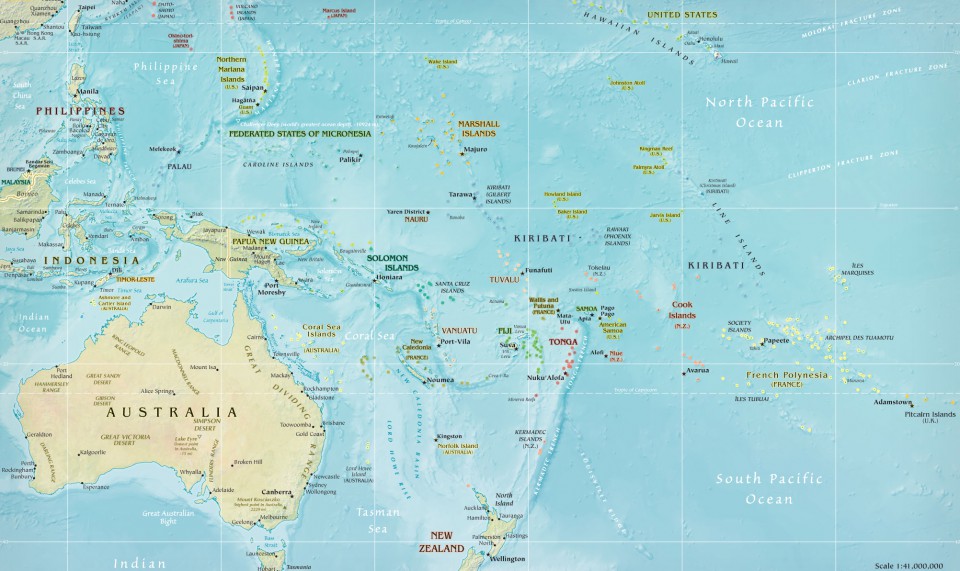
Since 2001 the Australian Psychoanalytical Society has been publishing the online journal ‘Psychoanalysis Downunder‘ dedicated to publishing articles, papers, book reviews and commentary by  psychoanalysts and others. It is offered free to the general community as a contribution to its intellectual life. One is able to read, and think, at one’s leisure.

The release of ‘Psychoanalysis Downunder # 13, under the editorship if Shahid Najeeb who has been doing the job for some years, co incides with a new and revamped website. The adventure implicit inhaving its own facebook page now provides another space for feedback and discussion. Will a Twitter account be next?

The existence of Psychoanalysis Downunder  reflects a long tradition of purveying and discussing Freud’s and others’ ideas. Psychoanalysis, as this blog also reflects, has long woven its way through Australian culture, in the cities and the bush since the first decade of the twentieth century when Dr Donald Fraser wrote to Freud about a reading group on psychoanalysis and, two years later was part of a group of medical practitioners who invited Freud and Jung to present at the Australasian Medical Congress. From then, as Joy Damousi sketched  out in her 2005 book, Freud in the Antipodes, psychoanalysis entered the fields of education, psychology, theology and philosophy. The Australasian Journal of Psychology and Philosophy, first issued in 1923 under the editorship of Sir Francis Anderson, Professor of Philosophy at the University of Sydney, published articles about psychoanalysis and mental life. The journal was the organ of the Australasian Society of Psychology and Philosophy which had branches in the major capital cities in each Australian state as well as in regional  areas. It seems to have faded away after WW2, but the idea of enabling ideas to be transmitted across vast distances remains.

Australians have always had to manage distance. The network of regional papers and newservices across the country responded to people’s hunger for what was going on in other parts of the world but also kept them up to date with intellectual and social developments. More specifically,  during her visit to Australia in 1937, British psychoanalyst and educator, Susan Isaacs, not only was well received by city audiences but, to her delight because women in England did not do such broadcasts, was given the opportunity to broadcast her talks about child development through the radio so that country – rural and regional families – could also listen. It was an initiative of the Country Women’s Association in Queensland, and repeated in the southern states as the New Education Fellowship Conference, which hosted her visit made its way across the country, through Sydney, Melbourne, Adelaide and Perth from 1 August 1937 to 20 Setpember 1937.

Here are the contents for edition # 13:

*John McClean ‘Basic Assumptions And The Training Analysis’

*Maurice Whelan: ‘The Space We Occupy and The Space Where Others Reside’

*Maurice Whelan: ‘Love of the World’

*Paul Schimmel : ‘Outside of Time’

*Shahid Najeeb: ‘In Praise of Fireflies’

*Shahid Najeeb: ‘Sand, Surf and Sky’

The journal also reflects some of the life within Australian psychoanalysis marking changes wrought, sadly, by the passing of colleagues.

*Gil Anaf:  “R S Gillen – Analyst in the frame.”    and

*Celia Pickworth:  “Ron Brookes – Remembering the Sydney “bush” psychoanalyst.”

And book reviews, of course, are form part of the project:

*Maurice Whelan:  Review of Paul Schimmel’s “Sigmund Freud’s Discovery of Psychoanalysis: Conquistador and Thinker.”

*Tom Wilmot: Review of Domenico Nesci’s “Multimedia Psychotherapy: A Psychodynamic approach for mourning in the technological age”

Psychoanalysis has made a considerable, but it seems, hidden  contribution to Australian culture and life.. and as you read through the journal over the years, it reflects something of the response of its authors and readers to the uniqueness of Australian conditions. Here are the links, this time not in text:

http://www.psychoanalysisdownunder.com.au/

https://www.facebook.com/psychoanalysisdownunder?fref=photo

Distance Psychoanalysis by Ricardo Carlino

I reviewed Carlino’s book early in the life of this blog, here at https://freudinoceania.com//?s=Distance&search=Go

I think it is exceptionally relevant for Australian conditions where there is an inequity in the availability of psychotherapeutic interventions between metropolitan and regional and remote-rural Australia.
Here is another review by Psychoanalyst, Luisa Marino.

Editor's avatarLUISA MARINO, PSYCHOANALYST, LONDON

Image

In this remarkable book Ricardo Carlino (2011, Karnac books) argues that psychoanalysis not only can be applied in a different way from the classical freudian setting, but also courageously tracks the deep meaning of the changes and the paradigms implied in the use of contemporary technologies in this field.

For distance psychoanalysis he means together with a considerable part of the contemporary community of analysts, all those different frames that imply that patient and analyst are not in the same room, but somehow distant in the space. For instance, when we deal with a telephone session, a skype session, with or without the use of the camera, or email exchanges, as well as an entire analysis or a psychotherapy started or continuing using these technologies.

As in the best psychoanalytical tradition he starts to investigate these new methods considering the resistances that they may encounter, specifically among the colleagues themselves…

View original post 298 more words

Australian Psychoanalytical Society Open Days, Melbourne, 5th and 6th Setpember 2015

This year’s Australian Psychoanalytical Society’s Open Days – Contemporary Psychoanalysis: A Treatment for Our Times, will be held in Melbourne, at the RACV Club, 601 Collins Street, Melbourne on 5th September 2015 and will be followed by clinical workshops and the opportunity to experience a Balint Group on 6th September 2015.

The conference will examine the role of psychoanalysis in treating serious mental disorders including those which underpin terrorism and fundamentalism.

The Keynote speaker is Professor Rudi Vermote M.D, (psychiatrist, and psychoanalyst [Belgium] and distinguished guest speakers Mr Neville Symington and Dr John Boots.

A link to the preliminary announcement and further details can be found here.

Psychoanalytic Filiations: Upcoming UCL events on history of psychiatry and psychoanalysis

Here is an opportunity to attend two  seminars, the first about the history of trauma and the second, about Ernst Falzeder’s new book, ‘Psychoanalytic Filiations: Mapping the Psychoanalytic Movement’ ( Karnac), at University College London on 18 July 2015. It is not so easy for Antipodeans, at such short notice, to merely pop on the plane to visit London for a week or so just to attend these events, but if one was in the area….! One could certainly dip into Falzeder’s book! Or, in the light of current historical interest about the Great War and Gallipoli  explore further the way trauma has shaped psychiatry in the Oceania Region.

An interview with Falzeder about his work, published in Cabinet magazine, is located at this link:http://www.cabinetmagazine.org/issues/20/falzeder.php

Falzeder’s work prompts reflection about Australia’s own psychoanalytic genealogy and the way this has shaped the psychoanalytic stance and thought. How has the Hungarian School, Ferenczi and Clara Geroe’s analyst, Michael Balint shaped the approach to analysis in the eastern states? What is the influence of Anna Freud in Western Australia? As the children of Empire returned from England after training as Kleinian analysts  and therapists during the 1970s, another wave of thought washed across the continent. And as psychoanalysts arrived from Argentina in the 1970s, Lacanian analysis provided another trajectory of thought. More recent, perhaps, is the turning to indigenous thought and philosophy for what we can learn about the mind.

Alexandra Bacopoulos-Viau's avatarh-madness

Two upcoming events at the UCL Centre for the History of Psychological Disciplines:
PROFESSOR MARK MICALE: A GLOBAL HISTORY OF TRAUMA
UCL, Tuesday 16th June 2015, 6-7.30pm

Historical trauma studies continue to burgeon, but the work in this
flourishing field of scholarship is derived from a small number of
purely Euro-American catastrophic events, which serve as historical and
psychological paradigms. Micale, who contributed to earlier debates in
the field with his edited collection Traumatic Pasts: History, 
Psychiatry, and Trauma in the Modern Age, 1870-1930, argues that
scholars need now to look beyond the West toward a new, more genuinely
global perspective on the history of trauma. He focuses in particular on
new research being done about Asia.

PSYCHOANALYTIC FILIATIONS: MAPPING THE PSYCHOANALYTIC MOVEMENT
UCL, Saturday 18th July 2015 2-6pm

How does one write the history of the psychoanalytic movement? This
event marks the publication of Ernst Falzeder’s book, Psychoanalytic
Filiations:…

View original post 237 more words

Susan Isaacs and The New Education Fellowship Conference, August, 1937

Tags

, , , , , ,

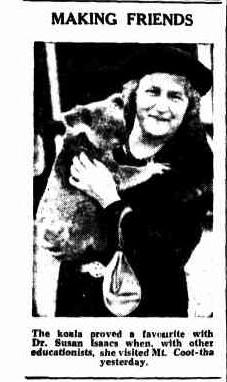
Susan Isaacs’ visit to the Antipodes in July, August and September 1937, occupies little more than several pages in biographies about her life and work published so far. But for Australians and New Zealanders it was a rare opportunity. Isaacs’ visit was larger than the New Education Fellowship Conference of which she was a key lecturer even through The conference itself was one of the most significant events in interwar Australia. Throughout the press across Australia Isaacs is recorded as speaking to full houses. She is the delegate who is chosen to be photographed with a koala. Her reunion with her sister after eighteen years would have touched many people who had long left family and friends behind in England. There was something very appealing and human about Susan Isaacs.

susan isaacs 1937

The Telegraph, (Brisbane)  7 August 1937, p. 8

It is hard to write a biography, or any historical work without access to sources.  Inevitably much of the focus in Isaacs’ biographies, of course, is upon her development as a psychologist and teacher in England during the 1920s and 1930s and, from the mid 1930s, as a psychoanalyst. She had completed her initial training and gained full membership of the British Psychoanalytical Society in 1923. In 1927 after meeting Melanie Klein, she entered analysis with another analyst Joan Riviere so as to understand for herself the meaning of Kleinian thinking. Her ability to  argue for the  importance of Klein’s position during the ‘Controversial Discussions’ within the British Psychoanalytical Society during the  early 1940s, and show that unconscious phantasy influences daily life in all people, also led to her seminal paper, ‘The Nature and Function of Phantasy’, published in the International Journal of Psychoanalysis in 1943.

Isaacs visit to Australia could be said to have been a significant event in her life, if not her development. Travel was hard in the 1930s. The effort and time needed   meant that such journeys to Australia from England for short periods as several months rather than several years were rare. And Australia was so far away. Dorothy Gardner, Isaacs’ first biographer and a former student, may have suffered from lack of access to sources. Although her visit to Australia is well documented in Australian newspapers, Isaacs did not keep such press clippings for posterity. Had she done so, Gardner would have found records of her speeches, her social engagements and most significantly for Isaacs, her reunion with her younger sister, Alice, who had emigrated to Australia with her husband eighteen years earlier. Gardner’s 1969 account generally highlights the opportunity for Isaacs to renew friendships in the United States. Gardner relates that in New York Isaacs was the guest of the Child Study Association and had the opportunity to travel to Berkeley in California where research was being carried out. In New Zealand Isaacs lectured to audiences in Auckland and Wellington, and Gardner guesses, ”she certainly visited Christchurch and probably the other cities” (p. 116).She was greatly admired by Mr Campbell, the Head of Education in New Zealand, but there is little information about the issues that concerned New Zealand, and Australian, audiences that had resulted in such interest in her work.

Philip Graham, Isaacs 2013 biographer, has little more detail to add. He notes that several delegates, including Isaacs, did not hesitate to criticize the Australian education system. Their recommendations were taken up and used to reform Australian education so that it became more relevant to the two countries, he continues. An important point, also underlined by historian John Godfrey in his 2004 article on the Conference, is the very strong interest in the conference among the Australian public. One motivation for the Conference was the recognition among educators, government and politicians that Australian education was in need of revival.  In his introduction to the Conference proceedings, K S Cunningham of the Australian Council of Education Research, noted that ‘owing no doubt to our remote and somewhat sheltered situation in the world, we had failed to keep up with this forward movement that featured in other parts of the world. This stressed the liberal view of the school’s function in a democratic community, and ‘a recognition of how great a part popular education must play in promoting, not only the well being of individuals, but also the security and well being of nation as a whole’, (Cunningham, 1938, p. 1). Godfrey’s article might be ‘breathless’ in tone, as Graham caustically remarks, but for those in the Antipodes, the conference was part of a larger process of developing Australian nationhood. Rather than remaining dependent upon the old country for direction, Australian educationists sought to develop a system suited to local needs.  The critique provided by Isaacs and her colleagues was sought, if not understood to be part of the arrangement during their visit.

Isaacs was chosen for this role because she was  known to Australian audiences for her work as Principle of the Malting House School where she used the opportunity to record the children’s play and conversations – the basis of her books,  and Intellectual Growth in Young Children, were favourably reviewed in education and psychology circles. In January 1933 the West Australian newspaper published a reviews of The Nursery Years and The Children we Teach was a shorter version of Isaacs’ The Intellectual Growth of Young Children,  was reviewed by  a month later.  Although not named, the author of both items was likely to have been either Professor Cameron, Head of Education at the University of Western Australia or Professor Fowler, who led the Psychology department.  Isaacs’ book, ‘Social Development in Young Children also carefully reviewed in the West Australian, in November 1933. Isaacs’ points, that children had individual, emotional lives of their own, that all behaviour had meaning and that this could be understood in terms of children’s psychical development and internal phantasy life, were new ideas for people brought up with the notion that the task of a parent was to train and mould children into adulthood.

It is not as if Isaacs’ ideas about education were unknown, generally. When South Australian psychologist and educationist, Lois Allen returned in 1928 after nine years in England, her experience as a teacher at Malting House for two terms  was impressed upon readers of the Adelaide News. Allen stressed the recognition and enablement of the differing abilities of each of the children.  Perhaps this idea was not as ‘taken for granted’ in 1928 where rote learning was the norm, as it is in the twentyfirst century.  Malting House, Allen explained,

was a small experimental school for research and the children were between three and eight years of age. The object was to study the problems of children with a view to making better use of the natural curiosity with which those this age are endowed. They were allowed to investigate the realities of nature and had a little laboratory where they experimented with crucibles, bunsen burners, and so on, so that knowledge of scientific phenomena might be instilled in the early years. Among the children was a grandson of Sir Ernest Rutherford, the noted physicist. It was most interesting to notice the extreme difference between the children, and to observe the trend of each mind towards artistic or scientific subjects.

Isaacs had her own reasons for accepting the invitation to visit Australia from the Australian Council of Education Research. Professionally she was interested in Aboriginal culture and what might be learned about the human mind. She was deeply familiar with the work of Geza Roheim and later lectured on this to students of psychoanalysis. A second, more personal reason was the opportunity to see her younger sister Alice who had emigrated to Australia shortly after her marriage eighteen years earlier. The two travelled together for part of the tour, at least and in Brisbane stayed together in accommodation at the Women’s College at Kangaroo Point. Isaacs had been ill with cancer during 1935 and 1936. It was a rare opportunity to see her beloved sister and to take time from her psychoanalytic  work.

There were opportunities for Isaacs, too. She had the opportunity to broacast several of her talks to people living in remote rural areas – the outback. At the end of her Brisbane stay Isaacs reflected that

In England, there Is not such a thing as a woman radio announcer, and one- of the ‘moat pleasant recollections I will take away from Queensland will be of a broadcast talk I gave from the national station to the Country Women’s Association last Thursday, during which I had how wisely the Influence of the women’s session was being used to benefit the women of Queensland.

There were further opportunities for radio broadcasting, in Victoria, South Australia and Western Australia. She was awarded an Honorary Doctorate from the Universty of Adelaide. Perhaps Isaacs’ appeal, along with the intellectual integrity she brought to her work, was that she spoke to people about the very real concern of raising children. Her efforts to translate complex psychological ideas into plain English, the research which underpinned her analyses and her preparedness to communicate in a variety of ways contributed to peoples’ desire to learn more about thinking, human development and relationships. She spoke about infant development, telling audiences about the investigations that were occurring into the mental life of infants. Her concern, to help people to think about children’s behavior, found audiences in unexpected places.

REFERENCES

BOOK REVIEWS. PSYCHOLOGY OF CHILDREN. “The Children We Teach,” by Susan Isaacs, M.A., D.Sc. University of London Press.The West Australian (Perth, WA : 1879 – 1954) Saturday 21 January 1933 p 4 Article

BOOK REVIEWS. (1933, February 25). The West Australian (Perth, WA : 1879 – 1954), p. 4. Retrieved June 4, 2015, from http://nla.gov.au/nla.news-article32488480

BOOK REVIEWS. (1933, November 25). The West Australian (Perth, WA : 1879 – Preview Post1954), p. 4. Retrieved June 4, 2015, from http://nla.gov.au/nla.news-article32774408

Psychology of Infants. (1937, August 4). The Telegraph (Brisbane, Qld. : 1872 – 1947), p. 9 Edition: CITY FINAL LAST NEWS. Retrieved June 4, 2015, from http://nla.gov.au/nla.news-article184565332

When a Child Is Obstinate And Defiant. (1937, August 5). The Telegraph (Brisbane, Qld. : 1872 – 1947), p. 10 Edition: CITY FINAL LAST MINUTE NEWS. Retrieved June 4, 2015, from http://nla.gov.au/nla.news-article184565910

The Telegraph, ( Brisbane, Qld: 1872-1947) Saturday 7 August 1937, page 8, http://nla.gov.au/nla.news-article184564179 accessed 3 June 2015.

Cunningham, K S, ed; (1938), Education for Complete Living: The Challenge of Today – The Proceedings of the New Education Fellowship Conference held in Australia August 1, 1937 – Setpember 20, 1937, Melbourne, Melbourne University Press, 1938.

Gardner, D E M ( 1969), Susan Isaacs: The First Biography, London, Methuen Educational Ltd.

Godfrey, Johm (2004), Perhaps the most important and certainly the most exciting event in the whole history of education in Australia. History of Education Review, 33, 45-58.

Graham, Philip,( 2013) Susan Isaacs: A Life Freeing the Minds of Children, London, Karnac

Paedophile Priests and the Current Royal Commission into Institutional Responses to Child Sexual Abuse –

Tags

, , , ,

The Royal Commission into Institutional Responses to Child Sexual Abuse has been proceeding around Australia for the last two years. What is striking, as Historian and Australian Research Council Fellow, Tim Jones notes, is that the authorities deny any knowledge of the level of sexual abuse occurring within the walls of their institutions, or in the case of Aboriginal Missions, from amongst the missionaries. The word of an Aboriginal person was not to be taken seriously in the nineteenth century and until, it seems, the Commission’s hearing in Darwin in September 2014. So too were the allegations of state children who suffered abuse at the hands of trusted priests and clergy whom they had been taught to revere.

Another vexed area is the management of allegations that reached the ears of police or government. Some instances were concealed as I suggest in this article  about the Aborigines Inland Mission. Of course the perpetrators were dismissed, but little was done for the children concerned and such matters were never discussed again, let alone recorded in any potential archive. The result, that subsequent generations of managers have been forced to defend the indefensible, is part of the tragedy that is unfolding.

In the last fortnight the Royal Commission has been hearing from residents of the Ballarat Catholic Boys Home in Victoria. The boys, it is alleged have been victims of a broader coverup by the Catholic Church which, as Tim Jones, shows in this item published in Melbourne’s The Age today, has begun to be reframed as ‘sin’ father than what it is, ‘a crime’.

The Radical Australian Journalist and the American Psychiatrist: Cyril Pearl Interviews Dr Anita Muhl – 1938

Tags

, , , , , , , , ,

Late in 1938 the American psychiatrist Dr Anita Muhl arrived  in Melbourne for a three year contract to teach and lecture about child development and children’s problems. It created something of a stir amongst Melbourne’s auxiliary ladies fundraising groups and the medical, teaching and welfare fraternities.  Her appointment was  something of a coup for her sponsor Una Cato, who undertook to fund Muhl for the entire period of her stay. Cato, whose father had made his fortune as a grocer, was dedicating her philanthropic effort to the psychiatric field.She later trained as a psychiatrist. Too.

Under the terms of her agreement and in accordance with legalities concerning the registration of overseas trained medical doctors, Muhl was not able to practise as a psychiatrist. Instead she took over the directorship of the “Association for the Understanding of Human Adjustments’ founded by Cato. She brought a library of books and journals  especially for her visit – even though war had been declared. Australian customs officials  confiscated these books  pending further inquiry. They were returned  after representations were made through the United States Embassy in Canberra.

Over the next three years Muhl’s  lectures and tutorials on human development were given to interested groups – legal, medical, nursing, teaching professionals; hospital auxiliaries, medical students and welfare professionals.  She was available to the general public through radio broadcasts, letters, newspaper reportage and, not surprisingly through the very well known women’s paper The Australian Women’s Weekly. The ‘Weekly,’ now part the National Library’s digitsied, online newspaper collection, TROVE provides a rich insight into contemporary issues about Australian family life. Amongst its reportage were items on child development, psychology and education, as well as broader political and social commentary on the issues of the day. It is not surprising that Muhl was profiled in an illustrated article published in November 1938.

What is surprising is the choice of author.To twentyfirst century readers the  journalist Cyril Pearl  seems an unlikely choice for a subject of this nature. His leftist views were known even then. He was about to  take up an appointment as the Editor of the Sydney Daily Telegraph and in this capacity  challenged the government on its censorship laws in 1942. His radicalism subsequently matured into membership of the Communist Party and, amongst other things the production of a body of writing about working class Australian culture. After his resignation from the Telegraph he pursued a career as a historian and writer. Pearl’s 1970 biographical study, Morrison of Peking, about The Times Peking correspondent and, from 1912 later political advisor to the newly formed Chinese Government, drew considerable controversy and the attention of the Australian Security Intelligence Organisation ( ASIO). Pearl’s ASIO file reveals little other than the opinion of his comrades that he drank too much.

Pearl’s interst  may have been Muhl’s views on psychology as a tool for social change and, perhaps, the question about how it was that a ‘well bred’ American girl could come to hold the views she did and travel as widely as she did. Framing Muhl’s professional identity as a medical practitioner and psychiatrist  with contemporary notions of femininity: she was once a ‘little blue-eyed girl who  wanted to know how things worked’, he highlighted her own version of advocacy for social change. She became an adult woman with a distinguished career who, despite her achievements was’ still curious’ and ‘whose eyes were still blue’. It is the kind of stuff that would hardly go down well with feminists these days even though Muhl typified the ‘new woman’ of the twentieth century American middle classes. Like many of her contemporaries in the social columns of the daily papers, her life as a single woman, was centred upon home with her parents. She was educated, had travelled to exotic places about which she was prepared to lecture, but her identity and moral conduct also rested in this family circle. But her views resonated with Pearl’s vision for a better, and more just society. Pearl’s interest was in her committment to the  the use of psychology and psychiatry as part of a broader response to emerging social dislocation amongst young people in industrialised societies such as America and Australia.

Unlike a newspaper with a life of a day, the Weekly was distributed Australia wide with a potential life of more than a week as it was passed between family members, friends and relatives for reading. By the 1930s psychology was well established as a subject at university and teaching training colleges. Almost everyone had heard of Freud and the idea of the unconscious and whether they were conscious of it or not, the recasting of the child in psychological terms was well established. During 1937 the New Education Fellowship Conference had traversed the continent. The twentyone delegates had presented lectures in each of the capital cities. One of them, Susan Isaacs, the British Psychoanalyst and Educationalist, had been a key speaker, drawing large audiences to her lectures as well as a multitude of listeners to her radio broadcasts. Her message, that child behaviour is to be understood as a communication at an emotional level, was part of a broader psychological recasting of the nature of childhood and the responsibilities of education and parenthood. Anita Muhl’s visit, following so soon after this event, was important enough for wider reportage than the local metropolitan press. Perhaps Pearl held the view that Muhl’s Australian sojourn was part of this process of enlightenment.

REFERENCES

Anita Muhl, Correspondence, 1938-1942, State Library of Victoria, MS MS 11459

WORLD’S No. 1 School TO MEET. (1937, April 17). The Australian Women’s Weekly (1933 – 1982), p. 24. Retrieved May 26, 2015, from http://nla.gov.au/nla.news-article52246132

Youth Saved From Life of Crime. (1939, January 28). The Australian Women’s Weekly (1933 – 1982), p. 14. Retrieved May 9, 2015, from http://nla.gov.au/nla.news-article51591527

Cyril Pearl ( 1970) Morrison of Peking, Penguin Books.