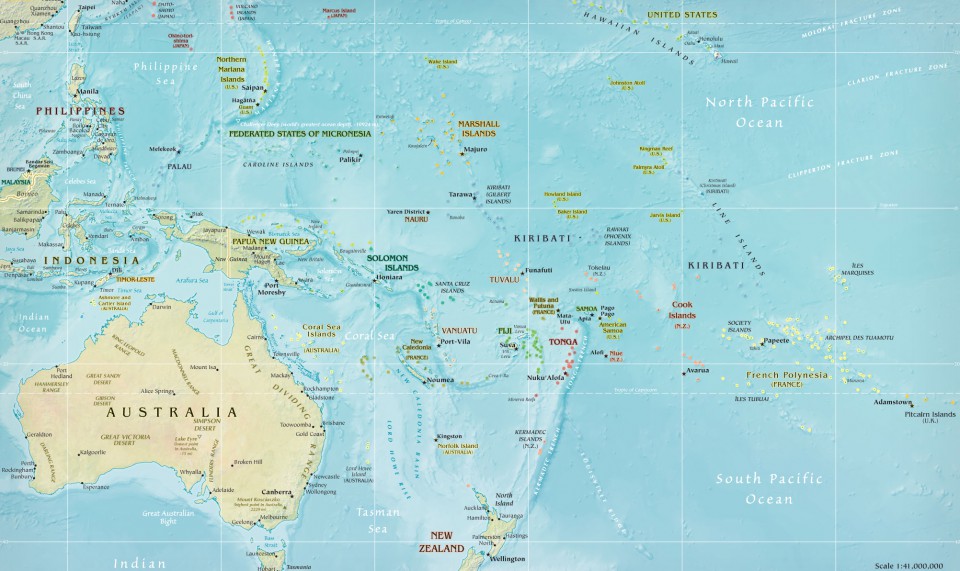
• About

Freud in Oceania

~ Histories of psychology and psychoanalysis in the Oceania region

Freud in Oceania

Author Archives: Christine

Review: ‘Ink in her veins: The troubled life of Aileen Palmer’.

21 Sunday Aug 2016

Posted by Christine in Book Reviews, Poetry, Psychiatry, western australia

≈ Leave a comment

Tags

Aileen Palmer, Biography, mid twentieth century psychiatry, refinding women poets and writers, Vance and Nettie Palmer, volunteers in Spain in the 1930s

Sylvia Martin, Ink In her Veins: The Troubled Life of Aileen Palmer, University of Western Australia Press, 2016.


It is difficult to not turn away when someone’s life is not working out well. It’s easier to shun. Work colleagues, unable to cope with difficult behaviours, might ease the person from their midst. A family might  banish that brother, sister, son or daughter to a silent place. When respectability is everything  mental distress can shake  to the core.

Sylvia Martin takes us into these shadowy silences in her biography of Aileen Palmer, a translator and talented poet and novelist. Plagued by mental illness  during the second half of her life- or was it, in part, the mental distress of wartime trauma? – Palmer never truly flourished as a writer despite the talent of her youth. Instead  she remained within the protective cowl of her family: her parents, the writers Vance and Nettie Palmer and her sister, Helen Palmer. Regarded on a par with royalty in the Australian literary world from the 1930s the Palmers  moved with socialistic, communistic elite. They held a central place in Melbourne’s literary circles which included Clem Christesen, the founder editor of the journal Meanjin, his wife, Russian born, Nina Maximov Christesen who launched the study of Russion and Slavonic Studies at the University of Melbourne and the historian Brian Fitzpatrick . Nettie Palmer’s biography of the writer, Henry Handel Richardson certainly underlined Richardson’s importance as an Australian author who centred her work  on the colonial experience and the vexed question of identity. The author Katherine Susannah Pritchard was  a presence in Palmer family life – and a mentor to Aileen.   Vance Palmer’s books: The Passage published in 1930 and The Rainbow-Bird and Other Stories, published in 1957 sold more than 50,000 copies each between 1959 and 1974. The Passage found its way onto high school reading lists.  Helen Palmer, an educationalist, sometimes poet and, along with her sister,  a member of the Communist Party , also has a place in the Australian Dictionary of Biography, in a biographical written by fellow Communist Party member, Robin Gollan a historian of the Australian left. Aileen, it seems, was put away. Until Sylvia Martin found her.

Aileen Palmer was born in 1915, Helen in 1917. At the time her parents were struggling to make their living from writing. Neither had an independent income: both came from middle class families.  Nettie’s own background centred upon the Baptist Church where good deeds were prized over monetary gain.  Vance’s family valued respectability and decency.  Rebellion, if that was what it was, did not venture much beyond these bounds despite the couple’s professsed political radicalism. Neither entirely came to terms with Aileen’s choices including her sexuality. Both sisters appear to have struggled against the strictures of their parents’ iron grip. Aileen was the one who did not get away.

When Aileen was a small child the family moved to Queensland  so Vance and Nettie could afford to live on their writing. During her teens  she attended Presbyterian Ladies College in Kew, Melbourne,  and went on to the University of Melbourne to study French literature along with German, Spanish and Russian. She graduated with a first class honors degree in French in 1935. All the while she wrote. Her semi autobiographical novel, ‘Poor Child’, was written during her late teens, explored her passion for a beautiful teacher – part of a rite of passage as she grew into adulthood. At university she was part of a friendship group of women whose political and literary views, if not their sexuality, appealed to her. Aileen was a young woman in formation – using the space that university life provided to explore ideas and identity.

After her graduation the Palmer family  went first to England where Aileen immersed herself in the local politics. She travelled alone to Vienna working as a translator at the while Hitler’s fascism asserted its power. She rejoined her family in Barcelona at the time of the July 1936 insurrection. After her parents departure Aileen volunteered  for the Communist led International Brigade and worked as an interpreter at the English Hospital at Granén on the Aragon Front. She returned to London, and drove ambulances during the Blitz. She appears to have had a serious love affair with ‘B’, who while never identified, appears to have been a woman. Nettie Palmer, her mother, may not have known about this even though, Martin notes, Aileen’s preference for women was clear.

Aileen’s years in Spain and London were the time of her life. It ended in 1945 when she returned, reluctantly, to Australia at her sister’s request after her mother suffered a mild stroke. Helen promptly moved to Sydney leaving Aileen with their parents in Melbourne – subject to their ways that stifled Aileen’s creativity and sexuality. Nor did the milieu in which she lived help.  Aileen’s life was built upon the conventions, constraints and assumptions of elder daughterly duty. Unable to reconcile herself with unconscious strictures  within her family’s life, Aileen broke down. She became an alcoholic; her mind snapped, and for the rest of her life she was admitted to hospital for long periods where she  was treated with new and experimental forms of psychiatry. She attempted psychoanalysis and tried to write.

But this writing, unlike her juvenilia, was often designated the product of a mentally ill person with signs of manic behaviour (p. 276)  and was not taken seriously. Martin does not agree with this view. Nor, eventually, did her sister who began to see the beauty in Aileen’s poetry, and the rhythms and cadences of her writing ( p. 276). Aileen was able to put her emotional experience into words, Martin says. Is it that the clumsiness of psychiatric treatment of the day has obscured talent? This is not to say that the treating psychiatrists were ignorant of such qualities in their patients. But  good work has been lost even if talent has not been undermined. I have heard of paintings, given to carers in gratitude by such talented people, destroyed because they were  thought of as ‘mad art’. Fortunately someone was wise enough to keep Aileen’s work and donate it to a library.

Martin’s  archival mining has produced a number of Aileen’s poems including this one: ‘The dead have no regrets‘ read at the 2016 commemoration of the British and Irish volunteers who went to Spain from 1936 to 1939.


Maybe Aileen Palmer absorbed her mother’s ambivalence  about the entire literary enterprise. Palmer had put aside her poetry Aileen was born. She hoped, too, that her daughter would not have ‘ink in her veins’ suggesting that her experience as an author had led her to conclude that a writer’s life was not a desirable one. Palmer continued to write and promote other authors, helping describe Australian literature to the rest of the world and Australia itself.

Aileen may not have known, consciously, of her mother’s doubt, but absorbed it, as if by osmosis.  She wanted more than anything to be remembered as a poet, Martin writes. But  her mother’s injunction, internalised from the the cradle, confused her.  Her more emotionally robust younger sister was not as encumbered. Nor did she suffer, as Aileen did, the mental illnesses that also plagued their uncle, ‘Wob’, Vance Palmer’s brother.  When Aileen finally published her book of poetry, World Without Strangers, it almost co-incided with her mother’s death in 1964. As if by then, Martin writes ‘she could cast off her mother’s shadow’. ( p. 265).

While Martin’s portrait of Aileen takes us into the Spanish Civil War and to the London Blitz, her writing about  1940s and 1950s Melbourne intellectual circles adds much to the historical record. In 1940, true to form for she was always in the front line when it came to doing good,  Nettie Palmer volunteered to assist with the Victorian International Refugee Committee and began teaching English to newly arrived Europeans refugees – among them doctors and architects. One of them was Melbourne psychoanalyst, Hungarian doctor Clara Lazar Geroe who had arrived in Australia in March 1940 with her husband and son after intense lobbying  by a group of doctors and their supporters. These included   Sydney psychoanalyst Roy Coupland Winn and in Melbourne, Paul Dane, Norman Albiston, Reg Ellery and Guy Reynolds. These were Melbourne’s leading psychiatrists working at a time when new ideas and treatments were developing: electroconvulsive therapy, insulin treatment and other medications. Such methods were revolutionising psychiatric treatment – particularly for those suffering psychotic illnesses. Ostensibly  this new medication relieved symptoms enough for people to be treated on an outpatient basis, rather than incarceration. But not without severe side effect and wild experimentation such as the sleeping cure; with lithium where learning about side effects was part of the process. Patients still had long spells in hospital: but months rather than years. At times treatment must have felt worse than the illness. And if Aileen told her story about her life in Spain and England it appears that her carers regarded this as part of her delusional system. Martin relates these events without judgement. Rancour is left to the reader.

Even more so upon reading Martin’s account of Aileen’s psychoanalysis with Clara Geroe. Nettie Palmer had taught  English to Geroe – well enough for her to begin practising psychoanalysis in 1941. At this time Nettie recorded conversations with Geroe: about her frustration about her refugee life; her inability to move about the community without a permit and the prejudicial behaviour she had experienced at the hands of a police officer.  ” You say your’re a doctor! Can’t you read the rules? Says it’splain hatred of the intellectual”. ( p. 237).  Geroe’s dissatisfaction with her emigration and loss of her intellectual world is apparent.

Aileen was to remark that her treatment with Geroe did not help. In fact it made her more depressed, she said.  Geroe did her own bit of undermining. She employed Helen Palmer as a typist requesting that Aileen not be told. She seems to have wanted to be part of the Palmer’s lives. One wonders whether such fragments, recorded in Nettie’s diary, are clues to another story about Geroe’s longing to connect with the world she had lost. Was it that Geroe wanted to recover the place she had left behind in Budapest more than she wanted to practice as a psychoanalyst? Or was it that her ideas about psychoanalysis and how it is practiced are no longer in favour – if they ever were? Geroe was a long way from the land of her birth, training and the accountabilities these implied. Aileen, shocked by her Spanish and English experiences, and by her subsequent emotional collapse, appears not to have found the treatment she needed.

There is much to learn from this biography about a very troubled person who tried so hard. Martin’s accumulation of evidence, carefully collated, is written without judgment but all the while building a portrait of a woman interacting with her world, conscious and unconscious. I walked the streets Aileen. I rode beside her on the battle fields and stood watching, shocked while she pulled bodies from the rubble in London. And then there was the downhill slide…

I finished this book with sadness for a life and talent not realised. I wanted more for Aileen Palmer.  A biographer cannot do better.


Reference:

Deborah Jordan (2013), ‘In defence of Vance and Nettie’, Overland, No. 10, October 2013.

What is psychoanalysis? Explained.

17 Wednesday Aug 2016

Posted by Christine in western australia

≈ Leave a comment

My piece about psychoanalysis for the Australian edition of the online daily, The Conversation was published last Friday. It has had a good reception, I think. I will leave it to you to decide.

Here is the link.

”The Conversation’, by the way,  draws its authorship from academia. With the assistance of an excellent editorial team who tolerate the vagaries of non journalists writing journalism, it covers a broad range of issues with intelligence and depth.


Matilda’s Therapy – London, 1944

11 Wednesday May 2016

Posted by Christine in western australia

≈ Leave a comment

Session III : Thursday 18 May 1944

Matilda is living near Belsize Park Road, part of a community of German-Jewish refugees who had fled Hitler in the early years of the war. After a period working as a fire watcher during the Blitz she was employed as a clerk in an organisation assisting refugees.

Recently she has been romantically involved with  two men – Robert whom she met several months ago and Monty, with whom she has been going out with for a long time. Both are serving in the military forces in some way. It means they are away, overseas, for long periods.  There are long gaps between meetings.

She has been puzzled about her response to Robert with whom she had felt, upon meeting, that there was much to bind them together. Potentially. She had felt herself to be in love, but doubted her capacity for this. But then? She is writing in her second language, or her third. It is difficult to decipher meaning as a result. Her thoughts seem disjointed, her tenses are all over the place. She might be unable to write down her thoughts. The intense feelings are too much, maybe.  The mind, I think, is not an orderly space. She writes,

I have some of that feeling of panic and emptiness.  I vaguely feel that something is wrong with Robert and wonder at the same time whether this is not a projection on to him of my own vacillating emotions?  With Monty I feel warm and comforted in that warm and paternal presence, although I often come across traits that  disturb me: sentimental, self dramatising, petit-bourgeois. But there is a kernel which is good and comforting. It is not for me a feeling of ‘This is what I have been dreaming of long ago’, as it was when I met Robert, but it is positive nevertheless.

My thoughts and feelings got curiously merged; I did not know to whom my tenderness and my desire went… I was surprised how small and far away Robert became, and then again when I talked to Mother at Guildford there was only Robert. Now he is far away again. And I feel alone.

Yet I don’t want to break the physical aloneness. Why? Seriousness perhaps? Or [am I, to be honest,] merely husband hunting? I feel I must tread softly with Monty and feelings may develop. But in almost everything he does I compare him with Robert…

28th December 1943

Suddenly it seemed a terrific problem. Monty is intense and – I still cannot help feeling –  his somewhat self dramatizing letters which sweep me away on waves of emotion… leave me somewhat high and dry. And then again the knowledge that I don’t want him profoundly. That I am longing for Robert and yet might perhaps just as well give him up.

I feel I ought to marry but I don’t know why; that a lover seems preferable to a husband but at the same time needs more sefl confidence in me. That I wnat children but don’t want them now and am loth to accept the responsibilities…

Matilda’s journeys into inner London, to Harley Street to see Dr W, become central to her. She needs to explore these  quandaries – about men, lovers, marriage and, through her dreams, her experiences as a German Jewish woman, a refugee, in London. This is her third session with Dr W.

I tell him about my fainting fits.

W: The easiest way to escape facing a situation. There must have been an unconscious emotional crisis.

She then tells him about a dream about Robert, and her wish that W solve this problem for her. After all, H,  an old  friend, or perhaps another therapist,  was somebody who solved my problems for me.  W. wont.  

W:  We move round and around the same problem until we outgrow it. -We have found that Mother is a very great influence.

M : Why?  Because I open the door for her. Why do I?

Matilda does not seem to like the thought that her mother is so central to her.

Session IV: Tuesday 23 May 1944

Matilda tells Dr W about her reflections between the sessions…

Matilda: On the one hand I ask Mother about things I don’t really think her competent to . I ask her about small things and put the full responsibility upon her if things go wrong. On the other hand I don’t tell her anything at all and resent all… interference.

W: Both are symptoms of immaturity.

This comment stays with her long enough for Matilda to record. We do not know what transpired next. We are working with the gap between event and memory. What has been suppressed?

Matilda: I felt completely lost last Monday after leaving Robert.

W: That feeling can not be got rid of so quickly.

Matilda: Query: Was it sexual because of F.l?

I wonder whether she is referring to ‘Father Love’ here.  Is she beginning to doubt the reality of her connection with Robert, seeing it as a enactment of her internal life?

W: No.

Matilda: Dreams. Element of conflict. Mother on one side,  [her father?] on the other. Neither is myself….

Matilda’s diary is hard to follow. Like the analyst we must follow these residues of  her thought and find a pattern.  She seems to be freely associating as she converses with herself about herself and about her experience of Dr W.

She begins with two dreams – about a man on a bike and an association: Unsolved question: Who is the man I feel is interfering?

Dream about railway station: Conflict of wanting to make contact with Robert but not quite daring. There is a dream about a flower, her feelings; an element of the emotional  connection she is making with Robert.

W: I am not interfering in your relationship with Robert in any direction.

Matilda: I feel better about it since now I don’t feel I ought to marry,  and can carry on for the time being. There is probably a lot of egoism in it in that I want to keep him, (Robert) until I  can do without…


The doctor -patient relationship – 19th century writings

10 Tuesday May 2016

Posted by Christine in western australia

≈ Leave a comment

This is a guest blog by Alison Moulds, second-year DPhil student at St Anne’s College, University of Oxford. Her thesis examines the construction of the doctor-patient relationship, and the formation of a professional identity, in nineteenth-century medical writing and fiction … Continue reading →

via Representing emotion in the doctor-patient encounter in Victorian medical writing — The History of Emotions Blog

History of Mental Illness in Australia

05 Thursday May 2016

Posted by Christine in History of Mental Illness, western australia

≈ Leave a comment

Tags

history of mental illness in Australia, Katie Holmes, Mak Finnane, radio broadcasts

A very interesting interview today on  ABC Radio National – about the History of Mental Illness in Australia. Hopefully a transcript will be available soon. The link is below:

History of Mental Illness – Katie Holmes and Mark Finnane

A diary of an analysis 1: Meeting ‘Dr W’.

01 Sunday May 2016

Posted by Christine in 1940s, Case study, what happens in psychoanalysis

≈ 1 Comment

Tags

Ambrose Cyril Wilson, British Psychoanalytical Society, Case study, Diary

The patient, a woman aged 25 when the analysis begins, is a Londoner. I shall call her ‘Matilda’. Her diary begins in May 1944 and continues until the end of the war.

I met Matilda for the first time when she was in her eighties during one of her visits to Australia. Perhaps her awareness that I work as a psychotherapist prompted her to speak about her own experiences in analysis. He was a Jungian, she said. She recollected seeing him in the early 1940s, several years after her arrival as a refugee from Nazi Europe.

This is her first session. I will use italics for her actual written words.

London: Wednesday 10 5 1944

No couch – relieved. Comfortable chair. Fatherly, not very interesting man, looks more business than doctor.

‘Dr W’  asks for her name, age and about her parents whether they are living or dead. She has a brother and sister? and her work? Does she like it? and does she have a boyfriend? He asks her about her school and leaving Germany.

To her surprise he asks about my scar; thinks this is an important incident ( I had not mentioned it all, never thought of it). Asks whether boyfriend is ‘first and only’…what interests? Is graphology a deep interest?

Conclusion: No firmness, psychologically non-existent, swimming about. Thus no firm relationship is possible. Must become… ?  and develop firm feelings. It will take a little time.

I say I have no patience.

You must learn it, he says. It is like the growth of a plant. It cannot be rushed. One can work if one knows what for.

Dr W advises her not to talk to anybody about her analysis. He warns her that it disturbs the progress if a third person takes part. It is to be between the two of them. Matilda continues her reflection.

On the conscious level I seem all right. [The] problem lies somewhere else.  I have to find and keep… [the] secret of myself.

Matilda attends a week later. She full of dreams, ideas and associations. I do not know whether she has read Freud’s work? But here she is curious… it is as if she has begun the work.

Dreams  – underlying factors – She feels there is no basis, the diary records. She is running about in a terrrific inner muddle. Floating from one thing and one person to another.  She has put her bag on a chair – in a dream or in the consulting room? It indicates that I want to occupy a place somebody else has.

Dr W asks Matilda about her mother. She was distant and aloof when I was small and needed her. It made me suspicious of love and unable to accept it. He explains that there is the parallel with a  dog  who after being shut in a dark room, starved and beaten is coaxed by the same and other persons. He will be perplexed and run away. 

How frightened Matilda must have been when she was a little girl. She continues,

I mention the element of cheating that goes through my dreams. Dr W replies.. if I do not know who and what I am I cannot face [matters] and am bound to cheat.

*****************************************

Who, I wonder, is Dr W?  Matilda described him as a Jungian. If this is so, then  Dr Ambrose Cyril Wilson is a possibility. I find an obituary for him written by D W Winnicott in the International Journal of Psychoanalysis, vol 29, 1958, page 617. I have made inquiries and excluded Winnicott himself.

Wilson  was the son of Ambrose Wilson, headmaster of Melbourne Boys Grammar School in the 1890s. The family had travelled from London, to Cape Town then Australia before returning permanently to London where Cyril matriculated and decided to study medicine.

Cyril Wilson qualified in medicine at Barts in 1908. He served in the Army during WW1 and then had a stint as an actor. He was an early member of the British Society of Psychoanalysis from 1924.   He began analysis with a Jungian, Robert Young.  After two years he had transferred to Ernest Jones and thence to membership of the British Society after qualifying. After a period of financial strain during which he looked into analysis with James Glover, Winnicott continues,  Wilson was in  analysis with Melanie Klein for seven years. He was on the staff at the Society’s clinic, the London Clinic of Psychoanalysis until 1945.

The dates add up and the little bit of information Matilda provided about her analyst’s identity points to Wilson. As a refugee Matilda would have had some financial constraints upon her… it is not impossible that the London Clinic was her preferred option when she decided to seek analytic help.

Winnicott seems to have respected Wilson’s ability. He wrote of him:

Although Wilson never contributed significantly to psychoanalytic theory he did a good deal of original work on the paternal aspects of the superego. This he never assembled in written form nor could he be persuaded to write up his findings after his appointment by the Home Office to study homicide cases at the Broadmoor Lunatic Asylum.

Wilson had a fighting sense of rectitude, Winnicott continues. He gave himself almost solely to his patients, and was militantly independent and in the Society eschewed politics.  He was particularly interested in the treatment of offenders and was an early member of the Institute for  Study and Treatment of Delinquency and in the final stages of his career a consultant to the Portman Clinic in London.

I am intending to follow Matilda’s progress session by session, placing it alongside  historical material that could help contextualise her experience. It is a glimpse into the world of British psychoanalysis in the last years of the war … It will be interesting to see what happens.


Robert Kenny’s Essay: ‘Freud, Jung and Boas: the psychoanalytic engagement with anthropology’. revisited,

02 Saturday Apr 2016

Posted by Christine in Anthropology and Colonialism, western australia

≈ Leave a comment

Tags

ethnohistorians, History of psychoanalysis, Intersubjectivity, interultural history

Robert Kenny, an Australian scholar, poet and writer, has a paper entitled, ‘Freud, Jung and Boas: the psychoanalytic engagement with anthropology revisited’, in the June 2015 edition of the journal Notes and Records: The Royal Society of the History of Science.  It is a cogently and carefully written piece challenging accepted interpretations, if not wisdom, about Freud’s development of his social theories in the 1910s. The essay is part of a larger project Kenny has been working on since, at least, the publication of his book, The Lamb enters the Dreaming: Nathanael Pepper and the ruptured world in 2007.

Kenny’s argument centres upon Freud’s and Jung’s visit to the United States in 1909 to attend and lecture at a Congress at Cark University.  It is no co-incidence, Kenny argues, that their encounter with  the personage and the anthropological  work of Franz Boas, who also lectured at the  Congress, that there was a shift of focus to anthropological interests in the months and years immediately afterwards. In his lecture, Kenny writes, Boas challenged social darwinist ideas placing humanity of a scale of development from savage to civilised, arguing that culture was a response to environment and, essentially, throwing Spencerian theory out of the window. This culminated, in Freud’s case, the publication of Totem and Taboo and in Jung’s his book, Transformations. Kenny’s abstract reads:

Sigmund Freud’s and C. G. Jung’s turn to evolutionist anthropological material after 1909 is usually seen as a logical progression of their long-term interest in such material. It is also seen that they used this material ignorant of the significant challenges to the evolutionist paradigm underpinning such material, in particular the challenges led by Franz Boas. This paper argues otherwise: that both psychologists’ turnings to such material was a new development, that neither had shown great interest in such material before 1909, and that their turnings to such material, far from being taken in ignorance of the challenges to evolutionist anthropology, were engagements with those challenges, because the evolutionist paradigm lay at the base of psychoanalysis. It argues that it is no coincidence that this engagement occurred after their return from America in 1909, where they had come into first-hand contact with the challenges of Franz Boas. 

Analysis of cultural subjectivity is central to Kenny’s historical writing. Very much influenced by the ethnohistorians, Greg Dening, Rhys Isaac and Inga Clendinnen, Kenny’s 2007 book, The Lamb Enters the Dreaming, traced the life of  Nathanael Pepper of the Wotjobaluk people, who was born as the first white pastoralists were driving cattle and sheep into Victoria’s Wimmera region. The book opens one’s mind to the ways these pastoralists and the Wotjobaluk people thought about and responded to one another. Following Dening’s analysis of the encounter with cultural specificities across time and place Kenny argues for recognition of the respective, and unconsciously held, subjectivities of the pastoralistd and Wotjobaluk. If the social unconscious is framed by those unconsciously held constraints and restraints that shape action and response: if neither pastoralist or Wotjobaluk were able to find in the other affirmation of preconceptions shaped and held from birth, then it would have been difficult for either side to recognize, let alone think about the other, other than in their own terms.

Kenny’s latest essay opens further the question of how  unconsciously held European subjectivity – particularly the formation of darwinist theory – influenced the way the development of the mind and the social was understood. Boas provided the inspiration and impetus to look at accepted ideas more closely, if not to see them in the first place.  And in that sense Kenny’s essay also adds to a growing body of writing – Rudnytsky comes to mind – recovering the voices and writers that ultimately, and also found expression in Freud’s work.


References

Greg Dening ( 1980), Islands and Beaches: Discources on a silent land: Marquesas 1774-1880, Honolulu, Hawaii, The University Press of Hawaii.

Robert Kenny (2007), The Lamb Enters The Dreaming: Nathanael Pepper and the Ruptured World, Melbourne, Scribe Publications.

Robert Kenny (2015), Freud, Jung and Boas: the psychoanalytic engagement with anthrpology revisited, Notes and Records: The Royal Society Journal of the History of Science, Vol. 69, Issue 2. Notes Rec. 2015 69 173-190; DOI: 10.1098/rsnr.2014.0048. Published 25 February 2015;  http://rsnr.royalsocietypublishing.org/content/69/2.toc accessed 2 April 2016.

Peter Rudnytsky (2011), Rescuing psychoanalysis from Freud and other essays in re-vision,  London, Karnac.

Some thoughts on W R Bion, psychoanalysis, shell shock, and the Great War.

11 Thursday Feb 2016

Posted by Christine in Group Analysis, War Neurosis

≈ Leave a comment

Tags

Bion, Ferenczi, Group Analysis, Ideas in the 1920s, Psychoanalysis in Australia, Shell Shock, Tank warfare, The use of Group Theories in times of war by strategists, War shock

This is a summary of a paper delivered to the Australian Association of Group Psychotherapists Annual General Meeting on 14 November 2015.


Introduction

The tragic losses on the battlefields of the Great War and the resulting psychological injuries to millions has had long term consequences for families down generations in Europe, Britain and the former Dominions. The Great War has also led to major professional and scientific advances and re-thinking including development of psychoanalysis from the treatment of trauma by doctors in the field and afterwards. During the last decade scholars have mined W R Bion’s autobiographical work as a basis for his contribution to psychoanalytical theory with his, focussing on his experience as a tank commander in the Great War. Terms such as nameless dread, attacks on linking, and ideas about the splintering of the mind emerged from the idioms of war in an attempt to put language to horrific experiences in the field. (Jacobus 2005; Torney 2009; Roper 2009). While this paper follows these developments I suggest that W R Bion’s book, ‘Experiences in Groups’ based on his work at Northfield is has its origins in his military training and experience in the Tank Corps under the command of General John Frederick Charles (‘Boney) Fuller.

***********************************

During the first months of the war a quarter of a million were killed and the war had stalled in France where it remained for the next two to three years. By December 1914 A third of the British Expeditionary Force had been evacuated from France, many with shell shock, the result of being ‘blown up’, by a shell or other incendiary device. The symptoms: paralysis, loss of senses, headaches, nervous tremors and nightmares where it seemed the patient relived his traumatic experiences were likened to ‘Hysteria’ by medically trained psychologist Charles Myers.( Myers 1915).

By mid 1916, in letters home from the Somme and the Battle of Pozieres soldiers wrote of conditions worse than the hell they had ever imagined. In letters published in the Australian press in 1916 soldiers observed how shell shock victims were ruined for battle, if not for the remainder of their lives. They wrote of the noise, the din, carnage and losses. Even so fear of the censor’s pen held them back. In his 1919 Memoir Bion wrote of the fear of finding himself walking on corpses of fallen soldiers – a ploy, perhaps, to protect his mother from the realities of the warfield. For Bion, a member of an elite group, the tank command of especially chosen officers, the difficulty of holding himself together in these conditions is expressed in his account of watching, for hours, a clod of earth held by the green shoot of a plant dangling above him – as if an infant holding himself together by focussing on a light or an object. His complete emotional collapse, and an event to which he returned again and again, for the remainder of his life, came with the death of his batman, Sweeting, who, as he lay dying from horrific injuries beside him, called to Bion to write to his mother. Bion, unable to cope, told him to ‘shut up’ and turned away. Indeed, Roper notes, letters home made light of the horrific conditions even as these acted to contain soldier trauma ( Roper 2009). No doubt there were many others who turned away. Too.

As Freud remarked in 1918, shell shock by many other names – war neuroses, neurasthenia, war shock – ‘helped put psychoanalysis on the map among medical men hitherto sceptical of its claims’. In the early months of the war diagnoses and treatment of shell shock followed physical definitions and treatment. By 1916 doctors were integrating psychological principles into diagnoses and treatment. In his 1917 work, War-shock, the psycho-neuroses in war: psychology and treatment, psychoanalyst and medical officer to the neurological department in Malta, David Eder observed shell shock to be rare amongst the seriously wounded, as if, he said, ‘the energy taken to deal with it left none to spare for the creation of phantasies'(Eder 1917). In a survey of one-hundred cases Eder noted that shell shock did not differentiate between classes nor between experienced soldiers and new recruits. Careful to differentiate the neurological, physical effects of being blown up from the psychological and asserted argued that shell shock occurred when presence of psychological factors over neurological in diagnosis and treatment. Eder asserted that the experience of war shock with its associations with mental collapse and insanity, was not the province of the weak minded, nor genetically disadvantaged, but resulted from unbearable and consistent terror. Work undertaken by W H R Rivers at Craiglockhart, immortalized by authors Siegfried Sassoon and Pat Barker, followed similar principles. On the German side similar work occurred. In 1918, also at the Fifth Psychoanalytical Congress in Budapest, Sandor Ferenczi’s paper on the treatment of war shock was well received and, according to Judit Meszaros, helped pave the way for his presidency of the International Psychoanalytical Society ( Meszaros 2014). By 1920 psychological interpretations and treatment of shell shock was was widely accepted. Further it was understood that part of the symptomatology of shell shock, was a manifestation of unconscious conflicts. ( Roper 2016, p. 43). In 1920 the Australian Medical Congress devoted an entire section, some eight papers, to neurology and psychotherapy many focusing upon the treatment of war shock.
An invisible wound of war, the effects of shell shock such as long term inability to hold work, marital conflict, family violence – were transmitted down generations. One outcome for Australians, was the emergence of formal psychoanalysis, borne of doctors attempts to understand patients suffering the condition in the post war years. Roy Coupland Winn and John Springthorpe who had enlisted as Medical Officers, returned with experience with shell shock patients the field hospitals. By 1933 after a training analysis in England Winn established the first psychoanalytic practice in Sydney and for the next three decades was a key figure in the establishment of the Melbourne and Sydney Psychoanalytical Societies. Winn’s Melbourne colleague Paul Dane developed his interest in psychoanalysis after working with shell shock patients in Melbourne. He enlisted as as a Medical Officer in 1916 but was invalided home within the year after a serious attack of dysentery and colitis. During the 1920s he went to London where he underwent analysis with Joan Riviere.
While scholars have stressed the place of Bion’s personal trauma in his later work, Bion’s experience in the Tank Corps a remains relatively neglected. Mary Jacobus has pointed out the failure of the containing function of tanks – called various ‘Mother’, ‘Little Willie’ and ‘Big Willie’, highlighting, as Bion did, their danger, noise and at worst, Bion’s experience of them as death traps (Jacobus 2005). He entered the tank Corps, Bion explains, because it was interesting and the secrecy surrounding appealed to him. Headed by Major General John Frederick Charles Fuller, ‘Boney’ Fuller, the Tank Corps was developed in order to break the stalemate and battlefield slaughter extant since late 1914. The Corps was the instrument of the younger generation designed to break the deadlock in France (Freedman 2013). Tanks were the secret weapon, designed to cover ground and defences more efficiently than an army platoon. In his account of the Corps. Drawn from the elite: its members were highly experienced soldiers (Fuller 1920) It members were the veritable ‘best and brightest’, experienced and, like Bion, with potential to lead. Freedman explains that Commanding General ‘Boney’ Fuller, based much of his work on that of le Bon’s theory of crowd behaviour. This stressed the ‘mindlessness’ of crowd behaviour. Freedman explains that Fuller, instead, described a military crowd dominated by a spirit which is the product of the thoughts of each individual concentrated on one idea. It was an organised crowd, contained through training and a common purpose. Nonetheless it was a crowd and could turn when stressed. (Freedman 2013 p. 130).

Serving in the Tank Corps was a pivotal experience for Bion. It influenced his work and his contemplation of leadership and the group in the book, Experiences in Groups. Bion’s analysis of group behaviour addressed the nature of unconscious stressors within the group and the group’s response. Where Fuller stressed leadership and containment of the group through careful and rigorous discipline, Bion took up the latent, unconscious aspects of group behaviour – the reasons why a group might fail. Critical of Freud’s idea that the group seeks a leader to look up to Bion explores the notion of the leaderless group and whether it is possible for such a group to function maturely, without regression. In his discussion of the mental activities of groups Bion recognizes the existence of ‘two groups’ existing within the one entity – the ‘work group’ which tries to retain focus on the task at hand but is constantly perturbed by influences that come from other group mental phenomena ( Bion 1961) and the ‘basic assumption’ group variously dependency, where the group gathers around a leader and appoints a ‘dummy’ that has to he taught; the pairing group: the idea, that two members will produce ‘a new leader figure who will assume full responsibility for the group’s security. The wish, in unconscious phantasy, is that the pair will produce a Messiah, a Saviour, either in the form of a person or an organising idea around which they can cohere’.(Lawrence, Bain and Gould 1996). Fight/Flight suggests there is an enemy to contend with. ‘The
unconscious assumption of the group is that they are met for action which is to preserve itself by fighting someone or something or by taking night from these. The individual is less important than the preservation of the group. Understandably [culture] is profoundly anti-intellectual and will decry as introspective any behaviour which attempts to reach self knowledge through self study’ ( Lawrence, Bain and Gould 1996). Each position, unconsciously held, acts against the group task undermining discipline from without.

War is a difficult subject to address coherently. Two classic texts read today Clauswitz’s ‘On War’published in 1832 and the work of the Chinese sage Sun Tzu’s The Art of War, sets out the conditions under which war is declared and fought, methods and goals. Freedman’s work on strategy during the Great War shows how officials, generals and strategists drew upon myriad disciplines in their undertakings, not least being group theory. It is to wonder how much the group activity of war was, and can be,disrupted by unconscious assumptions with the resulting stalemate in the Great war. Bion’s work on groups deserves further attention in this light.

REFERENCES:

Bion, W H R, (1919) War Memoir 1917-1919, London, Karnac.

(1961), Experiences in groups and other papers, London, Tavistock.

(1975), A memoir of the future, London, Karnac.

(1982), The Long Weekend 1897-1919, London, Karnac.

(1989), All My Sins Remembered : Another Part of a Life and The Other Side of
Genius: Family, London, Karnac.
Eder, Montague David (1917), War-shock, the psycho-neuroses in war: psychology and treatment, London, Heinemann.

Freedman, Lawrence (2013), Strategy: A History, Oxford, Oxford University Press.

Fuller, J F C ( 1920), Tanks in the Great War 1914-1918, New York, E P Dutton and Co.

Harris Williams, Meg (1985), The Tiger and “O”, Free Associations http://human-nature.com/free-associations/MegH-WTiger&O.html accessed 2 February 2016

Jacobus Mary,( 2005), The Poetics of Psychoanalysis: In the Wake of Klein, Oxford University Press.

Lawrence, W Gordon, Bain, A and Gould, Laurence ( 1996), The fifth basic assumption
Free Associations Volume 6, Part 1, (No. 37): 2855, http://www.acsa.net.au/articles/thefifthbasicassumption.pdf, accessed 10 02 16.
Myers, Charles (1915), ‘A Contribution to the study of shell shock’, The Lancet Vol. 185, February 13, 1915 pp. 316-320.

Roper, Michael, (2009), The Secret Battle: Emotional Survival in the Great War, Manchester, Manchester University Press.

Souter, Kay ( 2009), ‘The war memoirs: Some origins of the thought of W R Bion’, International Journal of Psychoanalysis, Vol.90, Issue 4, pp 795-808.

Shell Shock in the Great War: Letters From ‘The Front’.

24 Tuesday Nov 2015

Posted by Christine in Great War, John Springthorpe, War Neurosis

≈ Leave a comment

Tags

controversy about shell shock, Great War, medical views of shell shock, Soldiers letters, War shock

The psychological impact of the Great War upon soldiers occupied the thoughts of the leading members of the Australasian Medical Congress in Brisbane held in August 1920. Papers on the use of psychoanalysis in the treatment of neurasthenia was  also noted by London’s Ernest Jones  in the first edition of the International Journal of Psychoanalysis.  The keynote speaker was  John Springthorpe whose paper addressed the lack of psychological components in the syllabus at medical school. the resulting professional ignorance was catastrophic for Australian soldiers at the Front. The final statistics are not in as to how many returned home suffering from shell shock, or endured it for many years afterwards. Nor do we have information about the suicides that resulted although a search through the newspaper archives reveals reportage in 1916, of the suicide of a Mr Peter Hogan, a returned soldier and an inmate of Broughton Military Hospital, who threw himself under a train at Petersham railway station in Sydney.

Springthorpe told the Congress:

We sent men physically unfit to enter upon the strains for which they were temperamentally unsuited, and then back again when their prompt, even immediate breakdown was inevitable. Our medical officers at the front from their ignorance and inexperience, were unable to differentially diagnose the different psychical disabilities incurred, and even more unfit to teat them. Men were punished and even shot ( though not by us), for such disabilities as if they were crimes. After a time the cases got so bad – and dealt with in special hospitals, miles behind the lines but still under shell fire.

No stranger to controversy Springthorpe was among friends and supporters on this occasion. Introducing the Congress, its President, Dr William Taylor, noted that in past wars “old time diseases” had usually killed more than were wounded in the field. In the Great War disease  had been replaced by hellish devices of gas and flame throwing which, coupled with the issue of high explosives, renders ti difficult to conceive how anything had escaped destruction. The resulting inferno along with the misery of the trenches caused the nervous system to be worked up to the highest pitch of tension... Is it to be wondered at that a large number iof soldiers should suffer from neuroses of different kinds to a greater or lesser extent, purely functional in many cases and in others [adding] to the effects of injury. ( Taylor, Proceedings, p. 22).

To learn more about the way people thought about shell shock in war time Australia I typed the  words ‘shell shock’ into the search engine of the Australian National Library’s digitized newspaper collection : TROVE along with the dates: 1 January 1914 to 31 December 1916. I discovered not just  accounts of shell shock and its treatment by medical practitioners, but a seam  letters from soldiers in the field. These had  passed, somehow,  through the censor’s hands to reach their destination.  These were from Australian soldiers. In civilian life they were among the legions of  labourers, clerks and bankers who had enlisted to serve the Empire.  These letters were written to family and friends who forwarded them to the local newspaper editor editors for publication.  Most towns throughout New South Wales where I found most of these letters, had their own newspaper. Editors were well known to the community and, moreover, the folk who forwarded these letters to the paper knew that their townsfolk would be interested in the  progress of their men at war.

In these letters  home the men related their experiences at the battle for Pozieres from 23rd July 1916 until the 4th August, 1916. Often a way of assembling one’s mind after terrible events, the letters are vivid descriptions of thier battle experiences.  By the end of 1916 the term ‘shell shock’ was familiar to the soldiers and, increasingly, to the folk at home. ‘Shell Shock’ had emerged early and surprisingly. By December 1914, shortly after the war’s beginning, reports were reaching London that large numbers of soldiers had been evacuated from the British Expeditionary Force  with nervous and mental shock. (Shepherd, 2002: 21). Charles Myers, a psychologist who investigated the condition likened the condition – with its symptoms of paralysis, the loss of senses, loss of speech and/or  hearing – to hysteria ( Myers 1915).  Initially explained as a sign of weakness and fearfulness, if not degeneracy, shell shock was increasingly understood as a condition which observed neither rank or class. It was as difficult to treat as to understand  although generally, views evolved from an emphasis on physical interpretations at the commencement of the war to acceptance of psychological understandings at its end.

The Letters

Corporal Harold Glover was buried when a shell exploded close to him. He was dug out, unconscious for some hours As recorded by his doctor, John Springthorpe, a Melbourne Psychiatrist who was serving in Military hospitals,  Glover reached England suffering from ‘headaches, tremors, bad dreams, fainting attacks, cardiac pain and general nervous excitability’ (NAA B2455, GLOVER H A). His letter written to his brother was published in the Singleton Argus on 12 October 1916.

Words cannot describe what the situation was like… It was not warfare at all but simply murder. One need not be in the front line of the trenches to get wounded or killed: you get it in your dugoput or simply miles behind the lines…. The sight of the dead and wounded soldiers is nearly enough to make one go mad and thes tench from the dead horses and human bodies is absoletly unbearable at times. Big men cry and are absolutely broken- spirited with the scenes of bombardment… Gallipoli was never like this…

Fred Brown, a former clerk, wrote to his sister:

The dead, both British and German, were in many places piled waist high and when gaps were made in the parapet the biodies were thrown in to fill the gap along with empty rifle equipment and bomb boxes. A man who a few minutes previously was your mate was now a barricade for you. Amongst all the dreadful things of war, the most pitiful is a man who has lost his mental balance. You see dozens upon dozens of them without a scratch, yet ruined for life. ( Gloucester Advocate 1916)

Joseph Jackson, born in 1863, lowered his age to enlist in 1915. After the battle at Pozieres he was admitted to hospital in England and subsequently elected to return to Australia. His letter was published in the Maitland Mercury on 17th January 1917.

We had three go luny ( loony) from sehh shock… It was painful to realize how many good fellows had gone whilst the memory of the agonizing sights of the wounded linger with you… Talk about Hell. wll, if it’s any worse than Pozieres then I don’t want to assist old Nick.

According to Harry Bedford,  some men could not stand the strain. They went off their heads. Holding on until the end of their turn at the front was worst: it is then a man sees a chance of getting out safely and he begtins top think, “Onlu a few more hours to go: I wonder if I will get knocked”.

Springthorpe’s Intervention

At the Congress Springthorpe who had been  embattled with the Repatriation Department since June 1920 asserted that in the field hospitals  psychological treatment for these men was a poor relation to physical treatment.  The hospitals were not especially staffed, he explained. Many men were sent to places not equipped to treat these men. Many remained ‘for months, misunderstood and uncared for until finally disharged, often without any pension, because an uninformed board could find no disabilities’. When they returned to Australia the first arrivals were dismissed, without pension, as malingerers; the next batch dealt with as requiring isolation and restraint. And ever since until the last few weeks, all have been under the triple control of the Defence, Pensions and Repatriation ( Government Offices) without any nexus or comprehensive scheme. 

Legacies of war, apart from names engraved upon country town memorials throughout Australia, were the ongoing trauma of disability, the shattered minds of the traumatized soldiers which in turn tore apart the lives of many families over many years anf generations ( Larsson 2009).
Returned soldiers found they could not simply slip back into their old lives, nor could families make room for them as they had expected.

References:

Charles Myers ( 1915) ‘A Contribution to the study of shell shock: being an account of three cases os loss of memory, vision, smell and taste, admitted into the Duchess of Westminster’s War Hospital, Le Touquet’, The Lancet, 2  February 1915, pp. 316-319.

1916 ‘OUR BOYS AT THE FRONT.’, Singleton Argus (NSW : 1880 – 1954) , 12 October, p. 2, viewed 24 November, 2015, http://nla.gov.au/nla.news-article80448930

Gloucester Advocate 4 November 1916, p. 3.

Ben Shepherd ( 2002) A War of Nerves: Soldiers and Psychiatrists in the Twentieth Century, London, Pimlico ( Random House).

John Springthorpe: Australasian Medical Congress, 1920, Section VIII: Neurology and Psychological Medicine, pp. 402-404.

‘John Springthorpe’s Memo on Cardiac and War Neurosis’,National Archives of Australia http://recordsearch.naa.gov.au/SearchNRetrieve/Interface/ViewImage.aspx?B=4794937

Dr W Taylor,  Presidential Address, Australasian Medical Congress, 1920, p 22.

1916 ‘Returned Heroe’s Death.’, National Advocate (Bathurst, NSW : 1889 – 1954), 26 August, p. 2, viewed 24 November, 2015, http://nla.gov.au/nla.news-article158525008


“Child Study” in Australia – 1898 onwards…

04 Friday Sep 2015

Posted by Christine in Infant life, Nineteenth Century Psychology

≈ 2 Comments

Tags

Henry Handel Richardson; infant obersvation, nineteenth century psychology; infant life

I will begin with an excerpt taken from Henry Handel Richardson’s novel:Ultima Thule  first published in 1929. It is the third volume of her Trilogy: The Fortunes of Richard Mahony, a fictionalised biography of her father, Walter Lindesay Richardson, a medical practitioner. In this scene we hear his response to a crying child:

..she had cocked an attentive ear and now she said: ‘Tilly there’s something about that child’s cry…there’s a tone in it – a…’                                                             ‘

‘Ungry…!’ said Tilly fiercely. ‘E’s starving -that’s what it  is’.

‘Of course, hungry, too. But I must say it sounds to me more angry. And then look at how he beats the air with his little fists. He’s not trying to suck them or get them near his mouth…’

Who’s to say where consciousness begins?…or ends. For all we know, the child in the womb may have its own dim sentience. Now I don’t need to give you my opinion of the wet-nurse system. Nonetheless if the case were mine, I should urge the mother to leave no stone unturned to find the person who first had it at her breast’.

(Henry Handel Richardson, (1929) Ultima Thule ( The Fortunes of Richard Mahony, Vol.3); Penguin, 1971, pp. 22-23).

I am intrigued by this excerpt by the Australian writer, Henry Handel Richardson.  She was the sister-in-law  of the radical pedagogue, AS Neill. She was well versed in Freud and psychoanalytic theory and, presumably would have been aware of ‘Child Study’ – the scientific study of infants and children which originated in the United States during the 1880s. Here, she infers  the ‘folk knowledge’ of mothers who, from experience, have learned the language of their babies.  Through her protaganist, Richard Mahony, a doctor and the central figure in her trilogy, The Fortunes of Richard Mahony‘ Richardson reaches towards understanding the babe’s experience: Who’s to say where consciousness begins?…or ends. For all we know, the child in the womb may have its own dim sentience.

‘Child Study’, the scientific study of infants and children, formally began  in Sydney in October 1898 when a ‘so called’ anthropolgist, Dr Allan Carroll,chaired the first meeting of the Child Study Association of New South Wales at the ‘club room’ at 137 King Street in Sydney. The Sydney Morning Herald reported that  Mrs A Wilson presented a paper: ‘The Earliest Manifestations of Intelligence in Infants’. It was intended that the Association follow the  United States Association by holding fortnightly ’round table’ discussions. This would be every second Wednesday evening. was presented and,following practices in the United States subsequent meetings in the form of ’round table discussions’ were held on every second Wednesday evenings throughout the year.

Alan Carroll, of short stature with a long flowing grey beard, was something of an eccentric. Born as Samuel Mathias Curl in London in 1823, he arrived in Sydney in 1885. According to one biographer he claimed to hold three doctorates in addition to an M.A., namely D.Sc., D. Litt. and Ph.D. He founded  the Australasian Anthropological Society as well as the Child Study Association, and was a founder of the Kindergarten Union in Sydney. His notes on these matters, a miniscule hand on any scrap of paper he could find, are now lodged in the State Library of New south Wales.

Reports from the Sydney Morning Herald provide an overview of the group’s development and interest. In February 1899 a Miss Adams delivered a paper: ‘The Earliest Cries and Articulate Sounds of Childhood’. Adams recognized that the earliest sounds and behaviours of an infant were worthy of careful study. They were communications. The wail of the feeble infant and the cry of the lusty child all had a meaning, a reporter, from the Herald, recorded. The babe  was hungry, cold or in pain… A little later, both by sound and gesture, he shows attention, joy or contentment, thus leading to the utterance of articulate sounds. The first sign of defiance of authority was the cry of anger at the removal of food. His earliest desires were for physical comfort.

There are shades of evolutionary theory. Vocalisation was considered to be more of a rudimentary song than attempt at articulate speech‘. Its rhythmic element pleased the child like rude vocal music pleased the savage. In Miss Adams’s opinion the child’s development during its first year was  largely physical. All the phenomena of motion – sitting standing, the first steps in walking -claimed the little one’s powers during this period. The little one’s brain were awake and active, and there could be no doubt that those early impressions had an influence on the true development of the child.

During the 1910s Alan Carroll’s Child Study Association evolved into an organization providing formula for babies considered to be in need of healthful food – a result of Carroll’s particular proclivities and interests. Meanwhile the Child Study Society, focusing upon the psychological and intellectual development of the child, drew the attention of Peter Board, of the Department of Education as well as government officials and public servants. Influenced by developments in experimental psychology and teaching practice, Child Study also drew on work in the United Kingdom led by Cyril Burt as well as developments in the United States.

There is a longer history. Charles Darwin’s observation of one of his children in 1840 and published 37 years later in the journal, Mind, opened the field for detailed scientific observation and study of infancy.

It was a response to a response to  M Taine’s  essay ‘The Acquisition of Language by Children’ also published in Mind. M Taine’s observations  ‘were made from time to time and written down on the spot’ the editors of Mind wrote.The subject was a little girl whose development was ordinary, neither precocious nor slow’.

From the first hour, probably by reflex action, she cried incessantly,
kicked about and moved all her limbs and perhaps all her muscles. In
the first week, no doubt also by reflex action, she moved her fingers and
even grasped for some time one’s fore-finger when given her. About the
third month she begins to feel with her hands and to stretch out her
arms, but she cannot yet direct her hand, she touches and moves at
random; she tries the movements of her arms and the tactile an
muscular sensations which follow from them ; nothing more. In my
opinion it is out of this enormous number of movements, constantly
swayed, that there will be evolved by gradual selection the intentional
movements having an object and attaining it. In the last fortnight (at
two and a half mouths) I make sure of one that is evidently acquired;
hearing her grandmother’s voice she turns her head to the side from
which it comes.

Darwin’s theories of evolutionary development were incorporated into infant studies by the British psychologist, James Sully in his 1896 work, Studies of Childhood. Sully, a colleague of Darwinist Thomas Huxley, was a leading figure in the British Child Study Association during the 1890s. Sully theorised that the developing baby passed through all the phases of evolution from conception onward. As we all know the lowest races of mankind stand in close proximity to the animal world‘ he wrote. The same is true of the infants of the civilised races. Their life is outward and visible, forming a part of nature’s spectacle; reason and will, the noble prerogatives of humanity, are scarce discernible; sense appetite, instinct, these animal functions seem to sum up the first year of life‘.(Sully 1896, p.5). His contemporary the American psychologist G. Stanley Hall, also grounded infant and child development in evolutionary psychology and anthropology.

As the twentieth century approached M Taine’s account of a baby’s discovery of herself in the world prompted further investigations.  One of these was the 1898 study The Biography of a Baby’ published by American woman, Millicent Shinn. Her observational methodology drew on the work and words of Dr Joseph Le Conte a geologist and physician known for his scientific rigour and research…

What is wanted most of all in this as in every science is a body of carefully observed facts. But to be an accomplished investigator in this field requires a rare combination of qualities. There must be wide intelligence combined with patience in recording. There must also be an earnest scientific spirit, a patience in observing and an honesty in recording. There must be an earnest scientific spirit, a loving sympathy with the subject of investigation yet under watchful restraint, lest it cloud the judgement; keenness of intuitive perception, yet soberness of judgment in interpretation’.( Shinn, 1898, p.2).

Shinn’s referred to Professor Preyer’s 1881 publication of his ‘model record’ in 1881 which  reached the United States in translation: The Senses of the Will and The Development of the Intellect.  Mrs Hall’s ‘The First 500 Days of an Infant’s Life’ and Mrs Moore’s ‘Mental Development of a Child’ both drawing on Darwinian theory published at the the same time as Shinn’s investigation, all recognized the value of the observational method  outlined by Preyer.

When an infant is observed or the development of a child studied, what is seen? Does whatever the observer expects to find influence what is found? Or to put it another way, how does the cultural milieu in which we live, with its particular unconscious constraints and restraints, shape interpretation and understanding? The careful work of Shinn’s and her contemporaries, centred in Darwinian theory, showing the infant to be passing through stages of evolution from primate to human and, it is inferred, civilized at that. Freud’s theories, emerging a generation later, was more concerned with the effect of infant and childhood experiencing: how early life and trauma made its mark upon the developing mind consciously and unconsciously. Shinn’s observations of a little girl responding to the people around her incidentally reveal a portrait of a child engaging with the world around her. Freud sought clues in childhood experiencing for understanding of his patients’ symptoms.

By the mid 1920s after Melanie Klein, drawing on Freud’s work, had published her first paper on the Emotional Life of the Infant,  Henry Handel Richardson wrote of a baby crying, perhaps, for her wet-nurse: Who’s to say where consciousness begins?…or ends. For all we know, the child in the womb may have its own dim sentience. Now I don’t need to give you my opinion of the wet-nurse system. Nonetheless if the case were mine, I should urge the mother to leave no stone upturned to find the person who first had it at her breast’.

‘Dr Alan Carroll and Mrs D Izzett, Anthropological Society, Australasia’ http://www.auspostalhistory.com/articles/1633.php accessed 16 August 2015.

Henry Handel Richardson, (1929) Ultima Thule ( The Fortunes of Richard Mahony, Vol.3); Penguin, 1971.

← Older posts
Newer posts →
January 2026
M T W T F S S
 1234
567891011
12131415161718
19202122232425
262728293031  
« May    

Archives

  • May 2024
  • May 2023
  • April 2023
  • November 2022
  • February 2022
  • June 2021
  • February 2021
  • January 2021
  • August 2020
  • June 2020
  • March 2020
  • February 2020
  • January 2020
  • December 2019
  • October 2019
  • April 2019
  • March 2019
  • January 2019
  • January 2018
  • September 2017
  • December 2016
  • August 2016
  • May 2016
  • April 2016
  • February 2016
  • November 2015
  • September 2015
  • August 2015
  • July 2015
  • June 2015
  • May 2015
  • April 2015
  • March 2015
  • February 2015
  • December 2014
  • November 2014
  • September 2014
  • August 2014
  • June 2014
  • April 2014
  • March 2014
  • January 2014
  • November 2013
  • September 2013
  • August 2013
  • July 2013
  • June 2013
  • March 2013
  • January 2013
  • December 2012
  • November 2012
  • October 2012
  • September 2012
  • August 2012
  • June 2012
  • May 2012
  • April 2012
  • March 2012
  • February 2012
  • January 2012
  • December 2011
  • November 2011
  • October 2011
  • September 2011
  • August 2011

1910s 1920s 1930s 1940s 1950s Archive work Australian History Australian Women in Psychoanalysis Australian Women Writers Book Reviews Book Reviews Clara Geroe Conferences and Lectures Emigres Feminism Historical research historical source material John Springthorpe Lay analysis lectures Narrative and Memoir Newspaper reportage Press Psychiatry Reviews seminars Susan Isaacs the psychoanalytic process War Neurosis western australia WW2

Recent Posts

  • A philantropic project. The contribution of Anne Kantor, Psychoanalytic Psychotherapist, to the Melbourne psychoanalytic project.
  • Freud Conference 2023: Indigenous voices- Psychoanalytic listening 17 June 2023 ( in person and online)
  • “TROVE” the National Library of Australia’s jewel, has been saved!!!

The Australian Women Writer’s Challenge 2017

Blogroll

  • WordPress.com News
  • Psychotherapy Matters

Online Journals

  • Psychoanalysis Downunder

Organisations

  • New South Wales Institute of Psychoanalytic Psychotherapy
  • Australian Psychoanalytic Society
  • Australian Centre for Psychoanalysis
  • Australian Association of Group Psychotherapists
  • Victorian Association of Psychoanalytic Psychotherapists
  • http://www.psychoanalysis.asn.au/

Resources

  • Sigmund Freud Archives
  • Charles Darwin – Complete Works
  • National Library of Australia
  • Stanford Encycopaedia of Philosophy

The Australian Scene - History

  • Australian Dictionary of Biography
  • International Dictionary of Psychoanalysis

Enter your email address to follow this blog and receive notifications of new posts by email.

Join 104 other subscribers

Copyright

Creative Commons Licence
This work is licensed under a Creative Commons Attribution 3.0 Australia License.

Comments, Suggestions, Ideas and Other Matters

I am very interested in your comments, suggestions and responses to this blog and its content - good, bad, indifferent. It is all part of a broader conversation - about history, about psychoanalysis and the way people think about things. So if you'd like to make a comment on this blog, please feel free to do so. And, if you are interested in conversing further or, indeed, want to 'speak' to me offline my email address is freudinoceania@gmail.com I look forward to hearing from you.

Blog at WordPress.com.

  • Subscribe Subscribed
    • Freud in Oceania
    • Join 83 other subscribers
    • Already have a WordPress.com account? Log in now.
    • Freud in Oceania
    • Subscribe Subscribed
    • Sign up
    • Log in
    • Report this content
    • View site in Reader
    • Manage subscriptions
    • Collapse this bar