About Looking After Children in Hospital – 1953

Tags

, , , , , ,

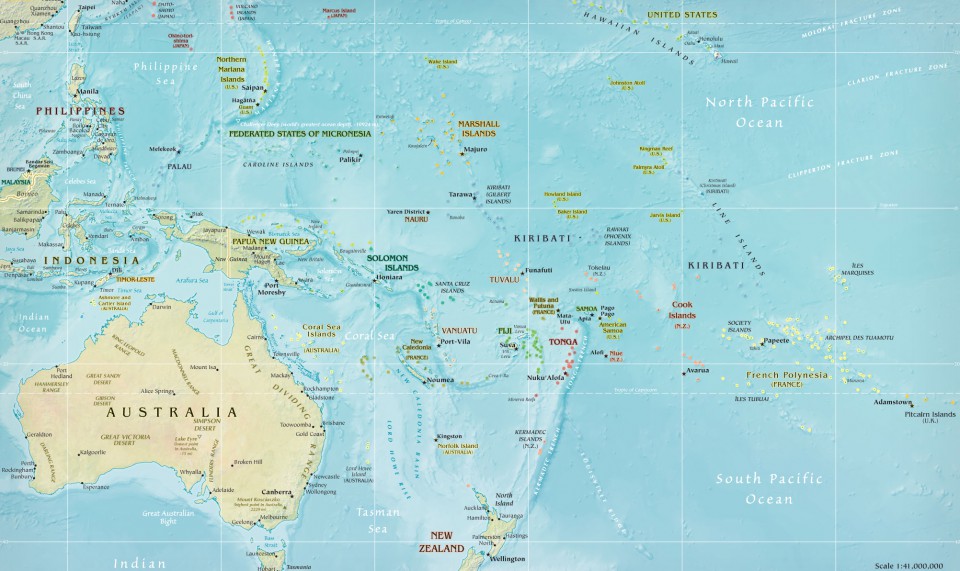
In my previous post I noted that Hungarian born and trained psychoanalyst Dr Andrew Peto was a speaker at Sydney’s twelve day Pacific Seminar on Mental Health in Childhood  in August 1953. Sponsored by the World Health Organisation with sixty delegates – medical practitioners, teachers, psychiatrists, psychologists and social workers -.from sixteen  west Pacific and South East Asian countries it was a talkfest on child psychology not seen before. The director of the seminar was Dr. F. W. Clements lecturer in child health at the School of Public Health and Tropical Medicine at the Universality of Sydney and  formerly chief of the Nutrition Section of W.H.O.  The purpose of the seminar was to  consider those forces in the child’s home and communal life that could help or hinder him in his growth towards a mature personality’. Curiously this international Congress was scarcely reported even though delegates were considering the leading research of the day. Melbourne’s Argus newspaper provided a brief overview of the conference under the heading: Experts have some cute ideas of how They’d Bring Up Mother” concluding that at the very least, professionals were better informed.The Sydney Morning Herald relegated the matter to the Women’s Pages with a major article on women doctors from South East Asia. In a thinly veiled attack upon these highly qualified professional women, the Herald wondered why they were not at home tending their children and carrying out household tasks.  Only one of the major Australian women’s magazine, the Australian Women’s Weekly contributed a well thought out item about a topic  covered during the conference about the needs of  children in hospital. As you will see the author, Veronica West, drew upon newly published Attachment research by John Bowlby and James Robertson.   West carefully negotiated some contentious issues between doctors and reformers.Thanks to the National Library of Australia’s website TROVE, we are able to read these articles easily. West wrote:

Are Australian hospitals mending the bodies of sick children while blindly subjecting their minds to emotional stress more damaging in many cases than the disease or condition from which they are suffering? Must the price of the child’s health be submission to an inflexible hospital routine which catapults him from the security of home to a world in which his two paramount fears are realised – desertion by his parents, injury at the hands of strangers? Is Australia to lag behind progressive English and American hospitals which encourage the presence of mothers at the bedside of their sick children? Many medical and hospital representatives who attended the Seminar on Mental Health in Childhood at Sydney University last August are asking themselves these questions.A few enlightened paediatricians (child specialists) and doctors have long been trying to introduce overseas reforms in Australia. The safeguarding of children from unnecessary, frightening experience and training the nursing staff in basic concepts of child psychology are other steps, being taken abroad.First to throw down an official challenge to the old hospital visiting system is the Royal Children’s Hospital, Melbourne. It now proudly announces the success of a scheme which makes hospital routine fit in with new daily visiting hours for mothers.

This article was set in motion by the distress of a friend who spent two weeks in an intermediate ward of a city hospital. She said she couldn’t forget the despairing cries of “Mummy, Mummy, where are you?” which she heard from a nearby children’s ward throughout the night. She was astounded to hear that mothers were only allowed to visit the children once a week. When my friend spoke to the night sister about the distress of the children, her anxiety for them was dismissed as maternal sentiment.

“Nonsense!” said the sister, “a sedative soon puts them to sleep. The kiddies are always like this for a couple of days after visiting days. We dread visiting days. They do more harm than good.” My friend was told that except for a few problem cases the children were perfectly happy with the nurses during the week. “They are quiet and good, and settled in, but as soon as mother comes they stage terrific tantrums.” When she told me the story my friend said that if her own child went to hospital and was as mentally distressed as some of the children she had seen and heard, she would insist, through her doctor, on reasonable access to her little girl. Was my friend being over maternal and foolish, or was she instinctively right? Í set about finding out.

West attended the Seminar on Childhood Mental Health in Sydney in August 1953. She wrote,

The Seminar on Mental Health in Childhood revealed something of the general impact of hospital experience on the child of pre-school age. Subjects discussed included depriving the child of the comfort of his mother’s presence, his fear of pain, the isolation and aimlessness of his existence, the uncertainty of ever getting home again, and the inner turmoil and emotional drive to which frail bodies were subjected.With two-year-olds or three year-olds, especially, it was pointed out, the immediate reaction was a period of agitated despair, during which the child screamed, refused food, and only exhaustion brought sleep. After i a few days he became the quiet, good, allegedly settled-in child-in reality the apathetic, frozen-emotion child who had reached a serious stage of mental sickness...Sir Ronald Mackeith, of Guy’s Hospital, London, told of reforms which remove the risk of hospital damage to the child’s personality. One of the simplest was the opening of wards to mothers, who fed, bathed, and generally assisted the staff in the care of their own child on their visits. The Royal Children’s Hospital, Melbourne, I discovered, had been experimenting with daily visiting for the smaller children over the past two years, had found this a success, and had introduced regular daily visiting for all children four months ago. The Medical Director, Dr. Vernon Collins, said that he regards the ideal as “free visiting where the parents may come to the hospital at any time.” He believes that this is essential to build up good relation ship between the mother and the nursing staff and to get the best care for the child.

Quoting this as an example, I interviewed leading paediatricians, medical men, child psychologists, hospital medical superintendents, matrons and sisters. I found the paediatriciains and doctors awake to recent research and already trying to apply the new methods to their patients, but still uncertain ol how general reforms could be carried out. Their reactions were surprisingly mixed, with individual but not collective antagonism to the new methods. Some had not heard of  visiting – hour reforms, and wary of the threat to hospital routine, were reluctant to hear of, or discuss, the subject. Others equally ill-informed listened kindly, but remained unshaken in their conviction that present methods were best. As an official spokesman put it, they were “sitting pat and waiting.”

West seems unimpressed by that response. She continued:  Here is the statement of the official spokesman of that hospital-the Royal Alexandra Hospital for Children, Sydney, which has 485 beds and treated 11,777 in-patients last year…

“Just say we are interested in the entire subject and an studying all the material available, but we prefer to wait and see. There will be no immediate alteration in the Sunday visiting day for the children.”

Here, too, are some of the opinions expressed at interviews: First, a talk with a hospital matron with many years’ experience in children’s wards. “I think the reforms will have to come,” she said. “The seminar undoubtedly opened the eyes of some of us who have long prided ourselves on the physical care of children in our charge. The most efficiently run ward in Sydney is not worth the constant reproach of the screams of the frenzied child, or the misery and listless apathy of the quiet child, star ing blankly, hour after hour at hospital walls.”

The most outspoken of the pediatricians who recently returned from England and who had instituted more liberal visiting hours in his hospital outside London said this: “Christmas is coming, and we will again have Press photographs of happy children and gaily decorated ward:and once again people will murmur warmly, ‘The hospitals are wonderful going to so much trouble for the children!’ “What the enlightened child expert would like is a little of this Christmas sentiment from hospitals and doctors spread over twelve months in our children’s wards.“When I was a medical resident I agreed with the general opinion that the weekly visiting day for mothers, with its aftermath of temperatures up and chaos in the wards, was an unnecessary evil. “Experience brought wisdom. In the London hospital I arranged for the mothers to visit the children daily, dropping in and out for brief visits on the way to town or after shopping.”The mothers sometimes fed the children, tidied beds washed them, and were of real assistance to the nursing staff. Reassured by the seemingly casual visits of the mothers the children were happy and contented, and were discharged mentally and physically well. “Certainly some cried when their mothers left, just as children here in our private ward« who enjoy the. privileges of more frequent visiting do. But a little weeping at temporary parting is one of our natural human emotions. It bears no relation to the violent reactions, or, worse, the disturbingly quiet ones, of the visit-starved public-ward child. Of course, we must have hospitals for sick children, and any physical pain inflicted is negligible to the suffering it spares the child, but too often both doctors and parents undertake to put a child into hospital without giving sufficient thought to the matter”.

The Doctor continued: “Some parents fall down on ‘he job of preparing the child for what lies ahead. They, in mistaken kindness, tell him fairy stories or refer to his approaching period in hospital as a ‘party.’ “What happens when the child arrives for the ‘party’?

“Generally he is whisked away from his harassed mother at the admission office, and, stripped of his favorite teddy bear or chewing rug, he is jet propelled into his new world. For the next six days until visiting day he is walled up in a world of white, forsaken bv his parents, helpless against the towering, white-clad, masked strangers who periodically select him for injury. It is not the pain-most children can take pain better than adults-it is the terror of what it is all about that breaks the child. While the comfort of the sympathetic nurse is often refused by the child in his des- pair, the reprimands and threats of the thoughtless, ill tempered nurse aggravate the situation. “Some of our hospitals allow the mother to accompany the child to his bed, get him used to the nurse, as well as letting him keep his cherished toys.

“In others where haste and ordered routine is the rule the opposite is the case. In many of these hospitals it is still the current practice on chaotic tonsillectomy morning to line up about a dozen young patients on a form out- side their ward or adjoining the theatre for upwards of an hour, and drag them off one by one.. for the operation.”

A woman pediatrician had this to say: “‘Certainly periods in hospital do not affect all children, temporarily or permanently. This is also true of epidemics, yet we would not deliberately expose children to such a risk, I believe a system of staggered daily visiting hours would be best, with full co- operation between the doctor in charge and the sister. Of course, some mothers because of domestic duties or because they live a long way from the hospital would not be able to make the daily visit.”

And what of the position in hospitals or wards where the children may stay months or even years? Two doctors stressed the need for closer contact between mothers and children in such hospitals.

“I commend any doctor or parent about to confine a child to one of these hospitals to study Bowlby’s report to the World Health Organisation***,one of them said. “As he and the famous Sir James Spence point out, these hospitals, despite the various activities, occupations, and entertainments arranged for the children, overlook one important factor -the depriving of the child of his mother. Perhaps Australia cannot immediately emulate these reforms, but some of the broken mother-child relationship can be repaired by extending visiting hours.

Finally I saw child psychologist Miss Zoe Benjamin. Clinging to mother, temper tantrums, bed-wetting, hostility towards the mother, and kindergarten activities are all typical symptoms of hospital experience,” said Miss Benjamin. Handled sympathetically by parents, these usually disappear, but can lead to serious results. The experts quoted agreed that the most urgently needed reform was an increase in visiting hours in children’s hospitals, which must be championed by an enlightened medical profession generally.

I for one was surprised to find this article published as long ago as 1953. I remember attending lectures at Melbourne’s Royal Children’s Hospital during the 1980s when Isabel Menzies Lyth from the Tavistock Clinic spoke about the needs of children in hospital. Here she advocated what one 1953 Australian Matron also promoted: that the ward be divided into smaller units with children allocated to a ‘team’ of carers during their admission? It seemed, upon listening to Mezies lyth that her recommendations and their implementations were far more recent. It is to be wondered about why such a large newspaper as the Sydney Morning Herald failed to report upon this and other matters arising from this international conference. Was there some sort of external pressure upon its editorial team not to do so? It would be interesting to look into this a little more.

*** “Child Care and the Growth of Love”-Penguin edition summary of the John Bowlby report to the World Health Organisation

References:

Child Care Is Their Subject. (1953, August 20). The Sydney Morning Herald (NSW : 1842 – 1954), p. 5 Section: Women’s Section. Retrieved April 20, 2014, from http://nla.gov.au/nla.news-article18383141

Sick children need parents at their bedside. (1953, November 25). The Australian Women’s Weekly (1933 – 1982), p. 20. Retrieved April 20, 2014, from http://nla.gov.au/nla.news-article41447234


Introducing The Europeans – 1938-58

During the 1930s and 1940s the exodus of Jewish families from Europe in response to Nazi persecution saw other nations scrambling to work out some sort of intake process, for fear, it seems, of inundation. A significant group, some practising members of European psychoanalytic societies, found their way to the Americas, Britain and the Dominions with either support and sponsorship from Ernest Jones then President of both the International Psychoanalytic Association and the British Psychoanalytic Society.  Others travelled independently, relying upon family and personal networks to find sponsors to their particular countries of choice. Ernest Jones’s concentrated work, beginning at the time of the Anschluss in 1933 resulted in the Freud family’s emigration from Vienna to London in 1938 and the relocation of a number of analysts to all parts of the world. So far the influence of Hungarian trained Clara Lazar Geroe, appointed by Jones as Australia’s first training analyst who arrived in Melbourne in 1940. At least two or three other analytically trained medical practitioners travelled independently of Jones’s rescue program and arrived in Australia. Hungarian analyst Andrew Peto who had also been approved for entry at the same time as Geroe did not arrive until 1948. Two German born doctors, Karl Winter who had been trained and analysed by Hans Sachs arrived in Adelaide with his wife in the early 1930s. Dr Siegfried Fink arrived in Sydney on 22 February 1939 with his wife, Lotte and daughter, Ruth. In contrast with Geroe these doctors appear to have faded into the historical record.

The Finks were amongst the fortunate ones: perspicacious enough to see that leaving the country was their best option before the tragedy of Kristallnacht. The family was interviewed – and accepted for Australia by the British Consul on 22 October 1938.  Somehow the family had made contact with a potential sponsor:Dora Birtles  author of The Overlanders and later a film of the same name, and at that time a member of an anti-fascist organisation. Birtles and her husband, Bert, had travelled and lived throughout China, Russia and Europe from about 1932 before returning to Australia in 1938. Birtles, by then living back in Sydney, sponsored the family. Fink listed his intended profession to be “psychoanalyst’.  He stated his race to be ‘White’ – a comment, perhaps, against the persecution against that had driven the family from their home in Frankfurt in Germany. Less than four months before on 11 November 1938, the date of what has since been referred to as Kristallnacht, the Nazis on orders from the central authority attacked Jewish homes, trashed synagogues, rounded up families and sent many of the men to Concentration camps for a short period. Afterward the Nazi advised Jewish people  could leave the country freely. This meant finding a country who would take them: difficult as far as entry into Britain and the United States were concerned. The Dominions were also reluctant. New Zealand closed its borders. The Australian Government eventually agreed to an intake of some 15,000 (London 2003:39). Siegfried Fink eventually worked as a neurologist. He was a regular attendee of its meetings from the early 1940s and, after its founding in the early 1950s, the Sydney Institute of Psychoanalysis. Lotte was an active member of the Jewish Women’s Association in Sydney. From 1947 she was a member of the editorial committee and contributor to of the International Journal of Sexology writing on marital relationships and child development. Her book on child development, ‘The Child and Sex’ was published in 1944.

Hungarian, Andrew Peto, was also approved for entry with his then wife, Elizabeth Kardos, he remained in Hungary. It was not until after Kardos’s death in 1945 followed by the Communist uprising in Hungary, that he applied afresh. This time, in 1946 a family contact, a remote cousin, Dr Nicholas Whealy, then working as a physician in Sydney, agreed to sponsor Peto, his second wife and child. He landed first in Melbourne in 1948 before moving to Sydney in 1950 and with financial assistance from Dr Roy Coupland Winn, founded the Sydney Institute of Psychoanalysis.(Mezaros 2012: 31-32). Peto remained in Australia for less than a decade. In 1956 he resigned from the Sydney Institute of Psychoanalysis and immigrated to New York.  Generally the reasons given for Peto’s resignation concern his qualifications to practice ( Damousi 2005, passim).

One wonders whether the reasons given for this move are entirely accurate.Perhaps there was some rivalry from Melbourne and Dr Geroe. Peto appears to have been a senior analyst in Hungarian circles; he had published widely and with a special interest in early childhood development. I can find little, if anything published by Geroe who appears to have qualified two years before her departure from Hungary in 1938. Nevertheless there was, for European born doctors, a long process of application and study to be undertaken before the Australian Government allowed them to practice.  Although Karl Winter was a qualified doctor with a special interest in psychoanalysis, it was not until the mid to late 1950s that he was granted status as a psychiatrist. He was influential and respected by South Australian colleagues in the psychiatric field: Harry Southwood who was trained as an analyst by Clara Geroe recognises his influence and training by Hans Sachs. Nevertheless by the late 1950s when his name was suggested for possible membership, Geroe insisted that he completed the Australian training.

Andrew Peto appears to have been extremely productive. In 1957 the Bulletin of the International Psychoanalytic Association (No 122) recorded his work as a faculty member and group leader of the Seminar on Mental Health in Childhood organized by the World Health Organization and Commonwealth of Australia held in Sydney from 10-27 August 1953. In his annual report to Dr Hellman at the British Institute of Psychoanalysis Peto reported that he had given two lectures at this Seminar: the ‘Psychoanalytical Theory of Early Childhood Development’ and ‘The Effects of Separation on Childhood’ (1). These were published in the Report of the Seminar on Mental Health in Childhood by the WHO and the Commonwealth Department of Health ( 1953). In 1954 Peto also published an article in the British Journal of Medical Psychology:’The Interrelations of Delinquency and Neurosis’  ( Vol. XXVII, Parts 1&2, pp.1-14). This was in addition to activities such as holding theoretical and clinical seminars for members and students of the institute, holding seminars for Institute members, numbering 11, and holding an introductory seminar for paediatricians at the Institute of Child Health. Fink, of course, as a regular attendee and, no doubt discussant. It is quite striking, a sign of the times and newspaper editors’ estimation of the importance of child development matters in the wider community that there was little coverage of this event. A brief look at the Sydney papers of the day shows that the conference was given a small space in the Women’s Pages. Rather more was given, some 2000 words, or so, to an article calling for a rethinking of children’s’ needs in hospital, in the Australian Women’s Weekly. Citing John Bowlby’s Attachment theories amongst others, the writer criticised practices where the rigidity of hospital procedures saw children catapulted from ‘the security of home to a world in which his two paramount fears are realised – desertion by his parents, injury at the hands of strangers’. Allowing parents to be with their children in hospital, the writer argued, enabled better and quicker healing and psychological health.

Overall though one wonders whether there is a deeper if not more disturbing story as psychoanalytic practice struggled to establish itself during the 1950s. It may be that rivalries between the Sydney and Melbourne groups, may have had something to do with it.Or it may be that Clara Geroe, as an appointee of the IPA/British Institute felt she should be in charge. Archival material available so far suggests that the younger newly trained analysts from the Melbourne group were coming to the forefront, while the Europeans in Sydney remained in the background. Was it that the European influence was eschewed in favour of the British? Australia in the 1950s, rested under the leadership of Anglophile Prime Minister, Robert Menzies and would do so until his retirement in 1966 and beyond, until 1973 after the election of the first Labor Government for twenty-three years.


References

(1) Andrew Peto to Dr Hellman 21 May 1954, Archives of the British Institute of Psychoanalysis, (G07/BH/F01/16).

Joy Damousi( 2005), Freud in the Antipodes: A Cultural History of Psychoanalysis in Australia, Sydney, UNSW Press, passim.

Louise London (2003), Whitehall and the Jews, Oxford, Oxford University Press, p.39.

Judit Mezaros,( 2012) ‘Effect of Dictatorial Regimes on the Psychoanalytic Movement in Hungary Before and After World War II’, in Mariano Ben Plotkin and Joy Damousi, (eds.), Psychoanalysis and Politics: Histories of Psychoanalysis Under conditions of Restricted Political Freedom, USA, Oxford University Press, 2012, pp.30-31.

Article: Shell Shock in New Zealand

An excellent article. It appears that the New Zealand response was somewhat similar to that in Australia where John Springthorpe mounted an active campaign for the recognition of shell-shock in the government’s repatriation response.

Alexandra Bacopoulos-Viau's avatarh-madness

The February issue of Social History of Medicine has just been released online and contains an article by Gwen A. Parsons entitled “ The Construction of Shell Shock in New Zealand, 1919–1939: A Reassessment .” The abstract reads:

This article explores the competing constructions of shell shock in New Zealand during and after the Great War. It begins by considering the army’s construction of shell shock as a discipline problem, before going on to consider the medical profession’s attempts to place it within a somatic and then psychogenic paradigm. While shell shock was initially viewed as a psychogenic condition in New Zealand, within a few years of the end of the war it had become increasingly subject to medical understandings of the psychiatric profession, who dominated the treatment of the mentally ill. It is the psychiatric understanding of shell shock which generally defined the treatment of shell shocked veterans within New…

View original post 94 more words

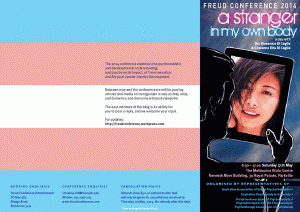
Registration for the 2014 Freud Conference is now open…

An interesting conference coming up in May 2014

Damien Pierce's avatarFreud Conference Blog

The 2014 conference A Stranger In My Own Body is now open for registration.
Contact Christine Hill on 0411 556 205 or by email: christine.hill@monash.edu

You can download the registration form by clicking on the following link: FREUDCONF_REG_FORM_2014

or from our website: www.fruedconference.com

Download the 2014 brochure:

FreudCONF2014_brochure_WEB

BROCHUREBLOGpic

View original post

George Orwell and the English Language

This may seem off topic, but….a thoughtful essay.

learnearnandreturn's avatarHistorians are Past Caring

There’s been a lot of discussion recently about how bad much academic writing is. There’s nothing new in this. I’m sure people have been complaining about the aridity and complexity of academic writing since Edward Casaubon first put pen to paper in Middlemarch.

All writers, I’m sure, go through a stage where the imperative is to get everything down on the page.  It’s the next stage though – making those pages readable to either a specialist or a general audience (and deciding which one is more important) – that we academics particularly seem to struggle with. Partly, it’s the pressure to publish as quickly as possible, but sometimes there’s a perverse security to be found in woolly prose and arcane jargon that prove we are a part of the group.

A friend yesterday sent me the draft of  an article to read, with an apology that she used to…

View original post 686 more words

Oral History interview with George Geroe about his mother, Clara Lazar Geroe

Tags

My interview with George Geroe about his mother, Clara Lazar Geroe, Australia’s first training analyst, appointed thus by the Ernest Jones, president of both the International Psychoanalytic Association and the British Psychoanalytical Society in 1939-40, is posted on the online journal, Psychoanalysis Downunder. The link is here.

When the Psychiatrists Invited Freud to Australia… Sydney 1911

Historians of psychoanalysis in Australia agree that a first point of contact for psychoanalysis in Australia was through the former Reverend Donald Fraser who, in 1909, wrote to Freud advising him of a reading group of people interested in his work. Two years later an invitation was extended to Freud, Jung and to Havelock Ellis to speak at the forthcoming Medical Congress in Sydney in a letter signed by one of the members of the group, Andrew Davidson, then Secretary of the Neurological Section of the Australian Branch of the British Medical Association. There was some discussion between Freud and Jung about whether they would send a conjoint paper. Historian Stephen Garton notes that Freud politely declined but sent a paper ‘outlining the central tenets of psychoanalysis’. Jung also sent a paper.  The two were in the throes of falling out: from 1912 they did not see one another again. Ernest Jones, Freud’s biographer, as Garton continues, sent a paper to a subsequent Congress in 1914 (1). From this point there was some isolated interest in psychoanalysis from amongst the medical profession, particularly those medical specialists in psychological medicine who returned from the Great War having learned about the application of Freud’s techniques in the treatment of war neurosis.

The full membership of Fraser’s little group is not known. Generally the narrative centres on Fraser himself, described by Freud’s biographer and advocate, Ernest Jones, as having been kicked out of his ministry in the Presbyterian Church for his Freudian views.

Further research has put paid to such notions of martyrdom on behalf of psychoanalysis. In a short biographical piece published in 1978 Historian Angus McIntyre provides evidence to show that Fraser, who came to Australia from Liverpool, UK, in 1893,  fell out with the Presbyterian Church in Newcastle by 1896. It is not clear why: whether from disagreement with the ‘establishment’ or drunkenness. After an attempt to begin his own church Fraser left the church to recommence medical studies at the University of Sydney in 1904 (2). Nevertheless as a result of a letter from Roy Coupland Winn who had set himself up as the first psychoanalyst in private practice in Sydney Australia, in which he made a connection between Fraser’s interest in psychoanalysis and his departure from the church, Jones has recorded Fraser as something of a martyr to the larger cause. That Winn was vague about the facts of Fraser’s case is revealed in MacIntyre’s paper. (2) Myths are created thus.

While commentators have grabbed hold of this incident as evidence of Freud’s deeper interest in Australia – he once fantasied in a letter to his fiance about moving to Australia, if only to establish himself well enough to be married- it is worth thinking about why he and Jung were invited in the first place. Davidson, who read Jung’s paper at the Congress appears not to have been particularly interested in psychoanalysis and appears not to have pursued it after 1911. After resigning his post as Medical Superintendent at Callan Park Hospital for the Insane in 1912 he frequently appeared in the press as an expert witness in trials of people accused of crimes as varied as murder and fraud to husband desertion for the next two decades. He was member of the Eugenics Society – a body whose membership Freud declined. He died in 1938.

It is the job of Secretaries of such bodies as the British Medical Association to act on behalf of their committees. By looking at those matters that occupied the thinking of the membership; their concerns over time and the tasks that filled their days we might begin to see something of what might have prompted an invitation to Freud and Jung. As colonials, the leading psychiatrists of the day were also recent emigrants, bringing their British training, their experience and their knowledge of the continental intellectual milieu informing their work and practice. Fraser, who had begun his medical studies in England, switched his training to that of a clergyman.Perhaps he was following his father -also Donald Fraser – who was well known as an ideas man and for his work in the Presbyterian Church in England. Perhaps young Fraser’s insomnia -prompting his migration – was symptomatic of some sort of conflictual relationship between father and son. Perhaps his interest in psychoanalysis was borne of an intellectual curiosity similar to his father’s. We can but speculate here. 

Andrew Davidson qualified in Aberdeen in Scotland before coming to Australia where by 1903 he had succeeded another well known doctor in the lunacy field, native born Chisholm Ross, as Medical Superintendent at Callan Park. Chisholm Ross had also trained in Scotland, at Edinburgh University before returning home to Australia and work with another Scottish born and educated doctor, Eric Sinclair, Inspector General of the Insane from 1898, a graduate from the University of Glasgow.Obviously there is a Scottish influence in the development of Australian Psychiatry.

Upon the commencement of a new building, the Psychiatry and Neuro-Surgical Pavilion at the Royal Prince Alfred Hospital in 1935, the editor of the Sydney Morning Herald took the opportunity to reflect upon its history. He was careful to record that Davidson – by then a senior and well respected figure in Sydney psychiatry – who some thirty years before had spoken of the need for individualised treatment methods when the
when the unit’s ‘predecessor’, a special ward was set aside at the Reception House, Darlinghurst, for curable cases of mental disease in 1908.

“One hopes that Sydney, though it now has a small hospital in a special ward at the reception house, will do still more, and establish wards with out-patient facilities at the Prince Alfred Hospital, or that a hospital such as is being built in Melbourne should be erected close to the University. This would mean that individual treatment could be given in each case, all histories fully investigated,causes definitely ascertained, and treatment therefore given on a rational basis”. (3)

According to the Herald the special ward at Darlinghurst and the subsequent erection of a psychiatric pavilion at Royal Prince Alfred Hospital was actually suggested  in 1905  when Davidson’s superior, Dr Eric Sinclair said that accommodation for curable mental patients at public hospitals had many advantages over anything a special department could provide – not least the reduction of overcrowding.  He argued that early treatment prevented long term, serious mental illness and incarceration. The Historian Professor Stephen Garton highlights Sinclair’s indefatigable work for recognition of psychiatry as a scientific and respectable arm of medicine. Garton says Sinclair

led a movement to establish the treatment of mental illness on a scientific footing and to have psychiatry recognized as a legitimate medical science. To these ends in 1909 he established the department’s pathological laboratory where mental patients were tested for various medical pathologies. Sinclair sought to replace older terms such as psychological medicine with modern terms like psychiatry. He believed in the importance of training specialists and successfully advocated a chair of psychiatry at the University of Sydney, established in 1923. (4)

Sinclair was not averse to standing up to governments, Garton continues. He sought to legalize voluntary treatment and opened the first  first public psychiatric ward for voluntary patients in 1908. In 1915 he authorized the admission of voluntary patients to State mental hospitals despite the absence of any authorizing legislation. His bluff succeeded: successive governments refrained from stopping this practice.(5)

A third notable in lunacy reform was  W.Beattie-Smith – another Scottish trained doctor and colleague of Sinclair, Davdison and Fraser who opened the The Neurology Section of the 1911 Medical Congress. Beattie-Smith who had emigrated  almost thirty years before had spent twenty-one years administering asylums in Victoria. He had built his experience beginning as Superintendent of Ararat Insane Asylum (1881) where, according to his biographer, Eric Cunningham Dax, he developed a small wine-growing industry. He was an advocate of training for nursing and mental health staff and encouraged the Scottish system of boarding out selected mental health patients to the community. Not all people who became mentally disturbed needed incarceration. His paper “Insanity in its Relation to the Practitioner, the Patient and the State, published in the Australasian Medical Gazette for February 1903, sets out his system of diagnosis and management of mental disorder beginning from mild melancholia to severe delusional illnesses. Beattie-Smith drew the distinction between patients who needed treatment in an insane asylum and those who might well need special care in a nursing home, if not at home. There was a systemic problem: that certification under the Lunacy Act assumed that the person was of ‘unsound mind’ and that – as a result – the person was fit to be detained in an asylum. Further the medical practitioner, privvy to the internal workings of the family in which the individual lived, needed careful training to be able to assess whether the person needed to be certified. He provided a summary of his 21 years of experience as a medical practitioner in Victoria, advocating the Scottish system of training of both medical and nursing staff in treatment rather than custodial care.When he published his 1903 article he was about to retire as President of the Ballarat District Branch of the British Medical Association.

At the Congress Jung’s paper “The Doctrines of Complexes” was read by Davidson. ‘It began with a description of the word association test, the research that had first brought him fame’, the historian, R M Kaplan writes. He continues:

From this arose Jung’s discovery of the complex which occurred in normal individuals, neurotics and psychotics. Commencing with the tactical feint that the neuroses arose from psycho-sexual conflict which could only be uncovered by means of Freud’s psychoanalytic process, he trumped this with the statement that dementia praecox involved a “characteristic and different behaviour” that would end up in dementia. Using the same post hoc, ergo propter hoc logic favoured by Freud, he justified these assertions by stating that proof was not required because the subject was already a “special science”, known as analytical psychological or, pacé Bleuler, depth psychology – making a clear distinction from the Viennese version.(6).

Freud,’s paper for the 1911 Congress, ‘On Psycho- Analysis,’ numbering but three pages, was  more peremptory. Kaplan reflects its tenor – Freud seems to be lecturing down to an uneducated audience he assumed to be ignorant of psychoanalysis. Kaplan writes:

Easily the shortest of the three papers, his explanation of the principles of psychoanalysis was terse, to say the least, and a significant portion was devoted to attacking those, especially in psychiatry, who rejected its tenets. Anyone critical of psychoanalysis, Freud stated, should “analyze his own person”, concentrating on their dreams. Freud’s masterful rhetoric and superb literary skills notwithstanding, it would seem to be a misguided effort to send such a paper to a far-distant group expected to know next to nothing about a theory that was far out of the boundaries of knowledge, if not conventions, that they inhabited.(7)

The invitation from the Antipodes, so far away from Europe and Vienna, must have astonished both Freud and Jung. Freud saw it as a sign his work was expanding. Jung, perhaps, found it another way to promote his ideas amongst medical peers. But for both, I suspect, Australia was too far away to think seriously about attending the Congress – whether or not they had the means.Australia was, for Freud at least, the site of primitivity, where Aborigines the lowest of the low races on earth could be found. At this time when Social Darwinist theory ordered humanity it was not surprising. Missionaries also preoccupied with such theories sought to establish that Aboriginal people had souls, that they were capable of an English education and were civilisable. All of this is considered racist these days, but these were the theories extant at the time. Where Jung found evidence of the ‘primitive’ in himself during his journey to Africa, so Freud also located it in his work, Totem and Taboo.

The Australian doctors who tried to arrange for the presence of Freud and Jung appear to have had a different agenda to Freud’s and Jung’s desire to promote their work. Qualified in England and Scotland, emigrants when they were adults, and well aware of the to-ing and fro-ing of information between England, Europe and Australia as their students departed and returned and new migrants arrived, it is not surprising that they were well up-to-date with contemporary ideas about mental health treatment and medicine.  They may have seen themselves as leaders, using the opportunities afforded in the Andtipodes to make good some of the frustrations encountered at home – as well as in their interactions with the government of the day – as they attempted to develop world leading treatment for insanity. It may be that they saw in the work of Jung and Freud potential methods for individualized treatment which would serve to prevent admissions to the asylums.

Based on a careful reading of available documents – the annual reports, newspapers as well as secondary sources a portrait of doctors who were proactive in their quest for better treatment for mentally ill people emerges. These were also the colleagues of Melbourne based John Springthorpe whose later work with war affected patients also drew on psychoanalytic ideas. It made sense, I think,  to this group of reforming doctors that the best in the world in the treatment of lunacy should be invited to their Congress. They were arguing with the government of the day. They wished to demonstrate to their peers and to government officials that that there were alternative and viable methods and techniques to custodial care and incarceration in the treatment of mentally distressed people. That Freud not only did not come to Australia but, in his paper,  failed to appreciate the knowledge of his peers in what to him was a faraway, if not exotic, land, could well have been have been a huge disappointment.


(1), Stephen Garton, ‘Freud and the Psychiatrists: The Australian Debate 1900 -1945’, in Brian Head and James Walter (eds,). Intellectual Movements and Australian Society, Oxford, Oxford University Press, 1988, p.170.

(2). Angus McIntyre, ‘The Reverend Donald Fraser’, Australian New Zealand Journal of Psychiatry, v.12, June 1978, p.109-113.

(3).1935 ‘MENTAL DISEASES.’, The Sydney Morning Herald (NSW : 1842 – 1954), 15 October, p. 10, viewed 5 January, 2014, http://nla.gov.au/nla.news-article17215833

(4). Stephen Garton, ‘Sinclair, Eric (1860–1925)’, Australian Dictionary of Biography, National Centre of Biography, Australian National University, http://adb.anu.edu.au/biography/sinclair-eric-8435/text14827, accessed 5 January 2014.

(5). ibid.

(6). R.M Kaplan, ‘Freud’s Most Excellent Adventure Downunder: The Only Publication in Australia by the Founder of Psychoanalysis’, Australasian Psychiatry, 2010 Jun;18(3):205-9.http://www.ncbi.nlm.nih.gov/pubmed/20482424

(7). ibid.