PSYCHO-ANALYSIS: A Doctor’s Warning – 1924

By the early 1920s public interest in psychoanalysis in Australia was broad, and certainly not restricted to medical circles. The president of the Victorian branch of the British Medical Association, Dr L.S. Latham used his retiring speech to warn that psychoanalysis should not be utilised indiscriminately. At the very least, he argued,  psychoanalysis should be practised ‘under skilled medical direction’. It is clear that there was sufficient interest for the editor of the Sydney Morning Herald  to publish Latham’s speech in the edition of 1 January 1924. Here is the text:

“The widespread and general interest in psycho-analysis is to be viewed with some concern. I am anxious not to indulge in cheap criticism, but it may be pointed out (what should be clear to anyone who has practised with any concentration psycho- logical method of introspection) that there are many pitfalls to be avoided in a logical tracing out of psychological associations. Follow a train of thought in your own mind and the associations are frequently most difficult to connect. The ideas would appear to be associated in time, but in little else.

Psycho-analysis affords by the “word association tests” a valuable means of examination of mind and determining the lines along which association tends to occur, but recognition of the occasional value of this method is consistent with the view that it should be but rarely applied, and that the Freudian symbolic interpretation of many phenomena thus observed need not be endorsed. The efforts of ancient philologists In derivations such as faba, fabaricus (fab-aricot-us) (h) aricot, and mus muris (mu-rat-us) rat, are ingenuous and simple in comparison with some of the psycho-analytic symbolisms.

Probably the whole profession makes use from time to time of suggestion, and many of our patients need above all things inspiration or, it may be, comfort, and these constitute a form of psycho-therapy.

It should be strongly emphasised that In cases of nervous disease psycho-analytic methods should not be employed by non-medical exponents alone, even though they may be expert psychologists, for it is necessary before application of such methods that the presence of organic disease liable to be aggravated by the employment of such methods be first excluded. Such conditions aro encephalitis and other inflam- matory states. Of course, the ideal method would be that persons suitable for this method of investigation should be handled by an expert psychologist in association with skilled medical direction”.


Proposed Psychoanalytic Institute – Perth, Western Australia

The  National Library’s digitized newspaper collection has thrown up another gem worthy of further pursuit. On 4 July 1943 Perth’s Sunday Times reported discussions between  the British Medical Association, the Perth Branch headed by Dr Roberta Jull, and the University of Western Australia about developing psychoanalytic training in that state. Australian cricketer turned  psychotherapist, Bill McRrae, was another mover.  McRae had  returned to Western Australia three years beforehand after studying psychoanalysis in the United States. Perth, the capital of Western Australia is a long way from Australia’s eastern capitals. It was rare enough for news of the west to reach the east. Despite its isolation Perth’s intellectual and cultural climate was thriving. Clearly.

Members of the British Medical Association were keen to have psychoanalysis incorporated into the teaching of psychology, Perth’s Sunday Times reported,  ‘so that qualified analysts’ might work alongside members of the medical profession. There was a dream: to make Perth the centre of psychoanalytic practice in the Southern Hemisphere. McRae, we learn, had established good relations with Perth’s medical fraternity. The Adult Education Board had invited him to give a lecture series: “The Foundations of Behaviour” – described as ‘outstandingly successful’ with an enrolment of 297. Prior to the lecture, Professor Fowler, head of the Psychology Department had raised a question with the University Senate. McRae’s course was not about psychology,as its title implied he said, but psychoanalysis. The Senate regarded the matter as unimportant. Two hundred and twenty-two pounds was not to be sneezed at! McRae’s lecture series was published as a book in 1945.

The vision for this new psychoanalysis – was it McRae’s? – included a school with analytically trained teachers for students from kindergarten level through to leaving. There was to be adult and parent education – analytically orientated – a clinic conducted on a not-for-profit basis and, eventually a Psychoanalytic Institute for the training of practitioners.

Perhaps McRae was on a mission? Another article appeared in the press three weeks later. McRae’s lecture ‘How Psychoanalysis Can Help Children’ given to the Women’s Services Guild. Here, McRae told his audience that the most important phase of life was the child’s relationship with its mother. He
explained:

The fulcrum of the science centred around the proven fact that in the first few years of life, a child developed a goal, or an attitude towards his environment [that remained through life]. This meant that if there were any difficulties, causes were traced to his early life.

‘A child developed along two lines,’ Mr McRae was reported as saying.Firstly, he became confident in facing life and its problems, and secondly he viewed life with pessimism, or a fear to face life. The latter attitude, he said, developed a strategy of how to live and at the same time evade life.

So resulted such traits as selfconsciousness, shyness, depression, irritability and the individual who no matter what he took on, invariably failed. In other words, life was a threat and the mind developed a capacity to avoid things that were un pleasant. ‘So we find people who do not make a success of marriage, of getting on with other people, and who fail in their chosen task,’ said Mr McRae. A favourite strategy the mind used was to cause a person to become helpless, so that he tried to shift responsibility on to other people.

McRae added:  ‘By giving schoolteachers, parents, social workers an opportunity of psychologically understanding the children they cared for, clinics would not be needed. But as this was rather an ambitious undertaking, we had to realise the need for psychological clinics with a stress on psycho-analysis’.

But this was war-time – fighting overseas and the fate of soldiers at war was also on peoples’ minds. McRae’s idea seems to have faded far from sight under the weight of it all…

Perhaps McRae eventually got his wish, after a fashion. His biographer, Marion Dixon, recounts that, after a stint in Zurich at the C. G. Jung-Institut in 1958-59, he was persuaded by the orthopaedic surgeon George Bedbrook and Archbishop George Appleton of Perth to set up a three-year training programme in psychotherapeutic methods for doctors and clergymen.

William McRae: Published Works

About Ourselves and Others, Melbourne, Oxford University  Press, 1941.

Sex, Love and Marriage: Psychological Factors, Melbourne, Oxford University Press, 1941.

The Psychology of Nervousness, Melbourne,Oxford University Press, 1941.

Adventures in Self-Understanding, Melbourne, The Book Depot. (1945)

The Foundations of Behaviour, Melbourne, Oxford University Press,1945

My Pain is Real ( 1968)


Making Wayward Children Wise Citizens – Sydney Feminsts and Psychoanalysis in the 1920s

Writing on behalf of the National Council for Women for in the Sydney Morning Herald’s Women’s Column of 15 June 1921 Maybanke Anderson set out a  proposal for the development Child Study circles for women. ‘Increasing understanding of psychoanalysis, and all that it involves, may, if women choose to study it and compare notes have an inestimable effect on future generations’. Hopefully ‘if every mother knows how to make a wayward child into a wise citizen our gaols and asylums might, in one generation, be converted into playgrounds’. She invited interested women to the first meeting at 3 o’clock the following Friday.

It was probably inevitable that Maybanke, born in 1845, whose activism  on behalf of women and children since the early 1890s, would make this link between psychoanalysis and child study. Interest in psychoanalysis was remarkably widespread across Australia during these immediate  years after the end of the Great War.  Perusal of the National Library’s Digital Newspaper collection shows that lectures and literature about psychoanalysis drew much interest – not just in the capital cities but in centres as far afield as Northern Queensland, and the far west of New South Wales. There was, of course, the realisation that  shell-shock could be treated using psychoanalytic techniques,  practiced by members of the medical fraternity.

During the 1890s Maybanke Anderson had been a suffragette and,in 1894 founded her own paper, Woman’s Voice  to promote reforming ideas about the rights of women and children. Her friends and associates of that time included a number of significant women reformers –  Rose Scott, Lady Mary Windeyer and her daughter, Margaret,  Louisa Lawson, and  Dora Montefiore. In 1896 when she was a campaigner for womens’ rights she and her colleagues had begun  the world’s first free kindergarten in the Sydney suburb of Woolloomooloo, She continued working with the Free Kindergarten Union well into the second decade of the twentieth century.Her marriage to Francis Anderson, Professor of Psychology and Philosophy at the University of Sydney in 1899 also brought her into contact with the university world.  Francis Anderson’s associate, the psychologist H Tasman Lovell was a particular admirer and friend. He had been charged with developing the first experimental psychology course, including the study of psychoanalysis at the University. Maybanke’s experience with children included teacher training and a period running her own school, Maybanke College in the early to mid 1880s. She was mother to seven children from her first marriage to Edmund Wolstenholme in 1876. Only two  survived to adulthood.

It seems that the take-up of psychoanalytic – and psychological – ideas by women and women’s groups in Australia at this time has not been documented. I cannot find much on this, even though the most recent published history of psychoanalysis in Australia, Joy Damousi’s 2005  Freud in the Antipodes has pointed to the work of the professors at various Australian Universities, and to the significance of the medical fraternity in the development of this arena. Yet women, such as Maybanke, were beginning to argue that as mothers and as educators the understanding of the inner world of the child was as important as physical care.

Maybanke’s book, Mother-Lore, published in 1919, written in the form of an advice manual, picked up notions from the ‘New Psychology’ and from the Child Study Associations  active in Sydney at the time.  In her book she was  concerned not with the physical, bodily care of children – there were plenty of such tomes,  but with the parents’ responsibility to care for the developing minds of their children. She wrote in common language, eschewing technical, psychological terms. Her message was for mothers – and fathers. Maybanke’s argument was that the child’s mind is something that is to be understood nurtured and developed. Children were not miniature adults, nor primitives to be trained in the ways of civilisation but sentient beings learning about themselves in the world. Far from utilising stringent measures as those promulgated by  New Zealander Dr Truby King, (was she having a  swipe at him when she remarked that few doctors were concerned about the developing mind of the baby?) famed for his advocacy of the strictly timed, four hourly feed, Maybanke Anderson  underlined the significance of the maternal/ parental relationship for the growing child. Her account of infant and child development is based  upon careful observation and experience. Maybanke directs her reader’s attention to the developing baby – born blind and deaf,  she asserts in the early chapters. She alerts readers to the babe’s exploration of self  – of arms, legs, hands, toes and fingers but also notes the child’s developing emotional life. She notes that patterns established in early childhood continue for life,  fears, lies, instincts and education. For twentyfirst century readers it is a glimpse into the common problems of child-rearing and notions of citizenship in middle-class English- Australian life during the early 1920s.  A baby has a brain, of course, she wrote. It is the mother’s task and responsibility to direct and help the child to develop.

Overall Maybanke seems to be groping, if not reaching for the notion that the mother’s/parents capacity for attunement and recognition of the babe’s gesture is central to the child’s  sense of becoming.  Her writing is powerfully clear.

Note how the energetic child may become a lazy man. His small endeavours to construct were burned as rubbish, or swept away because they littered the floor. He hurt his fingers with the hammer and we denied him the result of his experiments and hid the tool he longed to use. He cut the furniture with his little saw and scratched the floor with his chisel so we took them both away, not remembering that training he got by his endeavours would be of more use than the polish of the furniture and the tidiness of the floor. He was a troublesome boy, always wanting to do something. So we sent him to school early; and there all the work was talking and reading, he learned that work with the hands was degrading rather than ennobling, and that, if he wanted to be a gentleman he must wear a stiff collar and a good coat. So at length with his bright enthusiasm killed, he learned to sit still and smother his instincts, and the world lost an inventor, and gained a draper’s assistant. If it were not so common we would think it a tragedy. ( Mother-Lore, pp 17-18).

As a representative of the National Women’s Council Maybanke could have been following the lead of other women’s organisations in Sydney. It may be that some of its members also attended a lecture on psychoanalysis and war trauma given by Ethel Mortimer Langdon at the Women’s Club. In October 1920, the Feminist Club sponsored a lecture on psychoanalysis by Ruby Rich,who had just returned to Sydney after eight years away, some of these,  a reporter from the Sydney Morning Herald, said, spent studying ‘under Freud in Switzerland’. Perhaps this was an error… Switzerland was the place where  Carl Jung, Freud’s former protegé, was located. Rich’s lecture described as captivating by its listeners, was  followed by a second lecture. Both were repeated. A month later Ruby Rich announced her intention to ‘form a study circle on the subject of psychoanalysis under the aegis of the Feminist Club’. Apparently the Club continued its interest in mental health matters. On 9 February 1921 the Sydney Morning Herald reported that  the Feminist Club had passed a motion urging the re-centering of   ‘the clinic of psychiatry’ in general hospital work, and not be carried out by the Lunacy Department’.The Club paid especial attention to children. It included a clause ‘that special provision should be made for children temporarily mentally affected under the aegis of the work of this (hospital) clinic’.

Psychiatry was not Maybanke Anderson’s field. Her’s was education, in kindergartens and schools.  It is clear though, that in the immediate post-war years that she and her colleagues were working together, albeit following different threads of thought – to advocate for the development of psychological services within their particular communities of parents and children. For them psychoanalysis – and psychology –  held ideas that should not remain exclusive, confined within the portals of the medical fraternity. They had a place in the broader community to be used for its development.

THE PSYCHOGALVANOMETER – Can Emotions be Measured?

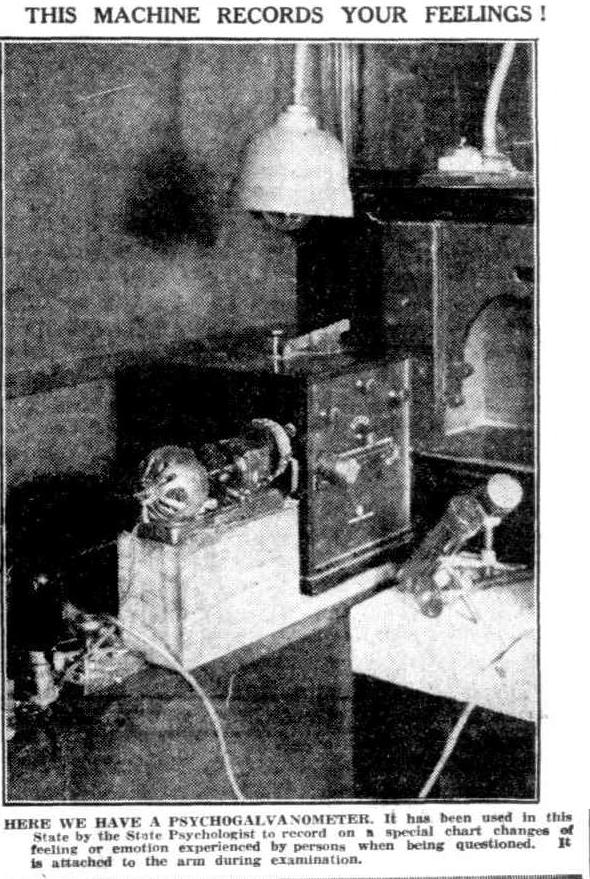
In my wanderings around the archives I have discovered a machine that purpots to measure emotions. It is called a Psychogalvanometer. When I learned that this critical piece of equipment was an essential feature of Western Australia’s Psychological Clinic, kept in the cupboard in the clinic’s Analysis Room, the psychogalvanometer became worthy of a post in itself.
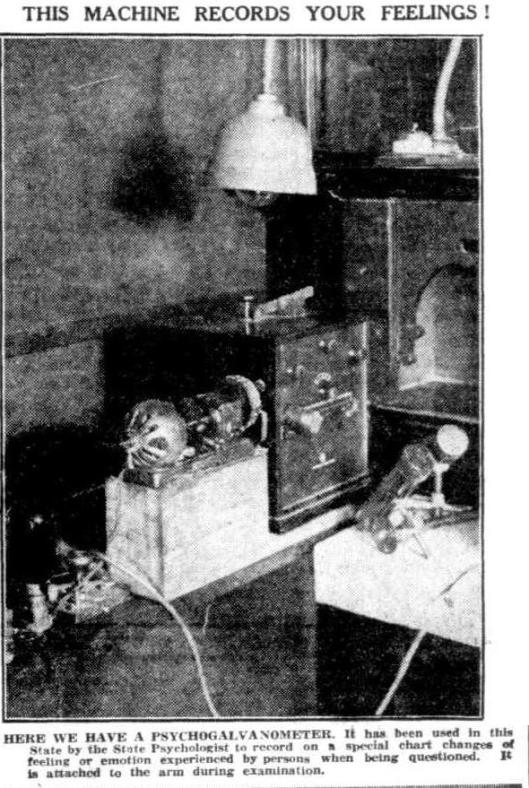
The Mirror  (Perth, Western Australia) Saturday 22 November 1930, p.1.

It had its uses. In his lecture to the Sydney branch of the Australasian Association of Psychology and Philosophy in October 1929, ( and reported in The Sydney Morning Herald 11 Oct 1929) psychiatrist and psychoanalyst, Roy Coupland Winn explained that the machine had ‘evolved’ in the Psychology Department at the University of Sydney. In experiments with patients with spinal chord injuries, Winn had found, he said, ‘that patients suffering from complete anaesthesia due to organic changes such as follow injury…to the spinal chord gave no psycho-galvanic response following pin-pricks in the anaesthetic area. On the other hand, in cases such as hysterical amnesia or of malingering, a response always followed stimulation of an area stated to be anaesthetic’. Anything that causes emotion will give the psycho-galvanic reflex’.

The psychogalvanometer was a delicate and expensive piece of equipment. An article: ‘Some new apparatus for the psycho-galvanic reflex phenomenon’, composed conjointly by a team from the Department of Psychology at the University of Sydney and published by the Australasian Journal of Psychology and Philosophy in 1928 described its workings in detail. Too long to publish here, the article was written by electronics experts, outlining its construction, the flow of electricity as it reacted to the subjects skin secretions as they altered and varied in response to their state of arousal.  The machine was expensive,  in need of constant adjustment but through the work of the team at the Department of Psychology it was, potentially, a useful instrument for the assessment of the true emotional states of respondents.

The machine linked mind and body and, it was supposed, enabled objectivity. It conceivably occupied the gap between the respective subjectivity of patient and doctor. This was what psychology was about, it seems, the gathering of evidence, and measurement.It aimed to exclude subjectivity.

For historians it is a glimpse into the what was assumed to be important and what was not; into early twentieth century British middle class sensibility.  The authors explained:

A list of twenty words was made, so selected that ten might be classed by a normal person as tinged with emotional tone, and ten of no emotional significance to a normal person. These words were arranged in six groups, as follows:
Group I: Table, light, house, cloud.
Group II: Bible, holy, religion, to sin.
Group I I I : Bird, dog, day.
Group IV: Man, woman, love.
Group V: Knife, clock, pencil.
Group VI: Kiss, family, anxiety.

It will be seen that Groups II, IV and VI are composed of words which for most people are accompanied by some considerable degree of emotional tone, while Groups I, III and V consist of words which have for most people, so far as can
be judged, very little emotional significance. In addition to the words, three stimuli were used which might be classed as nocive or threatening; these were: (a) a loud sound immediately behind the subject; (b) a pinprick in the back of subject’s neck; (c) the application of a small piece of moist sponge to the back of subject’s neck.
These stimuli might reasonably be expected to arouse some emotional response, whether of fear, anger, curiosity, or amusement. The subjects were required to respond with a free association in each case to the twenty stimulus words, and the
galvanometric deflections and reaction times were recorded in each case.

There was a series of questions:

An attempt was made to discover whether the act of making a voluntary choice between two alternatives would cause significant galvanometric deflections. Cards were shown to the subject one at a time, first setting before him a definite situation in which he was to imagine himself, and then offering the choice of two alternatives, between which the subject was to choose. In the case of two of the choices the subject was asked to reverse his decision, and in all cases the time and deflections were recorded.
The cards used were typed as follows:
1. (a) The hour is late, and the day has been tiring; you are about to take the tram home, when suddenly you discover that you have lost your money.
1. (b) Would you choose to walk the distance home, or risk explaining your quandary to some decent looking stranger ?

2. (a) You are preparing to attend a social gathering at a home not previously visited.
2. (b) Would you prefer to go in evening dress, with a chance of being made conspicuous, or in ordinary dress, and perhaps feel out of place?

3. (a) You are convalescing; it is your first day out of doors, and the weather is bright but cool.
3. (b) Would you prefer to sit in the sun in an uncomfortable chair, or in the shade in a comfortable one ?
3. (c) Now endeavour to make a reversal of your choice, and arrive at a contrary decision.

4. (a) On returning home after making a purchase you discover that you have been given more goods than you paid for.
4. (b)They would never be missed, and their return involves the dismissal of the employee responsible. Would you return or retain them ?
5. (a) You have invited out to dine a new acquaintance, whom you wish to impress favourably.
5. (b) On finding you have forgotten your money, would you rather borrow from your companion, or risk the unpleasantness of an explanation to the management, to whom you are personally unknown?

It must be admitted, the authors concluded, the psychogalvanometer ‘does register some emotional changes. Physiological investigations have confirmed what was once surmised, that changes in the amount of discharge by the sweat glands are responsible for the deflections. For this reason it is desirable to know
what emotions actually do cause such changes, but this fact is at present unknown’.

Nevertheless, the authors noted:

we hold to the point of view that  the psychogalvanic reflex does not register all emotions, for the “obstructed” situation of an attempted reversal of volition yields facial changes and bodily movements expressive of stirred-up mental conditions, far more pronounced than either free association responses or the act of volition itself. While of undoubted usefulness as one method of recording certain emotional change or changes, it does not appear that the psychogalvanic reflex may be regarded as a universal recorder of emotion. It ranks as a most important member among a number of methods of measuring somatic changes, but does not obviate other methods such as afforded by the pneumograph the cardiograph or manometer.

It seems that the authors conceded that subjectivity was difficult to measure, if not impossible.

Nevertheless the psychoanalyst Roy Coupland Winn found some use for the machine in his psychotherapeutic practice. It saved time, he wrote. ‘Supplying as it does objective evidence of emotional changes, it aids in the recognition of ” complexes “. He continued,

By having the patient attached to the psychogalvanometer during the recital of his experiences, or during free-association, a continuous indicator of emotion is provided. Owing to the common tendency of neurotics to adopt the method of facile superficial associations as a defence mechanism, the psychogalvanometer also saves considerable time by providing evidence of unemotional associations, which can be interrupted with confidence.

‘Anxiety, neurosis and hyperthyroidism give exaggerated psychogalvanic
reflexes’, Winn continued. ‘Patients with these conditions can be similarly compared with a control. It can be seen that the new psychogalvanometer is of considerable
practical value to the physician and the neurologist, as well as to the psychologist’

References:-

C.E.W. Bellingham, S.  Langford Smith, & A.H. Martin, Some New Apparatus for the Psycho-galvanic Reflex Phenomenon, Australasian Journal of Psychology and Philosophy, Volume 6, Issue 2, 1928, pp.137-148.

R. Coupland Winn, ‘The Psychogalvanometer in Practice’, Australasian Journal of Psychology and Philosophy, Volume 7, Issue 3, September 1929, pages 218-219.
Dream Theories

One of the first reports of Freud’s work and writings in Australia…

The Register, Adelaide, Thursday 4 May 1911, p.4. According to the newer theories of dreams, that which we perceive in a dream is a symbol. Professor Sigmund Freud, of Vienna, holds that behind the symbolism of dreams there lies ultimately a wish: and he believes that this wish is tinged by elements that go back to the dreamer’s infantile days. As Freud views the mechanism of dreams it is far from exhibiting a disordered mental activity, but is the outcome of a wish or a desire, which is driven back by a kind pf inhibition or censure, and is seeking new forms of expression. Thus, in Freud’s view, we never dream of anything without wishing in some irregular conscious or subconscious way to do so. This theory is not accepted without reserve by other psychologists, who urge that just as some unrelated picture or scene—observed perhaps many years ago— sometimes appear on the surface of consciousness, so may dream images arise. Such images come to the surface of consciousness as unexpectedly or disconnectedly as a minute bubble might arise and break on the surface of an actual stream from old organic material silently disintegrating in the depths beneath. The slight disintegration or alteration of a minute cell in the brain would produce a similar effect sleeping or waking.

The Story of the Psychological Clinic – Western Australia 1926-1936

Alongside the emergence of Freud’s ideas in the 1910s experimental psychologists began measuring and mapping human behaviour. The idea of an inner life gained increasing vogue particularly after the Great War when doctors treating shell-shock discovered that the ‘talking cure’ greatly ameliorated the well-being of their patients.   Psychological assessment based on understanding the causes of behavioural disturbances, and thus treatability,  increasingly challenged notions that behaviours were genetically determined. These were new ideas, perhaps not widely accepted and liable to marginalisation. In Western Australian the state’s first Psychological Clinic was opened on 1 July 1926 after a period of lobbying and discussion among senior mental health officials and government ministers. Despite its success the Clinic was closed down after a change of government in 1930, ministers pleading the need to cut expenditure in this year that the Depression hit – a saving of about fifteen hundred pounds a year. It was expedient, perhaps. The clinic was a minor part of the state’s mental health provision. Perhaps there were gender issues. The clinic was headed by the State Psychologist, Ethel Turner Stoneman. In the end,protracted lobbying especially by women’s organisations, resulted in the clinic’s reopening in 1937.

Ethel Stoneman, born in 1890, attended Claremont Teachers College in Perth from 1909. Upon the opening of the University of Western Australia in 1913 she had enrolled in the first course in experimental psychology developed by Professor Philip Le Couteur upon his arrival from Bonn in 1913. In 1924 Stoneman completed postgraduate study specialising in special needs children , to use today’s parlance, at Stanford University before returning to Australia in 1925 and setting about lobbying the Western Australian Government to set up a psychology clinic. In its first year, according to The West Australian newspaper published on 8 August 1927, 214 parents, relatives or guardians of children were interviewed. 350 people were treated; medical examinations were provided for 83 and 60 people were  referred for psychiatric care. A nurse-social worker was appointed to see clinic patients and conduct home visits. Liaison with the Education Department resulted in 567 state school children being assessed by clinic personnel.Referrals came from doctors, schools, the Children’s Court, the Supreme Court and from prisons.

‘I had a splendid time in Perth’. Ethel Stoneman told Journalist Keith Newman in 1936. ‘We were pioneering something new to the state, and something in which we firmly believed’. The team consisted of a doctor specialising in children’s ailments, RH Crisp; Dr Donald McKenzie who worked with adults – comprising two-thirds of the caseload by the time the clinic closed in 1930; a pathologist and specialist in mental diseases. But the annual budget was spare – only three thousand pounds per year for the entire state. Not much even for a state as sparsely populated as Western Australia.

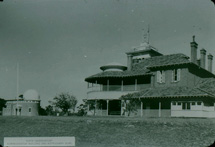
The Clinic, set up in the old Observatory Buildings in Perth, contained an ‘Analysis Room’ furnished with comfortable chairs, a couch and table. Standard for the time, the Analysis Room also contained a cupboard in which the galvanometer was kept. This machine  monitored physiological changes in patients as they spoke, or freely associated to words given by the practitioner. A second  ‘Interview Room’ was more sparsely furnished. This was a space in which children together with their families could be interviewed,Ethel Stoneman wrote. Interviews, rather than being fact-finding enterprises, could be utilised to explore ways in which troubled relationships could be ameliorated.  Ethel Stoneman also regretted calling her organisation a ‘clinic’. ” It is highly important to avoid the hospital atmosphere,” she said. It was inhumane. The word ‘clinic’ is a ‘hospital term’.

The Clinic’s closure was the subject of immediate protest. On 27 November 1930, shortly after the announcement that the clinic was to be closed down the Western Mail noted that ‘a deputation claiming to represent 10,000 women’ had waited on the Minister for Health to request reconsideration. At a joint meeting of the Women’s Justices Association and the Women’s Services Guild on 2 December 1930 a motion was carried deploring the closure of the clinic as a faulty way of cutting costs.  Proceedings were published in the West Australian on 3 December 1930.

The report of the Women Justices’ Association stated at the outset that, in the majority of cases, the cause of juvenile delinquency could be removed if the necessary steps were taken at the right time. At present, there was no modern Children’s Court in Western Australia, based on sound psychological investigation and treatment, and the procedure at the existing institution was not altogether calculated to obtain the best results for the child. There was absolute necessity for evolving some better method of dealing with the young delinquent before he had time and opportunity to harden into an habitual criminal. nal. Under the present system, the community was saddled with the huge expense of courts, officers, gaols, warders, maintenance of prisoners, and so on, and no return was received for this expenditure, either in hard cash or in the reformation of criminals.Experts agreed, the report proceeded, that delinquency was a symptom of mal adjustment to environment, and the first duty of a court should be, not as hitherto, to punish wrongdoing, but to find out why it took place, to endeavour to remove the cause, and to indicate the steps which must be taken in order to prevent a repetition of the trouble.

During the next five years lobbying continued, from women’s’ organisations, from religious and ‘missionary’ based organisations. Increasingly central was the notion that behaviour, determined by environment – not genetics – could be understood and treated. Combing through the National Library of Australia’s Newspaper archive one discovers  Press reports of the to-ing and fro-ing of young men and women travelling abroad to study – amongst them specialists in work with children. Alongside these are reports of doings and developments in child psychology and treatment in Europe, – including the work of August Aichhorn, one of Freud’s followers, who had opened one of the first child guidance clinics in Vienna. Australian people were, potentially, well informed about psychology. There was also news of developments in psychoanalysis. During Dr Kathleen Costello’s return to Sydney from London in 1930. Costello, who had qualified as a children’s specialist at London’s major hospitals spoke of the work of Frau [Melanie Klein whose work was to become central to psychoanalytic theory and the subject of considerable controversy in the next decade.

Wonderful child psychology works are being done in England,’ she said. ‘Everyone is particularly interested in the original methods of one doctor, Frau Klein, who works on a system of her own. ‘She lets the children play in a huge play ground in her own house, and watches them at their games, sometimes giving them set games to play. She then treats them according to their behaviour. She has had remarkable results, especially with intractable children. She’ does not beat about the bush, with parents, either.’ 

Reports such as this went no further even as others encouraged consideration of the impact of environmental issues on the internal life of the child. During a stop-over in Western Australia in February 1933 H J C Forster, then president of the Young Mens Christian Association pointed out that the lack of psychological services was out of step with developments in other parts of Australia. Indeed relationships within the family were critical to the well being of young people.Forster expressed regret that State Psychological Clinic in Western Australia had been discontinued.The West Australian reported:

A well organised child guidance clinic, he said, was an essential part of all effective social welfare activities and it was to be hoped that the Government would ‘before long re-establish this work. He referred to the good which was being accomplished along these lines in Victoria by the recently formed Victorian Council of Mental Hygiene, which had grown out of the neurological section of the British Medical Association and included representatives of the Education Department,- social welfare organisations, children’s courts and other bodies. At the present time it was conducting a child guidance clinic, investi gating and treating cases brought under its notice. The whole success of such activities, however, depended upon the ‘follow up’ work of the social worker or probation officer after the potentialities of a child had been determined and his development begun on a higher plane. 

After the closure of the clinic Ethel Stoneman travelled to the United Kingdom to complete her doctorate in child psychology. She returned to Perth in 1934 to continued agitation to re -open the clinic. It was not re opened until 1937 by which time she had moved on to the eastern states to work as a consultant.

I thought to record this post, and this blog, for myself and for anyone who shares this space. We see the power of the written word: of what it means to be able to write one’s thoughts in order to heal.

Richard Gilbert's avatarDraft No. 4

I was reading the late novelist’s short story “Redemption,” based on the accidental death of his younger brother in a horrifying farming accident, and found its sentences beautifully crafted. John Gardner, at eleven, was driving a tractor when his brother fell under its towed cultipacker, a pair of giant rolling pins for mashing the clods in harrowed soil that weighed two tons. In the story, grief almost destroys the father, like Gardner’s father a dairyman, orator, and lay preacher; the surviving brother is tortured almost to madness by guilt.

This sentence is about the wife and mother—Gardner’s was an English teacher:

Because she had, at thirty-four, considerable strength of character—except that, these days, she was always eating—and because, also, she was a woman of strong religious faith, a woman who, in her years of church work and teaching at the high school, had made scores of close, for the most…

View original post 243 more words

‘Ultima Thule’ – Henry Handel Richardson

Henry Handel Richardson, Ultima Thule: The Fortunes of Richard Mahony Vol.3, first published 1929. ( Winner: Australian Book of the Year – 1929).

This is the third book in Richardson’s trilogy – ‘The Fortunes of Richard Mahony’ based on the life of Richardson’s father. The first of the three, Australia Felix is set in the Victorian goldfields where Mahony, a doctor, hopes to make his fortune. The second, ‘The Way Home’ concerns his success, and return to the old country. With the third, Mahony returns to Australia having lost his fortune and, with wife, Mary and three children, must find a way to begin again. /Ultima Thule’, meaning ‘the ultimate destination’, concerns Mahony’s failure and his final descent into insanity.

How Henry Handel Richardson (the pen-name of Ethel Florence Lindesay Robertson) shaped this account would be dependent on contemporary notions of mental illness, I thought, when I began reading this book. The late historian Janet Oppenheim has written of Victorian era notions of mental illness – depression in particular – which was often described as weakness and malaise. The asylum, a place apart, was a custodial place. In the early decades of the twentieth century, in Victoria, Australia, medical practitioners  such as Drs John Springthorpe, Reg Ellery and Paul Dane began experimenting with the version of psychoanalysis they had learned of from Freud’s publications. Richardson, who left Australia in her late teens and spent the rest of her life in Europe, was familiar with Freud and enthusiastic about psychoanalysis. It is not surprising that some of its precepts wend their way through her work, even though her trilogy is set in time well before Freud’s emergence.

Mahony is a dreamer, always unsettled, always trying something new. Having lost his fortune he tries to recover and to support his family – wife and three children, by setting up a medical practice in suburban Melbourne, but this fails. He then moves his family and practice to a country town where he and his wife experience the death of one of their twin daughters from dysentery. When Mahony is overheard by a servant, as he talks to the ghost of this child, rumors spread through the community – and he is shunned. Isolated, he falls into depression, and eventually mental illness. He is sorely tempted by suicide – but cannot go through with it and is eventually admitted into an asylum. Richardson follows the process of his thinking…we see, from his perspective, his lack of comprehension as Mahony blunders from one disaster to the next.

Throughout, there are matters of class and relationships – Mahony is not able to relate to the servant classes who mock and deride him. Marriage is under scrutiny… one wonders whether Mary’s practicality was useful to him. What is not is her lack of empathy with him and her insistence on maintaining appearances and implicit rejection of his thinking – and him. She wonders whether he had been better to marry someone else. Perhaps she is right. For Mahony there are also moments of insight: his realisation that he demanded too much of others, that no-one was dearer to himself than himself. Some might call it narcissism in today’s parlance: self love, self aggrandisement and fear… Richardson writes…

Having dragged with him those who were dearer to him than his own life.- But stay! Was that true?….and not just one of those sleek phrases that dripped so smoothly off the tongue. Were they dearer? In this moment of greater clarity he could no longer affirm it. He believed that the instinct of self preservation had, in his case been the primary one. And digging deeper still, he got, he thought, a further insight into his motives. If this were so, then what he fled must needs be the reverse of the security he ran to seek: in other words, annihilation. The plain truth was that the life instinct had been too strong for him. Rather than face death and the death fear, in an attempt to flee the unfleeable he had thrown every other consideration into the winds and ridden tantivy into the unknown. (pp. 120-121, Penguin edition).

Perhaps suicide, and option Mahony considers, was not socially acceptable to write about. Nor would it have completed Mahony’s story as he descends into mental illness. Richardson’s father died from the effects of syphilis… it may be that this forms the basis of the rest of her account of Mahony’s life. I was not convinced the detail she provided on this followed from her outlining  of Mahony’s life-long emotional difficulties. Perhaps the two were intertwined?

Within Mahony’s story there are others. Mary’s response – having to raise the children without the essential support of her husband; her inner conflict around her love for him which was in opposition to the practical realities of daily life provides one counterpoint melody. Another is the voice of the couple’s son, Cuffy – whose thoughts , spoken in the language of children, reveals his wonder and worry about the world of the grown ups about him. For Cuffy is a witness, without comprehension, to it all.

I cannot do justice to the complexity of this volume here which also stands alone in relation to the rest of Richardson’s trilogy. Her exploration of Mahony’s mind and his descent into the hell of unconsciousness warrants reading and rereading for the insight into being human it contains.