• About

Freud in Oceania

~ Histories of psychology and psychoanalysis in the Oceania region

Freud in Oceania

Category Archives: western australia

Dual Training: Professional and Personal Insights

01 Saturday Jun 2013

Posted by Christine in western australia

≈ Leave a comment

Since this blog is about the intersection between psychoanalysis and history as well as the history of psychoanalysis in the region, Lowenberg’s contribution is a useful one.

KPG's avatarUC-NCP IPC

A classic essay on the value of “dual” psychoanalytic and academic training by the eminent psychohistorian Peter Loewenberg—one of UCIPCs founding members and Professor Emeritus of History at UCLA.

Check it out!  Read the Entire Article Here

View original post

“The Mental Life of Infants” – Dr Susan Isaacs’s Australian Tour, 1937.

09 Sunday Dec 2012

Posted by Christine in 1930s, Conferences and Lectures, educational theory, Infancy, Susan Isaacs, western australia

≈ Leave a comment

British Psychoanalyst Susan Isaacs, an associate of Melanie Klein, was one of fourteen international speakers – and one of two women in the list – in the New Education Fellowship Conference which proceeded around Australia from July to September 1937. After a stint in New Zealand, the Congress, hosting about 50 delegates from 15 countries was one of the largest Australia had seen. At this time the Fellowship, founded by the other woman delegate –  French born, English Educationalist, Beatrice Ensor in 1914 – had 51 national groups, including Japan, and published 23 magazines in 15 languages. The New Education Fellowship rejected discipline and drill methods of education. Rather it utilised ideas from Theosophy, Jungian Psychology and Psychoanalysis to stress the need for educationists to develop methods resonant with children’s’ developmental needs. The first session was held in Brisbane in early August 1937 before delegates returned to Sydney to convene from 9 to 16 August. The Conference then continued in Canberra from 18 to 21 August – an interlude before moving onto Melbourne for another strenuous period. Then it was to move onto South Australia and then Perth where Professor Robert Cameron was organising the event. The Federal Government underwrote the conference to the tune of 1250 pounds.

Isaacs combined her official visit with the opportunity to visit her sister in Sydney. It is clear, through perusal of newspaper reports of the Congress that Isaacs’s lectures – given at each port – were well regarded, attended and reported in each of the states. What is of interest is the differences between the east, where clearly Isaacs was the guest of women’s  organisations such as the National Council of Women in Sydney and the West – Adelaide and Perth where the organising committee was largely drawn from the University of Western Australia as well as the Educational and Maternal and Child Health Sector.

Isaacs was welcomed in Canberra  where she was a guest of the British High Commissioner and his wife, Sir George and Lady Whiskard. Clearly there was a desire, if not hunger amongst these Canberra people to learn from her. Isaacs’s lecture on Child Psychology was well patronized: by senior members of Canberra society, by mothers whose children were cared for in a crèche especially organised for the day, and by maternal and infant nurses who closed their centres to attend. Her lecture, pitched at the general public, reached for the link between emotional world of children and behavioural expression. The reporter summarised:

Isaacs referred to the enormous field covered by child psychology and the many intricacies of the subject.. There are many schools of thought in” child psychology and she stressed the need for a ‘balanced view-point and the danger of adopting a method of child training that was partial and extreme’.  Confining her remarks to the method.of dealing with the child under six or seven years, Dr Isaacs said that difficulties encountered in children in the form of temper were quite natural. In America, two groups of children had been studied from birth up to six years of age. One group had been referred to a child clinic, and the other not, but in both instances the same tempers and fits of screaming had been manifested. The displays of temper are caused by the intensity of feeling in the child – his unrestrained love and hatred – and as the child grows the difficulties become less intense.

For Isaacs – and the other delegates – there were luncheons in Sydney, lectures in Adelaide and at least one interview, urging that educationists linking play and emotional development with education and learning, published in the Melbourne newspaper, The Argus.

In South Australia the advent of the Conference coincided with the announcement by the Council of Mental Hygiene to establish an Institute of Medical Psychology and Child Guidance in Adelaide. It was to be located near the Hospitals, the Children’s Court and the Education Department – and would employ psychiatrists, psychologists and social workers. Again, the popularity of Isaacs’s lectures was marked. She spoke to packed auditoriums, her message: ‘the importance of understanding the mentality of children during the first two years of their life. The essential needs of the child, she said, were love and a feeling of security’.

Remarkably as South Australian audiences noted, Isaacs issued a challenge to the theory that a child had no mental life before the age of about two years emphasising both the importance of motherly love for the understanding of the child mentality and the vital part those early two years played in later life. These lectures provide a glimpse into the state of infant research and infant observations in the pre-war years. We learn from reading press commentary, from noting off the cuff remarks and explanations about research into the mental life of infants prior to WW2 and Esther Bick’s development of Infant Observation Seminars at London’s Tavistock Clinic a decade later.  Announcing plans for her attendance at South Australian leg of the conference a the editor of the Adelaide Mail wrote, ‘One of Dr. Susan Isaacs’ strong con victions is that in order thoroughly to understand the child we must observe him under conditions in which adult interference is reduced to a minimum’.

At the Conference proper, Isaacs stressed infant subjectivity: ‘A baby fed in a “stiff institution manner’ with a bottle lost a rich emotional experience which affected its after development’. Research amongst delinquent girls was revealing a common experience of  lack of love and affection during the first two years of life. It was during this period she continued, that the maternal infant relationship was central to the child’s intellectual and emotional development.

The lecture was also summarised by a reporter for the West Australian a week later.

“Too often the mental life of the infant of a year, or even two.years, is left out.of the reckoning and we are only just beginning to realise the importance of the mental development during the first two years of life. Delinquency, mental ill ness and crime which is apparent in after life often had its beginnings in this stage of mental development,” Dr. Susan Isaacs said. The reporter continued:-

Briefly tracing the course of infants’ mental growth and explaining the difficult ties met with when trying to understand their reasoning, Dr. Isaacs stated that a baby learnt by its own spontaneous efforts which took the form of play starting as early as the second month. Baby should, therefore, be given ample opportunities for play. In the same way speech developed from the first playful sounds until the child began to distinguish familiar and oft-repeated sounds, which we called words. The emotional development of the child was the next consideration. During the first two or three months baby’s feelings were complex and were expressed by sounds. During the first two months any strong effects-bright lights, loud noises, etc.caused discomfort. but after this such things attracted attention until by the end of the first year the causes of pleasure outnumbered those of discomfort. Another interesting change, which occurred at about five months, was the cause of crying. Up to this time baby cried chiefly because of physical unhappiness, but after this age social pleasures and displeasures came into the picture and baby would cry, for instance, when mother left him alone, or because he wanted to sit up and could not manage it. A child’s smile was another signpost of its mental process, Dr. Isaacs continued. Up to the age of 20 weeks the average infant would smile at anyone while from that age until about 40 weeks old they would smile only at intimates, after which they seemed to grow more delicately discriminating and smiled at those they considered  deserved the honour.

There was more. The reporter continued: Dr. Isaacs traced the causes of feeding difficulties, which were often bound up with a child’s emotions and fear of its own early biting instincts. Parents should recognise the amount of learning a child had to do, and introduce new foods and new methods of feeding slowly. Dr. Isaacs did not advocate forcing a young child to eat what was dis tasteful to it, the difficulty usually being overcome by presenting it in a different form.

The challenge now is to discover whether and how these ideas were developed within Australian culture.  Perhaps not at all. And indeed it was not until someone from Europe, in the form of the first Training Analyst, Clara Geroe both arrived from Europe and stayed to develop her work that a space was created for the development of these very rich ideas within an Australian context. Isaacs’s visit occurred during a period in Australian history when England and Europe were regarded as Home;  where  scholars and professionals travelled for the education they would bring back to the Antipodes. The role of the visiting scholar is far more problematic: evoking idealization on the one hand and, may be envy on the other.

References:–

The Argus ( Melbourne) 3 September 1937.

Canberra Times: 12 August 1937; 20 August 1937; 25 August 1937.

West Australian: – 11 September 1937; 20 September 1937.

Advertiser ( Adelaide) 26 May 1937; 6 September 1937.

The Mail ( Adelaide) 3 July 1937.

Sydney Morning Herald, 12 August 1937.

25 Sunday Nov 2012

Posted by Christine in western australia

≈ Leave a comment

This may be a litte to the side of the main theme here – or maybe not.Mayhew’s work and his respectful interviews with the poor in London during the mid nineteenth century impressed me deeply…It formed part of my introduction to History and my love of it.

Mike Paterson's avatarLondon Historians' Blog

Today is the bicentenary of Henry Mayhew (25 November 1812 – 25 July 1887).

“I think you will agree to be one of the most beautiful records of the nobility of the poor; of those whom our jaunty legislators know nothing. I am very proud to say that these papers of Labour and the Poor were projected by Henry Mayhew, who married my girl. For comprehensiveness of purpose and minuteness of detail they have never been approached. He will cut his name deep.”

This was written in 1850 by Douglas Jerrold, Mayhew’s friend, collaborator and father-in-law at a time when Henry Mayhew would have been collating the first edition of London Labour and the London Poor (1851). Jerrold was mainly wrong, because today Mayhew is all but forgotten. This is a great pity, because the writer was hugely influential in his own time, not least among his near-exact contemporaries, Charles…

View original post 726 more words

18 Sunday Nov 2012

Posted by Christine in western australia

≈ 1 Comment

A thoughtful essay, and a blog for following.

abelsvoice's avatarAbelsVoice

This is a much abbreviated version of a paper I developed.  Here, I represent one of three important psychoanalytic versions of transference to show how it can help us better relax into loving each other.

When in conversation I mention the word psychoanalysis, I am usually responded to with comments referencing sex, perversion, or the unconscious. Even then, the conversation usually takes on an insouciant tone. Whatever other responses I have received, I am unable to recall any that included references to love. And yet, in a letter to Carl Jung dating from 1906, Freud indicated that psychoanalysis offers transformative experiences because psychoanalysis is a, “cure through love” (McWilliams, 11). And again, near the end of his life when reviewing the sum of psychoanalytic findings in Analysis Terminable and Interminable, Freud gently reminds that, “finally, we must not forget that the relationship between the analyst and patient is based…

View original post 2,770 more words

29 Monday Oct 2012

Posted by Christine in western australia

≈ 1 Comment

Some interesting questions here,,,

whatashrinkthinks's avatarwhat a shrink thinks

Michael (a highly fictionalized/conglomerate but all too real client) was scared as hell and little more than a month away from aging out of the group home he had lived in. At the close of the session he was trembling. I had seen him twice a week for the very first three years of my private practice (many many years ago now) and I had fielded at least as many hours of emergency and crisis phone calls. Hired as an independent contractor by the group home agency, I had watched him, week after week, grow from a gangly coltish boy, into a young self-identified gay man, as tough as he was pretty.

He had no one.
His parents, both severely mentally ill, profoundly sadistic, and long gone. He had lived in an undisputed, unfathomable house of horrors, tortured and feral, until he was removed at age 7. He had then…

View original post 2,686 more words

“Foundations of Behaviour” – McRae’s lecture series – Perth, Western Australia, 1943.

03 Wednesday Oct 2012

Posted by Christine in 1940s, Bill McRae, historical source material, Lay analysis, public education, western australia

≈ Leave a comment

Tags

Georg Groddeck, William McRae

William McRae, The Foundations of Behaviour, Melbourne, OUP, 1945.

Writing of Western Australian Bill McRae in her history of psychoanalysis in Australia, Freud in the Antipodes, Joy Damousi asserts  McRae believed psychoanalysis was  reserved for those with deep-seated difficulties. His aim, she writes, was ‘to break down resistance which prevents us knowing ourselves’ and that he thought it was dreams that enabled such resistances to be accessed. Drawing on two books published by McRae during the 1940s –About Ourselves and Others (1941) and Adventures in Self Understanding (1945) Damousi also notes McRae’s ‘reformulation of the Oedipus Complex’ upheld particularly oppressive stereotypes about men and women, about male and female. (Damousi, 2005: 175-6). As offensive as these were, such stereotypes reflected his  time, Damousi explains. It was war-time. Gender roles were being reshaped, families were having to adapt to long absences of their menfolk; lives and careers were on hold. Women were involved in activities traditionally the domain of males. ‘McRae listened and interpreted the testimonies of those who spoke to him through this prism’. Damousi writes. It shows that psychoanalysis was moving from being used ‘to analyse individuals’ to define the place of these individuals within the community and society. ( p.178).

It is an interesting thought. Editorially this statement and Damousi’s reference to McRae’s work has been at a point where she wants to introduce what she considers to be a larger and more important issue:   advent of psychoanalytic institutes in Australia also during the 1940s.

My own impression of McRae is somewhat different – even as I find his version of psychoanalysis ‘thin’ and his writing repetitive. McRae’s stance on the relations between men and women were but one corner of his work. He also wrote of infants, children and dreams. Often, by his own admission, he framed his views from psychoanalytic texts he was reading at the time.  I have mentioned McRae’s lecture series given to the Adult Education Board of the University of Western Australia: ‘The Foundations of Behaviour’ in an earlier post. His intention was to present psychoanalysis in a form ‘that would be of immediate use’ to people approaching the subject for the first time. He hoped that by showing ‘how and why a child’s earliest years determine his basic attitudes to himself and others, and to existence in general’, and then how these basic attitudes persist through life’. We may read McRae’s take on psychoanalysis in relation to societal and family expectations of men, women and children. But I suspect that his purpose was not so much to define or to reshape but to underline the existence and importance of unconscious processes within the individual. He had a battle before him. McRae was aware there were those who remained sceptica.l Behind everything I say, McRae said, there was

evidence in plenty and the backing of some of the greatest minds of our time, but as you read through the book you can safely forget all this and test everything said in the light of your own experience of yourself and others. I ask for nothing more than this.
McRae’s 10 session lecture series demonstrates that he had a grasp of the complexities of psychoanalytic theory of which dreams are a part. His focus on the ‘inferiority complex’ though reveals his Adlerian preference.  He began Foundations of Behaviour with a general introduction – ‘How We See Ourselves’. We may be able to gauge the personality of others, he began, but how do we understand what causes people to act as they do? He drew attention to possible meaning in psychosomatic symptoms; to the mystery behind a sudden onset of acute anxiety or depression, and ways to understand the ‘vicarious satisfactions’ wrought through ‘stealing, delinquency, procrastination or antisocial behaviour for which we are ashamed, sicknesses behind which we hide, then we may not feel too happy about getting knowledge concerning our real motives, for then we may have to change our way of life and this is not easy or pleasant, especially when we have behaved one way for so long’.

This is a basic enough understanding in the twenty-first century but was not so in 1943. McRae’s  motive was to educate. He believed that the opportunity for people to to think about and practice this psychological knowledge might ‘help to materially reduce the amount of psychological ill-health in the general community’. He was critical of those who thought psychoanalytical knowledge should be kept from the public, not just because it concerned the darker side of one’s self, but because they doubted the possibility of presenting such knowledge in an intelligible to untrained listeners and readers.  Instead, he argued ‘we are striving to keep something out of sight’.

Reading McRae’s material is also to become aware of the multiplicity of psychoanalytic material circulating about the place. McRae seems to have been unaware of the work of Melanie Klein, DW Winnicott and others – and the battle over psychoanalysis then going on in war-time Britain. To outline ideas about the potential for psychoanalysis to address underlying matters within the psyche McRae drew on the psychoanalyst, and one-time member of Freud’s circle, William Stekel, whose book, The Beloved Ego, published in 1921,told the story of a king who ‘saw so much hypocrisy and evil that he mourned for the state of the world’. He asked the wise men of the land for advice. Evil may be in the hearts of men and women, they replied, but they are also loyal to you, McRae summarized. They have conquered the evil in themselves.  ‘Do you want to change man’s nature and tear the heart out of his breast. That you cannot bear the sight of Truth proves how wise was the kind Fate in inflicting short sightedness upon you and giving you spectacles’. Stekel, McRae continued, encouraged people to take off their spectacles so as to see the truth for what it is, ‘to own up to weaknesses and to welcome the overcoming of these as a victory and triumph’. Much material included in the lecture series, McRae warned his audince, ‘will be in direct opposition to cherished ideas – ideas which we have clung to with all the tenacity of one who is afraid to let go’.

McRae’s second lecture introduced  Freud’s theories of Ego, Id and Superego; to the slips and mistakes of everyday life. The process of becoming civilised was his theme. His third lecture. ‘The Importance of Birth’  underlined the subjectivity of infant experience. Psychiatrist Eleanor Joyce Partridge’s 1937 Baby’s Point of View, certainly had challenged old-school doctrines against capitulating to the needs of the baby. She found an ally in McRae and another of Freud’s circle, Georg Groddeck whose 1923 ‘The Book of The It’ challenged readers to get inside the mind of a child. McRae, fascinated, quoted from page 89.

Have you ever tried to get inside the thoughts of an unborn child? Try it once. Make yourself very, very tiny and creep into the womb from which you issued. This is not at all such a crazy challenge as you may think and the smile with which you dismiss my suggestion is childishly kind, a proof that the thought is familiar to you. As a matter of fact, without our being aware of it, our whole life is guided by this desire to get back to the mother. ” I should like to get back into you” – how often one hears it said.

McRae goes on to explain the effect of birth upon the baby…’perhaps this is the reason why nature requires so many years of dependence on the mother before the child loses the original pain of separation from the mother, physically’. When it all goes wrong, he continues, a person remains stuck, struggling to reconcile infant needs with the adult world. It is as good a summary as I can find – all the more significant when it is remembered that these ideas were new to people – even if, ‘somehow’, known. McRae takes the matter further:

Everyone of us still bears the effects of birth and these become very much a part of our deepest personality and although the physical part of the birth process is not remembered it has become part of our phantasy life (he uses the word ‘Phantasy’ as this refers to unconscious processes rather than ‘fantasy’ – the stuff of dreams and castles in the air) and as such it is remembered in symbols depicting birth – the most common are fear of snakes, mice and spiders, together with the phobias concerning enclosed spaces.

Freud wrote on Birth anxiety, McRae continued. Otto Rank focussed his entire theory on the birth process while Groddeck also wrote about the days after birth…

Have you ever pondered over the experiences of a baby who is fed by a wet nurse? The matter is somewhat complicated, at least if the child has a loving mother. On the one hand, there is that mother in whose body the baby has lain for nine months, carefree, warm, in undisturbed enjoyment. Should he not love her? And on the other hand, there is that second woman to whose breast he is put every day, whose milk he drinks, whose fresh, warm skin he feels, and whose odor he inhales. Should he not love her? But to which of them shall he hold? The suckling nourished by a nurse is plunged into doubt, and never will he lose that sense of doubt. His capacity for faith is shaken at its foundation, and a choice between two possibilities for him is always more difficult than for other people. And to such a man, whose emotional life has been divided at the start, who is thereby cheated of full emotional experience, what can the phrase Alma Mater mean, but a lie to scoff at? And knowledge will seem to him from the beginning to be useless. Life says to him, “That woman over there who does not nourish thee is thy mother and claims thee as her own; this other gives thee her breast and yet thou art not her child.” He is confronted with a problem which knowledge is unable to solve, from which he must flee, away from whose troublesome questioning he can best take refuge in phantasy. But whoever is familiar with the kingdom of phantasy recognizes, at one time or another, that all science is a kind of phantasy, a specialist type, so to speak, with all the advantages and all the defects of specialization.

Lectures 4 and 5 cover the Oral and Anal stages of development. Lecture 6, ‘The Development of Love or Altruism’ concerns the genital phase, a stage in which children begin to recognise minds of others than their own. It is entwined with the discovery of sexuality, McRae notes. He is following Freudian theory here, linking physical and emotional, sensuality and the development of thinking, elaborated in Lecture 8. The final chapter consists of a series of questions asked of McRae from his audience. These include technical questions – about the meaning of terms such as transference, resistance and repression. Some asked questions that may have been of immediate concern to them – could stuttering be cured? Why does my toddler run away?  There were questions about bottle feeding over breast feeding, about thumb-sucking and whether it was possible to abolish jealousy? Someone asked for a key to bringing up children while another asked when a psychologist could call themself a psychoanalyst. All were answered in terms of the need to understand unconscious processes – that the formations of later difficulties within one’s self and with others lay in the early relationship between mother and infant.

Theoretically it was not sophisticated stuff. McRae was no Freud, Melanie Klein nor Donald Winnicott – or even a member of the clique whose works he quoted. Perhaps he knew his limitations even as he educated others.

References: Joy Damousi, Freud in the Antipodes, Sydney, UNSW Press, 2005.

William McRae, The Foundations of Behaviour, Melbourne, OUP, 1945.
Yesterday’s Post – revised

05 Wednesday Sep 2012

Posted by Christine in western australia

≈ Leave a comment

Yesterday’s post about the proposal to develop a psychoanalytic training institute in Western Australia in 1943 has been revised…as ever in research new sources are always being discovered.

Proposed Psychoanalytic Institute – Perth, Western Australia

04 Tuesday Sep 2012

Posted by Christine in Australian History, Bill McRae, Feminism, Psychology Training - History, University of Western Australia Archives, western australia

≈ Leave a comment

The  National Library’s digitized newspaper collection has thrown up another gem worthy of further pursuit. On 4 July 1943 Perth’s Sunday Times reported discussions between  the British Medical Association, the Perth Branch headed by Dr Roberta Jull, and the University of Western Australia about developing psychoanalytic training in that state. Australian cricketer turned  psychotherapist, Bill McRrae, was another mover.  McRae had  returned to Western Australia three years beforehand after studying psychoanalysis in the United States. Perth, the capital of Western Australia is a long way from Australia’s eastern capitals. It was rare enough for news of the west to reach the east. Despite its isolation Perth’s intellectual and cultural climate was thriving. Clearly.

Members of the British Medical Association were keen to have psychoanalysis incorporated into the teaching of psychology, Perth’s Sunday Times reported,  ‘so that qualified analysts’ might work alongside members of the medical profession. There was a dream: to make Perth the centre of psychoanalytic practice in the Southern Hemisphere. McRae, we learn, had established good relations with Perth’s medical fraternity. The Adult Education Board had invited him to give a lecture series: “The Foundations of Behaviour” – described as ‘outstandingly successful’ with an enrolment of 297. Prior to the lecture, Professor Fowler, head of the Psychology Department had raised a question with the University Senate. McRae’s course was not about psychology,as its title implied he said, but psychoanalysis. The Senate regarded the matter as unimportant. Two hundred and twenty-two pounds was not to be sneezed at! McRae’s lecture series was published as a book in 1945.

The vision for this new psychoanalysis – was it McRae’s? – included a school with analytically trained teachers for students from kindergarten level through to leaving. There was to be adult and parent education – analytically orientated – a clinic conducted on a not-for-profit basis and, eventually a Psychoanalytic Institute for the training of practitioners.

Perhaps McRae was on a mission? Another article appeared in the press three weeks later. McRae’s lecture ‘How Psychoanalysis Can Help Children’ given to the Women’s Services Guild. Here, McRae told his audience that the most important phase of life was the child’s relationship with its mother. He
explained:

The fulcrum of the science centred around the proven fact that in the first few years of life, a child developed a goal, or an attitude towards his environment [that remained through life]. This meant that if there were any difficulties, causes were traced to his early life.

‘A child developed along two lines,’ Mr McRae was reported as saying.Firstly, he became confident in facing life and its problems, and secondly he viewed life with pessimism, or a fear to face life. The latter attitude, he said, developed a strategy of how to live and at the same time evade life.

So resulted such traits as selfconsciousness, shyness, depression, irritability and the individual who no matter what he took on, invariably failed. In other words, life was a threat and the mind developed a capacity to avoid things that were un pleasant. ‘So we find people who do not make a success of marriage, of getting on with other people, and who fail in their chosen task,’ said Mr McRae. A favourite strategy the mind used was to cause a person to become helpless, so that he tried to shift responsibility on to other people.

McRae added:  ‘By giving schoolteachers, parents, social workers an opportunity of psychologically understanding the children they cared for, clinics would not be needed. But as this was rather an ambitious undertaking, we had to realise the need for psychological clinics with a stress on psycho-analysis’.

But this was war-time – fighting overseas and the fate of soldiers at war was also on peoples’ minds. McRae’s idea seems to have faded far from sight under the weight of it all…

Perhaps McRae eventually got his wish, after a fashion. His biographer, Marion Dixon, recounts that, after a stint in Zurich at the C. G. Jung-Institut in 1958-59, he was persuaded by the orthopaedic surgeon George Bedbrook and Archbishop George Appleton of Perth to set up a three-year training programme in psychotherapeutic methods for doctors and clergymen.

William McRae: Published Works

About Ourselves and Others, Melbourne, Oxford University  Press, 1941.

Sex, Love and Marriage: Psychological Factors, Melbourne, Oxford University Press, 1941.

The Psychology of Nervousness, Melbourne,Oxford University Press, 1941.

Adventures in Self-Understanding, Melbourne, The Book Depot. (1945)

The Foundations of Behaviour, Melbourne, Oxford University Press,1945

My Pain is Real ( 1968)


The Story of the Psychological Clinic – Western Australia 1926-1936

12 Saturday May 2012

Posted by Christine in western australia

≈ 3 Comments

Alongside the emergence of Freud’s ideas in the 1910s experimental psychologists began measuring and mapping human behaviour. The idea of an inner life gained increasing vogue particularly after the Great War when doctors treating shell-shock discovered that the ‘talking cure’ greatly ameliorated the well-being of their patients.   Psychological assessment based on understanding the causes of behavioural disturbances, and thus treatability,  increasingly challenged notions that behaviours were genetically determined. These were new ideas, perhaps not widely accepted and liable to marginalisation. In Western Australian the state’s first Psychological Clinic was opened on 1 July 1926 after a period of lobbying and discussion among senior mental health officials and government ministers. Despite its success the Clinic was closed down after a change of government in 1930, ministers pleading the need to cut expenditure in this year that the Depression hit – a saving of about fifteen hundred pounds a year. It was expedient, perhaps. The clinic was a minor part of the state’s mental health provision. Perhaps there were gender issues. The clinic was headed by the State Psychologist, Ethel Turner Stoneman. In the end,protracted lobbying especially by women’s organisations, resulted in the clinic’s reopening in 1937.

Ethel Stoneman, born in 1890, attended Claremont Teachers College in Perth from 1909. Upon the opening of the University of Western Australia in 1913 she had enrolled in the first course in experimental psychology developed by Professor Philip Le Couteur upon his arrival from Bonn in 1913. In 1924 Stoneman completed postgraduate study specialising in special needs children , to use today’s parlance, at Stanford University before returning to Australia in 1925 and setting about lobbying the Western Australian Government to set up a psychology clinic. In its first year, according to The West Australian newspaper published on 8 August 1927, 214 parents, relatives or guardians of children were interviewed. 350 people were treated; medical examinations were provided for 83 and 60 people were  referred for psychiatric care. A nurse-social worker was appointed to see clinic patients and conduct home visits. Liaison with the Education Department resulted in 567 state school children being assessed by clinic personnel.Referrals came from doctors, schools, the Children’s Court, the Supreme Court and from prisons.

‘I had a splendid time in Perth’. Ethel Stoneman told Journalist Keith Newman in 1936. ‘We were pioneering something new to the state, and something in which we firmly believed’. The team consisted of a doctor specialising in children’s ailments, RH Crisp; Dr Donald McKenzie who worked with adults – comprising two-thirds of the caseload by the time the clinic closed in 1930; a pathologist and specialist in mental diseases. But the annual budget was spare – only three thousand pounds per year for the entire state. Not much even for a state as sparsely populated as Western Australia.

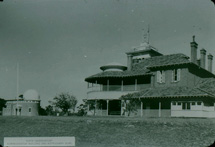
The Clinic, set up in the old Observatory Buildings in Perth, contained an ‘Analysis Room’ furnished with comfortable chairs, a couch and table. Standard for the time, the Analysis Room also contained a cupboard in which the galvanometer was kept. This machine  monitored physiological changes in patients as they spoke, or freely associated to words given by the practitioner. A second  ‘Interview Room’ was more sparsely furnished. This was a space in which children together with their families could be interviewed,Ethel Stoneman wrote. Interviews, rather than being fact-finding enterprises, could be utilised to explore ways in which troubled relationships could be ameliorated.  Ethel Stoneman also regretted calling her organisation a ‘clinic’. ” It is highly important to avoid the hospital atmosphere,” she said. It was inhumane. The word ‘clinic’ is a ‘hospital term’.

The Clinic’s closure was the subject of immediate protest. On 27 November 1930, shortly after the announcement that the clinic was to be closed down the Western Mail noted that ‘a deputation claiming to represent 10,000 women’ had waited on the Minister for Health to request reconsideration. At a joint meeting of the Women’s Justices Association and the Women’s Services Guild on 2 December 1930 a motion was carried deploring the closure of the clinic as a faulty way of cutting costs.  Proceedings were published in the West Australian on 3 December 1930.

The report of the Women Justices’ Association stated at the outset that, in the majority of cases, the cause of juvenile delinquency could be removed if the necessary steps were taken at the right time. At present, there was no modern Children’s Court in Western Australia, based on sound psychological investigation and treatment, and the procedure at the existing institution was not altogether calculated to obtain the best results for the child. There was absolute necessity for evolving some better method of dealing with the young delinquent before he had time and opportunity to harden into an habitual criminal. nal. Under the present system, the community was saddled with the huge expense of courts, officers, gaols, warders, maintenance of prisoners, and so on, and no return was received for this expenditure, either in hard cash or in the reformation of criminals.Experts agreed, the report proceeded, that delinquency was a symptom of mal adjustment to environment, and the first duty of a court should be, not as hitherto, to punish wrongdoing, but to find out why it took place, to endeavour to remove the cause, and to indicate the steps which must be taken in order to prevent a repetition of the trouble.

During the next five years lobbying continued, from women’s’ organisations, from religious and ‘missionary’ based organisations. Increasingly central was the notion that behaviour, determined by environment – not genetics – could be understood and treated. Combing through the National Library of Australia’s Newspaper archive one discovers  Press reports of the to-ing and fro-ing of young men and women travelling abroad to study – amongst them specialists in work with children. Alongside these are reports of doings and developments in child psychology and treatment in Europe, – including the work of August Aichhorn, one of Freud’s followers, who had opened one of the first child guidance clinics in Vienna. Australian people were, potentially, well informed about psychology. There was also news of developments in psychoanalysis. During Dr Kathleen Costello’s return to Sydney from London in 1930. Costello, who had qualified as a children’s specialist at London’s major hospitals spoke of the work of Frau [Melanie Klein whose work was to become central to psychoanalytic theory and the subject of considerable controversy in the next decade.

Wonderful child psychology works are being done in England,’ she said. ‘Everyone is particularly interested in the original methods of one doctor, Frau Klein, who works on a system of her own. ‘She lets the children play in a huge play ground in her own house, and watches them at their games, sometimes giving them set games to play. She then treats them according to their behaviour. She has had remarkable results, especially with intractable children. She’ does not beat about the bush, with parents, either.’ 

Reports such as this went no further even as others encouraged consideration of the impact of environmental issues on the internal life of the child. During a stop-over in Western Australia in February 1933 H J C Forster, then president of the Young Mens Christian Association pointed out that the lack of psychological services was out of step with developments in other parts of Australia. Indeed relationships within the family were critical to the well being of young people.Forster expressed regret that State Psychological Clinic in Western Australia had been discontinued.The West Australian reported:

A well organised child guidance clinic, he said, was an essential part of all effective social welfare activities and it was to be hoped that the Government would ‘before long re-establish this work. He referred to the good which was being accomplished along these lines in Victoria by the recently formed Victorian Council of Mental Hygiene, which had grown out of the neurological section of the British Medical Association and included representatives of the Education Department,- social welfare organisations, children’s courts and other bodies. At the present time it was conducting a child guidance clinic, investi gating and treating cases brought under its notice. The whole success of such activities, however, depended upon the ‘follow up’ work of the social worker or probation officer after the potentialities of a child had been determined and his development begun on a higher plane. 

After the closure of the clinic Ethel Stoneman travelled to the United Kingdom to complete her doctorate in child psychology. She returned to Perth in 1934 to continued agitation to re -open the clinic. It was not re opened until 1937 by which time she had moved on to the eastern states to work as a consultant.

Vale: Ivy Bennett – 2 December 2011

25 Sunday Mar 2012

Posted by Christine in western australia

≈ 2 Comments

When I commenced this blog last August I posted about the Australian psychoanalyst Ivy Bennett. She was born in Wagin, Western Australia in 1919. Through sheer determination and  a British Council scholarship she travelled to England in 1946. Through a series of connections  she was one of the first people, if not the first, to train in Child Psychoanalysis with Anna Freud. In 1953 Ivy returned to Australia and set up a practice as a psychoanalyst near Kings Park in Perth, Western Australia. She  had frequent communication with psychoanalytic professionals in the Eastern States and remembered the warm reception she received from Clara Lazar-Geroe at the Melbourne Institute of Psychoanalysis.She returned to England for further training in 1958, married and eventually moved to Kansas in the United States. During 2011 I had a brief correspondence with her. Although she was ill, she wrote me a long letter outlining as many memories as she could about her life and the psychoanalytic scene she during the 1950s.

I have recently learned that Ivy Bennett ( Ivy Gwynne-Thomas) died on 2 December 2011. I have copied her obituary here.

← Older posts
Newer posts →
December 2025
M T W T F S S
1234567
891011121314
15161718192021
22232425262728
293031  
« May    

Archives

  • May 2024
  • May 2023
  • April 2023
  • November 2022
  • February 2022
  • June 2021
  • February 2021
  • January 2021
  • August 2020
  • June 2020
  • March 2020
  • February 2020
  • January 2020
  • December 2019
  • October 2019
  • April 2019
  • March 2019
  • January 2019
  • January 2018
  • September 2017
  • December 2016
  • August 2016
  • May 2016
  • April 2016
  • February 2016
  • November 2015
  • September 2015
  • August 2015
  • July 2015
  • June 2015
  • May 2015
  • April 2015
  • March 2015
  • February 2015
  • December 2014
  • November 2014
  • September 2014
  • August 2014
  • June 2014
  • April 2014
  • March 2014
  • January 2014
  • November 2013
  • September 2013
  • August 2013
  • July 2013
  • June 2013
  • March 2013
  • January 2013
  • December 2012
  • November 2012
  • October 2012
  • September 2012
  • August 2012
  • June 2012
  • May 2012
  • April 2012
  • March 2012
  • February 2012
  • January 2012
  • December 2011
  • November 2011
  • October 2011
  • September 2011
  • August 2011

1910s 1920s 1930s 1940s 1950s Archive work Australian History Australian Women in Psychoanalysis Australian Women Writers Book Reviews Book Reviews Clara Geroe Conferences and Lectures Emigres Feminism Historical research historical source material John Springthorpe Lay analysis lectures Narrative and Memoir Newspaper reportage Press Psychiatry Reviews seminars Susan Isaacs the psychoanalytic process War Neurosis western australia WW2

Recent Posts

  • A philantropic project. The contribution of Anne Kantor, Psychoanalytic Psychotherapist, to the Melbourne psychoanalytic project.
  • Freud Conference 2023: Indigenous voices- Psychoanalytic listening 17 June 2023 ( in person and online)
  • “TROVE” the National Library of Australia’s jewel, has been saved!!!

The Australian Women Writer’s Challenge 2017

Blogroll

  • WordPress.com News
  • Psychotherapy Matters

Online Journals

  • Psychoanalysis Downunder

Organisations

  • New South Wales Institute of Psychoanalytic Psychotherapy
  • Australian Centre for Psychoanalysis
  • Victorian Association of Psychoanalytic Psychotherapists
  • http://www.psychoanalysis.asn.au/
  • Australian Psychoanalytic Society
  • Australian Association of Group Psychotherapists

Resources

  • Charles Darwin – Complete Works
  • Stanford Encycopaedia of Philosophy
  • Sigmund Freud Archives
  • National Library of Australia

The Australian Scene - History

  • Australian Dictionary of Biography
  • International Dictionary of Psychoanalysis

Enter your email address to follow this blog and receive notifications of new posts by email.

Join 104 other subscribers

Copyright

Creative Commons Licence
This work is licensed under a Creative Commons Attribution 3.0 Australia License.

Comments, Suggestions, Ideas and Other Matters

I am very interested in your comments, suggestions and responses to this blog and its content - good, bad, indifferent. It is all part of a broader conversation - about history, about psychoanalysis and the way people think about things. So if you'd like to make a comment on this blog, please feel free to do so. And, if you are interested in conversing further or, indeed, want to 'speak' to me offline my email address is freudinoceania@gmail.com I look forward to hearing from you.

Blog at WordPress.com.

  • Subscribe Subscribed
    • Freud in Oceania
    • Join 83 other subscribers
    • Already have a WordPress.com account? Log in now.
    • Freud in Oceania
    • Subscribe Subscribed
    • Sign up
    • Log in
    • Report this content
    • View site in Reader
    • Manage subscriptions
    • Collapse this bar
 

Loading Comments...